
Paul Signac, Portrieux, The Bathing Cabins, Opus 185 (Beach of the Countess), 1888
| Artist | Paul Signac, French, 1863–1935 |
| Title | Portrieux, The Bathing Cabins, Opus 185 (Beach of the Countess) |
| Object Date | 1888 |
| Alternate and Variant Titles | La Mer – De Portrieux (Côtes-du-Nord), juin, juillet, août, septembre 1888; Portrieux, Les cabinés, Opus 185 (Plage de la comtesse) |
| Medium | Oil on canvas |
| Dimensions (Unframed) | 13 1/8 x 18 1/4 in. (33.3 x 46.4 cm) |
| Signature | Signed and dated lower left: P. Signac. 88 |
| Credit Line | The Nelson-Atkins Museum of Art. Gift of Henry W. and Marion H. Bloch, 2015.13.23 |
| Copyright | © 2023 Artists Rights Society (ARS), New York |
Catalogue Entry
Citation
Chicago:
Brigid M. Boyle, “Paul Signac, Portrieux, The Bathing Cabins, Opus 185 (Beach of the Countess), 1888,” catalogue entry in French Paintings and Pastels, 1600–1945: The Collections of the Nelson-Atkins Museum of Art, ed. Aimee Marcereau DeGalan (Kansas City: The Nelson-Atkins Museum of Art, 2023), https://doi.org/10.37764/78973.5.730.5407.
MLA:
Boyle, Brigid M. “Paul Signac, Portrieux, The Bathing Cabins, Opus 185 (Beach of the Countess), 1888,” catalogue entry. French Paintings and Pastels, 1600–1945: The Collections of The Nelson-Atkins Museum of Art, edited by Aimee Marcereau DeGalan, Nelson-Atkins Museum of Art, 2023. doi: 10.37764/78973.5.730.5407.
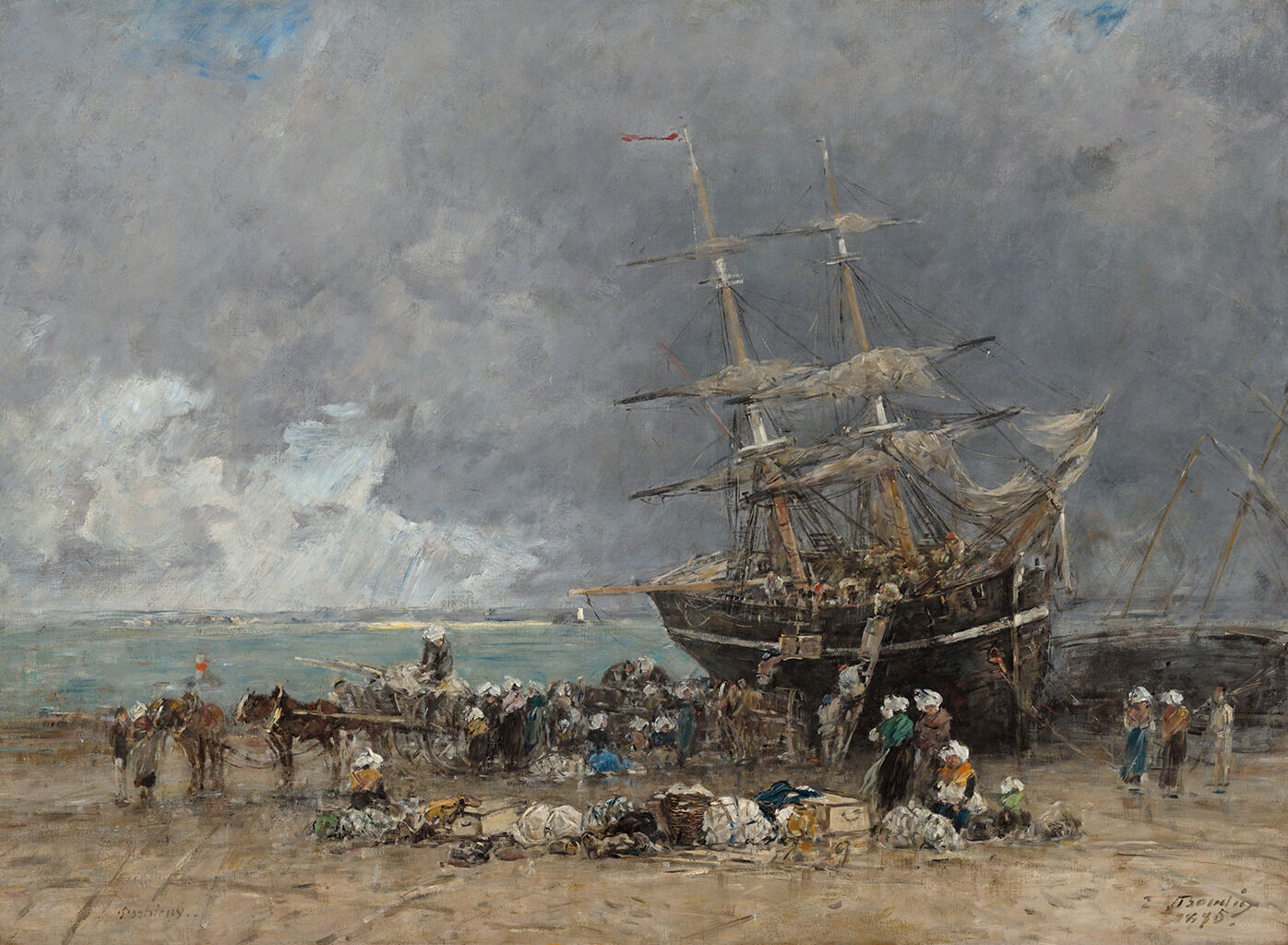
The town of Portrieux was in a state of flux when Paul Signac, a Neo-ImpressionistNeo-Impressionism: A term coined in 1886 by French art critic Félix Fénéon to describe a style of painting pioneered by Georges Seurat. He and his followers espoused a scientific approach to color and a painting technique known as pointillism. painter in the first decade of his career, arrived there in July 1888. For centuries, life in this quiet Breton village had revolved around deep-sea fishing—not, as one might suppose, in the nearby Bay of Saint-Brieuc, but rather off the coast of Newfoundland in present-day Canadian waters. Each year, beginning in 1664, Portrieux and many other French ports sent hundreds of men across the Atlantic to fish for cod from May to October. When the fishermen returned to France, they would sell their annual hauls in La Rochelle, Bordeaux, and Marseille, as well as some Spanish and Italian towns.1For an excellent account of this industry, see Bernard Corbel, Saint-Quay-Portrieux: Enjeu maritime aux XVIIIe et XIXe siècles (Saint-Brieuc: Presses Bretonnes, 1993), 39–48, 124–42. The fishermen used salt to cure and preserve the cod for later consumption. Their families eagerly awaited these homecomings, as seen in an 1875 painting of Portrieux by Eugène Boudin (1824–98) (Fig. 1).2Boudin visited Portrieux repeatedly between 1870 and 1879, producing more than sixty paintings of the town. See Corbel, Saint-Quay-Portrieux, 322. Figure 1 is inscribed “Portrieux” in the lower left corner. Men, women, and children are gathered around a beached terre-neuvierterre-neuvier: The French term for a vessel used for cod fishing off the coast of Newfoundland., some unloading crates and others simply watching the bustle of activity. However, Portrieux’s economy was already beginning to change drastically when Boudin captured this scene. During the last quarter of the nineteenth century, cod fishing declined in popularity as other industries, particularly tourism and oyster farming, became more lucrative and offered residents a less itinerant lifestyle. By the time of Signac’s sojourn, two major hotels had been built in Portrieux to entice would-be visitors, signaling that this societal shift was well underway.3The Hôtel du Talus and Hôtel de la Plage opened in 1860 and 1877, respectively. They were soon followed by the Hôtel du Mouton Blanc in 1890. See Corbel, Saint-Quay-Portrieux, 318; and Arnaud Collin, Saint-Quay-Portrieux: Mémoire en images (Saint-Cyr-sur-Loire, France: Éditions Alan Sutton, 2008–2009), 2:12, 2:21.
During Signac’s three-month stay on the Breton coast, he produced a total of fifteen oil paintings: six studies on panel and nine finished works on canvas. The latter all received opus numbers, akin to musical compositions, something Signac had introduced the previous year.10For a complete inventory of Signac’s paintings with opus numbers, see Marianne Jakobi, Gauguin-Signac: La genèse du titre contemporain (Paris: CNRS Éditions, 2015), 251–74. As Peter Flagg has noted, the town of Portrieux itself is virtually absent from this series. Signac was wholly absorbed in the port and its environs.11Peter J. Flagg, “The Neo-Impressionist Landscape” (PhD diss., Princeton University, 1988), 131. His paintings depict the octagonal lighthouse, built in 1867; the jetty, greatly expanded in 1876; the ships anchored in the Bay of Saint-Brieuc; and the sandy beach known as the Plage de la Comtesse. The beach appears in two of the opus-numbered pictures: the Nelson-Atkins work and another painting in private hands (Fig. 2).12The latter surfaced at auction in 2018. See The Collection of Peggy and David Rockefeller, vol. 1, 19th and 20th Century Art Evening Sale (New York: Christie’s, May 8, 2018), lot 21, Portrieux, La Comtesse (Opus no. 191). It is likely that Signac worked on these beachscapes simultaneously, because he told Camille Pissarro (1830–1903) in a letter dated August 24, 1888: “I have eight canvases started and not a single one finished!”13Signac to Pissarro, August 24, 1888, Archives de Camille Pissarro (Paris: Hotel Drouot, November 21, 1975), unpaginated, lot 179. “J’ai 8 toiles commencées et pas une seule finie!” All translations are by Brigid M. Boyle. For both beach scenes, Signac painted preparatory oil sketches, similar in size and purpose to the croquetonscroquetons: Georges Seurat’s term, derived from the French word croquis (sketch), for his small oil sketches on panel. They were easily transported, making them ideal for painting outdoors. of his colleague Georges Seurat (1859–91).14The Nelson-Atkins has two examples of Seurat’s croquetons: Study for “Bathers at Asnières,” 1883; and Study for “The Channel of Gravelines, Petit Fort Philippe,” 1890. Signac would later shed this habit and renounce painting from nature. In a journal entry dated September 15, 1902, he wrote: “Peindre d’après nature n’est-ce pas une espèce de servilité; un manque de pouvoir créateur?” (Is not painting after nature a form of servile copycatting; a lack of creative power?) Paul Signac, Journal: 1894–1909, ed. Charlotte Hellman (Paris: Gallimard, 2021), 525. Signac’s study for Portrieux, The Bathing Cabins, Opus 185 (Beach of the Countess) is compositionally close to the finished painting but seems to have been executed under different lighting conditions (Fig. 3). The dramatic shadows from the cabins, so central to the Nelson-Atkins picture, are absent in the study, suggesting an overcast day.
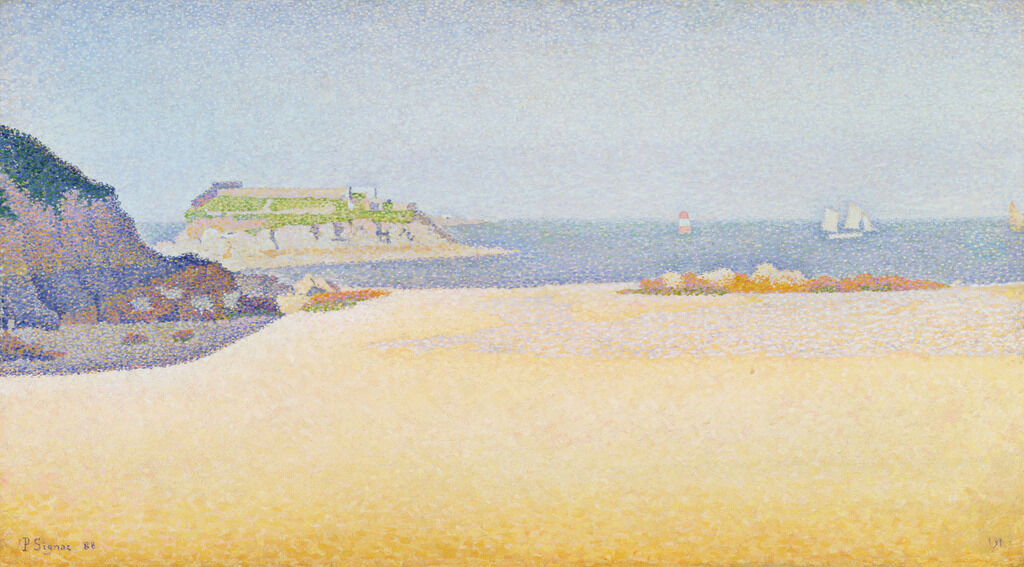 Fig. 2. Paul Signac, Portrieux, Beach of the Countess, Opus 191, 1888, oil on canvas, 23 3/4 x 36 1/4 in. (60.3 x 92.1 cm), private collection. © 2023 Artists Rights Society (ARS), New York. Photograph © Private Collection/Bridgeman Images
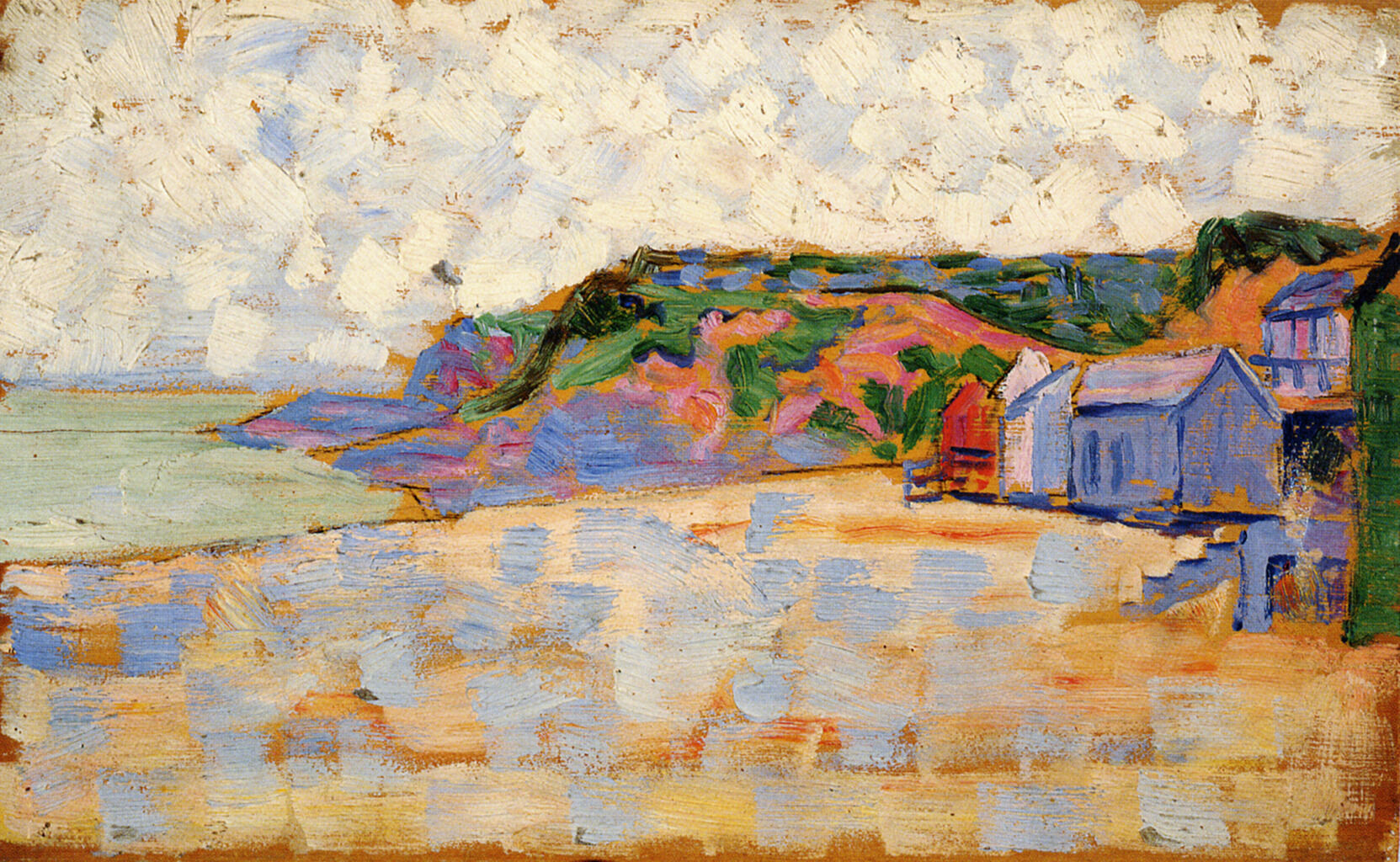 Fig. 3. Paul Signac, Portrieux, Beach of the Countess (Study), 1888, oil on panel, 6 1/8 x 9 3/4 in. (15.5 x 24.8 cm), private collection, reproduced in Richard R. Brettell and Joachim Pissarro, Manet to Matisse: Impressionist Masters from the Marion and Henry Bloch Collection, exh. cat. (Kansas City, MO: Nelson-Atkins Museum of Art, 2007), 110. © 2023 Artists Rights Society (ARS), New York
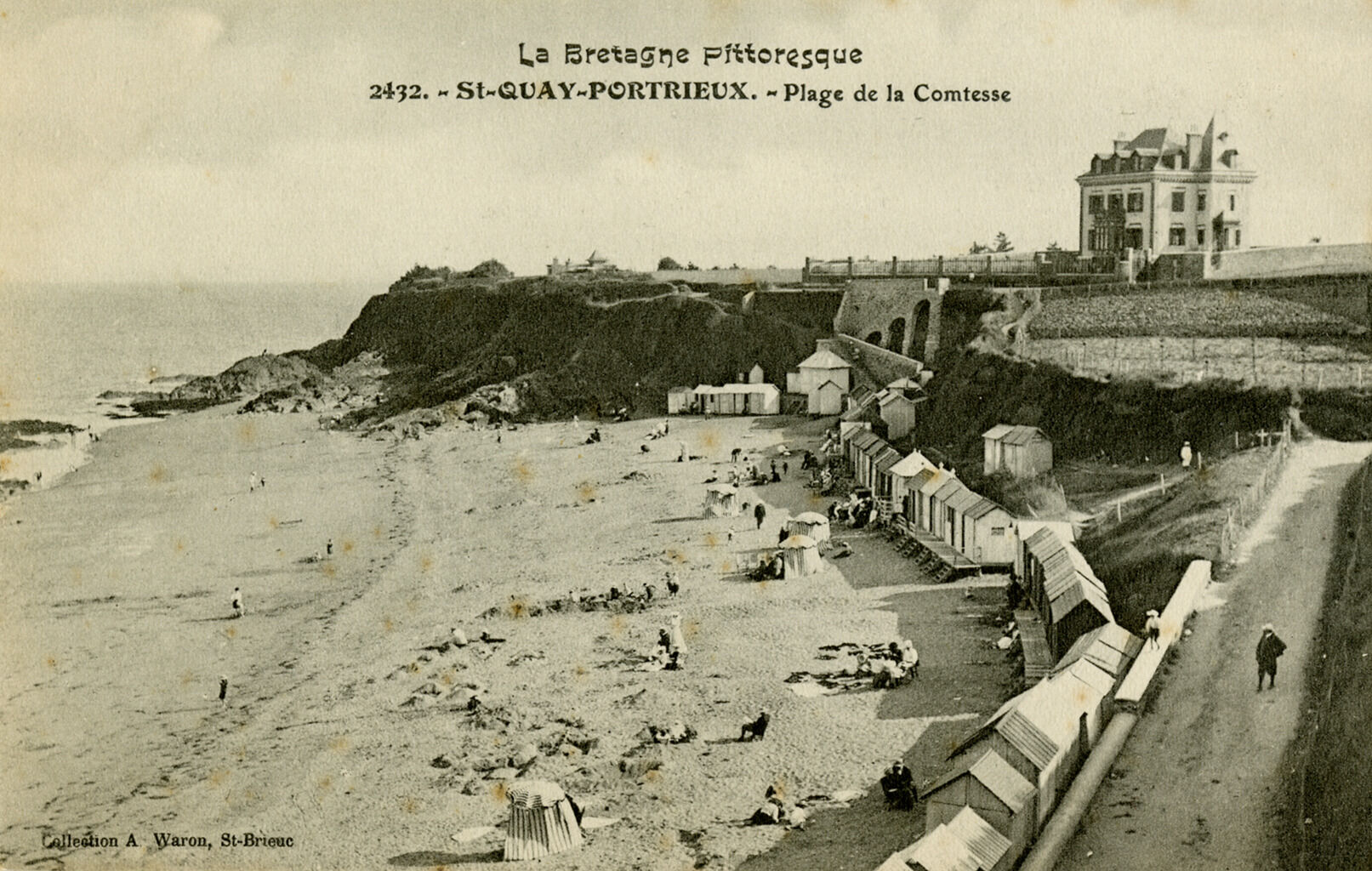
Some bathing cabins were available for short-term rentals by tourists. According to a 1908 guidebook, they generally cost one franc per day.18Paul Joanne, Bretagne: Les routes les plus fréquentées (Paris: Librairie Hachette, 1908), 32. For comparison, hotel rates in Portrieux averaged five to seven francs per day. See Corbel, Saint-Quay-Portrieux, 318; and Collin, Saint-Quay-Portrieux, 2:12. Whether Signac, Roblès, or Ajalbert availed themselves of this opportunity in 1888 is unknown, but Signac certainly found the cabins interesting as motifs. In the Kansas City picture, he rendered them with touches of blue, orange, cream, and occasionally purple pigment. Long, geometric shadows amplify the cabins’ presence within the scene. Richard Brettell, noting the absence of people, assumed that Signac must have risen early to paint the Plage de la Comtesse while it was empty,19For Brettell’s interpretation, see Richard R. Brettell and Joachim Pissarro, Manet to Matisse: Impressionist Masters from the Marion and Henry Bloch Collection, exh. cat. (Kansas City, MO: Nelson-Atkins Museum of Art, 2007), 111. but three current residents have independently identified the time of day as mid- to late afternoon, based on the cabins’ shadows.20I am grateful to Florence Lévêque, Office de Tourisme de Saint-Quay-Portrieux; Véronique Lacour, Les Amis de Saint-Quay-Portrieux; and Mathieu Petitjean, author of Saint-Quay-Portrieux: À l’abri de la ronce bénie (Saint-Jacut-de-la-Mer, France: Jean-Pierre Bihr, 1998), for their helpful comments about the shadows. Nearly identical shadows can be seen in an early twentieth-century postcard of the Plage de la Comtesse by Breton photographer Armand Waron (1868–1956) (Fig. 4). Waron captured the beach from a more elevated position but facing the same direction as Signac. Some two dozen figures are scattered across the shore, including several adults lounging on the cabins’ wooden decks and a group of children building a sandcastle.
After Signac left Portrieux in late September 1888, he began making plans to exhibit his finished works. Within two years, all nine of the opus-numbered paintings had been publicly displayed, some multiple times.24Signac exhibited two paintings of Portrieux at the Cinquième exposition de la Société des Artistes Indépendants, Paris, September 3–October 4, 1889; seven at Les XX: XVIe exposition annuelle, Brussels, January 18–February 23, 1890; four at the Sixième exposition de la Société des Artistes Indépendants, Paris, March 20–April 27, 1890; and one at the Théâtre Libre, Paris, for a period of about ten years (1888–98). The Nelson-Atkins picture made its debut in 1890 at the sixth annual exhibition of the Société des Artistes IndépendantsSociété des Artistes Indépendants: A group founded in 1884 in Paris by Odilon Redon, Albert Dubois-Pillet, Georges Seurat, and Paul Signac that created the Salon des Indépendants as an alternative to exhibiting at the Salon organized and juried by the French Royal Academy of Painting and Sculpture (Académie Royale de Peinture et de Sculpture). The Salon des Indépendants has no selection committee; instead, artists can exhibit on payment of a fee. The exhibitions became the main venue for many artists, particularly the Post-Impressionists in the late nineteenth century. The Salon des Indépendants is still in existence today. See also Salon, the., an organization that Signac had helped found in 1884. Reviews were decidedly mixed. Some commentators praised Signac’s methodical approach to color and his ability to capture both “the diaphanous depths of an azure sky” and the placid, “immensely flat” sea.25See Jules Christophe, “Causerie: L’Impressionnisme; L’exposition des artistes indépendants,” Journal des artistes, no. 13 (April 6, 1890): 102; and Georges Lecomte, “Beaux-Arts: L’Exposition des néo-impressionnistes, Pavillon de la ville de Paris (Champs-Elysées),” Art et critique 2, no. 44 (March 29, 1890): 204. Lecomte lauded Signac’s rendering of les profondeurs diaphanes d’un ciel azur” and the “immensément plane” sea. Others found his pointillistpointillism: A technique of painting using tiny dots of pure colors, which when seen from a distance are blended by the viewer’s eye. It was developed by French Neo-Impressionist painters in the mid-1880s as a means of producing luminous effects. technique and repetition of motifs stultifying. The harshest critique came from Julien Leclercq:
Signac really bores us. No personality. Dots, dots, nothing but dots. . . . And his seascapes—his seascape, we mean to say, because it’s always the same! With Monet, when we encounter the same tree, the same cliff, or the same rock in ten paintings, we appreciate it; with Signac, we wonder: [is this] some punishment imposed by Seurat?26J[ulien] L[eclercq], “Beaux-arts: Aux Indépendants,” Mercure de France 1, no. 5 (May 1890): 175. “Signac nous ennuie bien. Aucune personnalité. Des points, des points, et c’est tout. . . . Et ses marines, sa marine voulons-nous dire, car c’est toujours la même! Chez Monet, lorsqu’en dix tableaux nous retrouvons le même arbre ou la même falaise, le même rocher, nous le sentons; chez Signac, nous nous le demandons: quelque pensum infligé par Seurat.” The latter remark positions Signac as a disciple of Seurat, whose pointillist technique and ideas about color theory strongly influenced him in the mid-1880s.
Leclercq’s unfavorable comparison of Signac with his predecessor Claude Monet (1840–1926) is not without irony, for it was Monet who had inspired Signac’s choice of profession and to whom Signac later paid homage in his book D’Eugène Delacroix au néo-impressionnisme (From Eugène Delacroix to Neo-Impressionism; 1899).27Signac decided to become a painter after attending Monet’s first solo exhibition in 1880. The two artists were in periodic contact for more than four decades, and Monet even visited Signac in Les Andelys in September 1921. See Ferretti-Bocquillon et al., Signac, 69, 317. Leclerq’s dismissive attitude toward Signac’s technique was certainly not shared by all observers. When Signac gave Ajalbert a preview of his Portrieux paintings toward the end of their joint summer vacation, the latter reacted with awe: “Signac showed me his canvases. He works methodically, in small dots. How many per hour? One thousand, two thousand!”28Ajalbert, Mémoires en vrac, 371. “Il travaille méthodiquement, au petit point. Combien à l’heure? Cent mille, deux mille!” Emphasis in the original. Unlike Leclercq, Ajalbert recognized that few artists possessed the patience or tenacity for so painstaking a method.
Created during the first decade of Signac’s career, Portrieux, The Bathing Cabins, Opus 185 is a small but important seascape. On a local level, it bears witness to a transitional moment in Portrieux’s history, when tourism began to overtake deep-sea fishing as an economic driver. In personal terms, it reflects Signac’s love of travel, his deep attachment to the sea, and his anarchist sympathies. The late-afternoon shadows reflect Signac’s keen observational skills, but, at the same time, the unoccupied beach demonstrates his willingness to deviate from reality when it suited his aesthetic or political aims. Over the next forty-odd years, Signac would explore countless other ports, producing hundreds of oils and watercolors of the French waterfront, a perennially favorite theme.29By one scholar’s tally, 484 of Signac’s 611 documented oil paintings depict water. See Marina Ferretti Bocquillon, “Signac, la mer toujours recommencée,” in Marina Ferretti Bocquillon and Pierre Curie, eds., Signac: Les harmonies colorées, exh. cat. (Brussels: Fonds Mercator, 2021), 24–37, at 27.
Notes
-
For an excellent account of this industry, see Bernard Corbel, Saint-Quay-Portrieux: Enjeu maritime aux XVIIIe et XIXe siècles (Saint-Brieuc: Presses Bretonnes, 1993), 39–48, 124–42. The fishermen used salt to cure and preserve the cod for later consumption.
-
Boudin visited Portrieux repeatedly between 1870 and 1879, producing more than sixty paintings of the town. See Corbel, Saint-Quay-Portrieux, 322. Figure 1 is inscribed “Portrieux” in the lower left corner.
-
The Hôtel du Talus and Hôtel de la Plage opened in 1860 and 1877, respectively. They were soon followed by the Hôtel du Mouton Blanc in 1890. See Corbel, Saint-Quay-Portrieux, 318; and Arnaud Collin, Saint-Quay-Portrieux: Mémoire en images (Saint-Cyr-sur-Loire, France: Éditions Alan Sutton, 2008–2009), 2:12, 2:21.
-
Signac met Roblès in 1882. She modeled for many of his early figure paintings. See Marina Ferretti-Bocquillon et al., Signac: 1863–1935, exh. cat. (New York: Metropolitan Museum of Art, 2001), 92.
-
Like many Neo-Impressionist painters, Signac sympathized with the left-wing political philosophy known as anarcho-communism and befriended some of its leading proponents, including Jean Grave, Émile Pouget, and Élisée Reclus. See Robert L. and Eugenia W. Herbert, “Artists and Anarchism: Unpublished Letters of Pissarro, Signac and Others: I,” Burlington Magazine 102, no. 692 (November 1960): 472–82.
-
For Ajalbert’s description of their accommodations, see Jean Ajalbert, “Un demi-siècle d’art indépendant,” Les Nouvelles littéraires, no. 591 (February 10, 1934): 4.
-
Signac was his father’s sole heir. Ferretti-Bocquillon et al., Signac, 84, 298.
-
It was not until 1905 that the Paris-Saint-Brieuc line was extended north to Plouha, with a stop at Portrieux’s sister village, Saint-Quay. Corbel, Saint-Quay-Portrieux, 322; and Collin, Saint-Quay-Portrieux, 1:81. Portrieux and Saint-Quay officially merged in 1921 to form what is now known as Saint-Quay-Portrieux.
-
Ajalbert, “Un demi-siècle d’art indépendant,” 4; and Jean Ajalbert, Mémoires en vrac: Au temps du symbolisme, 1880–1890 (Paris: Albin Michel, 1938), 371.
-
For a complete inventory of Signac’s paintings with opus numbers, see Marianne Jakobi, Gauguin-Signac: La genèse du titre contemporain (Paris: CNRS Éditions, 2015), 251–74.
-
Peter J. Flagg, “The Neo-Impressionist Landscape” (PhD diss., Princeton University, 1988), 131.
-
The latter surfaced at auction in 2018. See The Collection of Peggy and David Rockefeller, vol. 1, 19th and 20th Century Art Evening Sale (New York: Christie’s, May 8, 2018), lot 21, Portrieux, La Comtesse (Opus no. 191).
-
Signac to Pissarro, August 24, 1888, Archives de Camille Pissarro (Paris: Hotel Drouot, November 21, 1975), unpaginated, lot 179. “J’ai 8 toiles commencées et pas une seule finie!” All translations are by Brigid M. Boyle.
-
The Nelson-Atkins has two examples of Seurat’s croquetons: Study for “Bathers at Asnières,” 1883; and Study for “The Channel of Gravelines, Petit Fort Philippe,” 1890. Signac would later shed this habit and renounce painting from nature. In a journal entry dated September 15, 1902, he wrote: “Peindre d’après nature n’est-ce pas une espèce de servilité; un manque de pouvoir créateur?” (Is not painting after nature a form of servile copycatting; a lack of creative power?) Paul Signac, Journal: 1894–1909, ed. Charlotte Hellman (Paris: Gallimard, 2021), 525.
-
Some people mistakenly believe that the beach and island were named for another countess, Julie Tranchant des Tulayes, who purchased the Île de la Comtesse in 1832, but archival records confirm that the name long predates her period of ownership. See Collin, Saint-Quay-Portrieux, 2:111.
-
The latter view was greatly altered in 1990, when the town of Saint-Quay-Portrieux installed a seventeen-hectare marina at the southern end of the Plage de la Comtesse. I thank Florence Lévêque, Office de Tourisme de Saint-Quay-Portrieux, for this information.
-
For this history and anecdote, see Corbel, Saint-Quay-Portrieux, 267, 285; and Collin, Saint-Quay-Portrieux, 2:61.
-
Paul Joanne, Bretagne: Les routes les plus fréquentées (Paris: Librairie Hachette, 1908), 32. For comparison, hotel rates in Portrieux averaged five to seven francs per day. See Corbel, Saint-Quay-Portrieux, 318; and Collin, Saint-Quay-Portrieux, 2:12.
-
For Brettell’s interpretation, see Richard R. Brettell and Joachim Pissarro, Manet to Matisse: Impressionist Masters from the Marion and Henry Bloch Collection, exh. cat. (Kansas City, MO: Nelson-Atkins Museum of Art, 2007), 111.
-
I am grateful to Florence Lévêque, Office de Tourisme de Saint-Quay-Portrieux; Véronique Lacour, Les Amis de Saint-Quay-Portrieux; and Mathieu Petitjean, author of Saint-Quay-Portrieux: À l’abri de la ronce bénie (Saint-Jacut-de-la-Mer, France: Jean-Pierre Bihr, 1998), for their helpful comments about the shadows.
-
The lone exception is Paul Signac, Portrieux, The Port (Study), 1888, oil on panel, 5 7/8 x 9 13/16 in. (15 x 25 cm), Fitzwilliam Museum, University of Cambridge, PD.9-1959.
-
Robyn Roslak, Neo-Impressionism and Anarchism in Fin-de-Siècle France: Paintings, Politics, and Landscape (Aldershot, England: Ashgate, 2007), 7, 155. See also Roslak’s discussion of water as an anarchist metaphor for social harmony in Signac’s marine paintings, in Robyn Roslak, “Symphonic Seas, Oceans of Liberty: Paul Signac’s La Mer: Les Barques (Concarneau),” Nineteenth-Century Art Worldwide 4, no. 1 (Spring 2005): http://19thc-artworldwide.org/index.php/component/content/article/64-spring05article/302-symphonic-seas-oceans-of-liberty-paul-signacs-la-mer-les-barques-concarneau.
-
In 1892, Signac followed the lead of his colleague and fellow anarchist Henri Edmond Cross (1856–1910) in relocating to the south of France. Cross had moved from Paris to Cabasson the previous year, and his rhapsodic descriptions of the town’s scenery and climate convinced Signac to make a similar leap. He set his sights on Saint-Tropez, initially renting a villa and later purchasing property there in 1897. For both Cross and Signac, their choice of the Mediterranean coast was motivated, in part, by their politics. Reclus and others characterized this area as “well-suited to the dream of an anarchist utopia” in their writings, praising its ample sunshine, access to the sea, and pre-modern character; see Roslak, Neo-Impressionism and Anarchism in Fin-de-Siècle France, 145–47. This rhetoric persuaded Cross, Signac, and other Neo-Impressionists to explore Provence, with many of them settling there long-term.
-
Signac exhibited two paintings of Portrieux at the Cinquième exposition de la Société des Artistes Indépendants, Paris, September 3–October 4, 1889; seven at Les XX: XVIe exposition annuelle, Brussels, January 18–February 23, 1890; four at the Sixième exposition de la Société des Artistes Indépendants, Paris, March 20–April 27, 1890; and one at the Théâtre Libre, Paris, for a period of about ten years (1888–98).
-
See Jules Christophe, “Causerie: L’Impressionnisme; L’exposition des artistes indépendants,” Journal des artistes, no. 13 (April 6, 1890): 102; and Georges Lecomte, “Beaux-Arts: L’Exposition des néo-impressionnistes, Pavillon de la ville de Paris (Champs-Elysées),” Art et critique 2, no. 44 (March 29, 1890): 204. Lecomte lauded Signac’s rendering of “les profondeurs diaphanes d’un ciel azur” and the “immensément plane” sea.
-
J[ulien] L[eclercq], “Beaux-arts: Aux Indépendants,” Mercure de France 1, no. 5 (May 1890): 175. “Signac nous ennuie bien. Aucune personnalité. Des points, des points, et c’est tout. . . . Et ses marines, sa marine voulons-nous dire, car c’est toujours la même! Chez Monet, lorsqu’en dix tableaux nous retrouvons le même arbre ou la même falaise, le même rocher, nous le sentons; chez Signac, nous nous le demandons: quelque pensum infligé par Seurat.” The latter remark positions Signac as a disciple of Seurat, whose pointillist technique and ideas about color theory strongly influenced him in the mid-1880s.
-
Signac decided to become a painter after attending Monet’s first solo exhibition in 1880. The two artists were in periodic contact for more than four decades, and Monet even visited Signac in Les Andelys in September 1921. See Ferretti-Bocquillon et al., Signac, 69, 317.
-
Ajalbert, Mémoires en vrac, 371. “Il travaille méthodiquement, au petit point. Combien à l’heure? Cent mille, deux mille!” Emphasis in the original.
-
By one scholar’s tally, 484 of Signac’s 611 documented oil paintings depict water. See Marina Ferretti Bocquillon, “Signac, la mer toujours recommencée,” in Marina Ferretti Bocquillon and Pierre Curie, eds., Signac: Les harmonies colorées, exh. cat. (Brussels: Fonds Mercator, 2021), 24–37, at 27.
Technical Entry
Citation
Chicago:
Susan Pavlik Enterline, “Paul Signac, Portrieux, The Bathing Cabins, Opus 185 (Beach of the Countess), 1888,” technical entry in French Paintings and Pastels, 1600–1945: The Collections of the Nelson-Atkins Museum of Art, ed. Aimee Marcereau DeGalan (Kansas City: The Nelson-Atkins Museum of Art, 2026), https://doi.org/10.37764/78973.5.730.2088.
MLA:
Enterline, Susan Pavlik. “Paul Signac, Portrieux, The Bathing Cabins, Opus 185 (Beach of the Countess), 1888,” technical entry. French Paintings and Pastels, 1600–1945: The Collections of The Nelson-Atkins Museum of Art, edited by Aimee Marcereau DeGalan, Nelson-Atkins Museum of Art, 2026. doi: 10.37764/78973.5.730.2088.
Paul Signac painted Portrieux, The Bathing Cabins, Opus 185 (Beach of the Countess) on a fine, tightly woven, lightweight fabric with a plain weaveplain weave: A basic textile weave in which one weft thread alternates over and under the warp threads. Often this structure consists of one thread in each direction, but threads can be doubled (basket weave) or tripled to create more complex plain weave. Plain weave is sometimes called tabby weave.. The painting was edge linededge lining: A conservation technique used to strengthen/repair tacking margins that have weakened or failed. New fabric is adhered to the painting’s damaged tacking margins to allow the stretcher to exert its normal tensioning on the original canvas. See strip lining. sometime before 1994,1Forrest Bailey, examination report, November 9, 1994, NAMA conservation file, 2015.13.23. leaving the reverse of the canvas visible and the original tacking marginstacking margins: The outer edges of canvas that wrap around and are attached to the stretcher or strainer with tacks or staples. See also tacking edge. intact. The painting retains its original five-member stretcherstretcher: A wooden structure to which the painting’s canvas is attached. Unlike strainers, stretchers can be expanded slightly at the joints to improve canvas tension and avoid sagging due to humidity changes or aging. with half-mitered bridle joints.2See illustration 33 in Mark Bockrath and Barbara A. Buckley, “Historical and Original Stretchers and Strainers,” American Institute for Conservation (AIC) Wiki, accessed November 21, 2025, https://www.conservation-wiki.com/wiki/Stretchers_and_Strainers:_Materials_and_Equipment. All ten keys are present. Both canvas and stretcher have a stenciled artist supplier marksupplier mark: A mark (ink stamp, brand, impression, etc.), often present on the reverse of canvas, panel, or other support, signifying the company that sold or prepared the support. As these companies sometimes performed framing and restorations, these marks could also reflect these services. See also canvas stamp. for Tasset et L’Hôte (Fig. 5).3Tasset et L’Hôte operated from 1887 to 1899. Pascal Labreuche, “Tasset et Lhote,” Guide Labreuche: Guide historique des fournisseurs de matériel pour Artistes à Paris, 1790–1960, 2018, https://www.guide-labreuche.com/en/collection/businesses/tasset-et-lhote. The stretcher has a second artist supplier mark from Bourgeois Aîné,4While the stamp is difficult to decipher, it visually matches Bourgeois Aîné’s mark of a “B” inside a horizontal diamond. Labreuche, “Bourgeois Aîné,” Guide Labreuche, https://www.guide-labreuche.com/en/collection/businesses/bourgeois-aine. indicating that the stretcher was constructed by Bourgeois Aîné, then Tasset et L’Hôte stretched the canvas and sold it. With infrared (IR) imaginginfrared (IR) photography: A form of infrared imaging that employs the part of the spectrum just beyond the red color to which the human eye is sensitive. This wavelength region, typically between 700-1,000 nanometers, is accessible to commonly available digital cameras if they are modified by removal of an IR blocking filter that is required to render images as the eye sees them. The camera is made selective for the infrared by then blocking the visible light. The resulting image is called a reflected infrared digital photograph. Its value as a painting examination tool derives from the tendency for paint to be more transparent at these longer wavelengths, thereby non-invasively revealing pentimenti, inscriptions, underdrawing lines, and early stages in the execution of a work. The technique has been used extensively for more than a half-century and was formerly accomplished with infrared film., two more marks on the stretcher appear. On the proper right vertical member is a stenciled “8” indicating the painting’s size as the French standard-formatstandard-format supports: Commercially prepared supports available through art suppliers, which gained popularity in the nineteenth century during the industrialization of art materials. Available in three formats figure (portrait), paysage (landscape), and marine (marine), these were numbered 1 through 120 to indicate their size. For each numbered size, marine and paysage had two options available: a larger format (haute) and smaller (basse) format. no. 8.5In the 1888 Bourgeois Aîné catalog, a no. 8 paysage measured 46 by 33 centimeters. See David Bomford, Jo Kirby, John Leighton, and Ashok Roy, Art in the Making: Impressionism (New Haven: Yale University Press, 1990), 46. There is faint handwriting on the upper horizontal member that reads, “42bis Rue de Paris / Asnières,” the artist’s address at the time.6See the chronology in Marina Ferretti-Bocquillon, Anne Distel, John Leighton, and Susan Alyson Stein, Signac: 1863–1935, exh. cat. (New York: Metropolitan Museum of Art, 2001), 298.
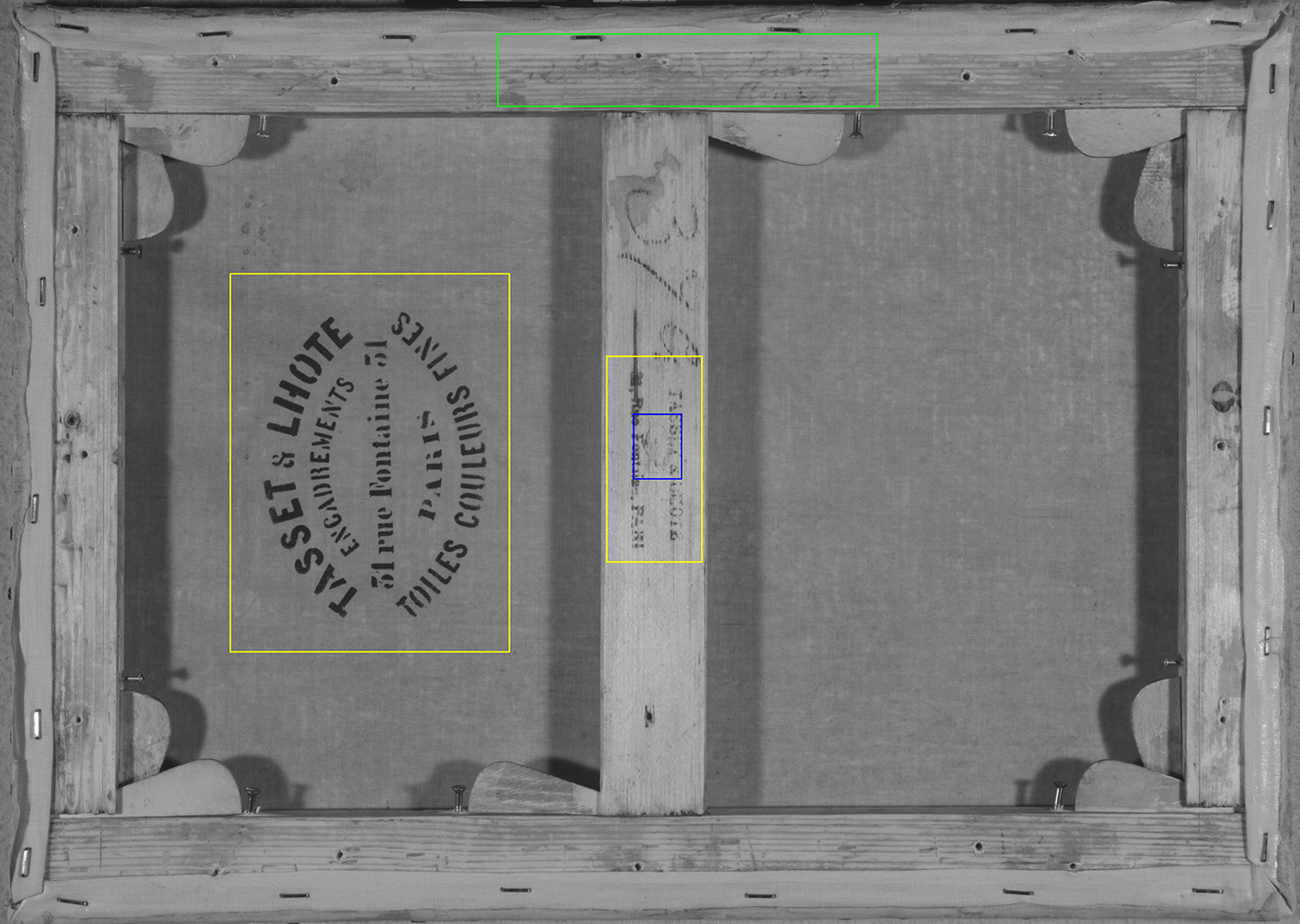 Fig. 5. Reflected infrared digital image of the reverse of the canvas and stretcher, Portrieux, The Bathing Cabins, Opus 185 (Beach of the Countess) (1888). The Bourgeois Aîné mark is indicated by a blue rectangle, the Tasset et L’Hôte marks by yellow rectangles, and the handwritten address by a green rectangle.
The canvas was commercially primed with a thin, evenly applied off-white ground layerground layer: An opaque preparatory layer applied to the support, either commercially or by the artist, to prevent absorption of the paint into the canvas or panel. See also priming layer., which fully extends to the edges of the tacking margins. Signac allowed much of the ground layer to show through between brushstrokes and passages of paint (Fig. 6). Under magnification, particles of dry, dark media are visible between brushstrokes, indicating Signac used a medium like Conté crayoncrayon: Traditionally, the French term crayon referred to a wide variety of fabricated, dry drawing media including ground and compressed chalks and pastels. For the purposes of this catalogue, crayon refers to a drawing medium where pigments, dyes, or a mixture of the two are mixed with wax, grease, or oils, or any combination of the three, and compressed into a stick. for his underdrawingunderdrawing: A drawn or painted sketch beneath the paint layer. The underdrawing can be made from dry materials, such as graphite or charcoal, or wet materials, such as ink or paint.. Signac first began working in Conté crayon in emulation of his friend and mentor Georges Seurat (1859–1891).7Marina Ferretti-Bocquillon, “Signac: Drawings and Watercolors,” in Ferretti-Bocquillon et al., Signac: 1863–1935, 24. He quickly took up the medium for preparatory sketches for paintings, such as Study for “Sunday”: Woman at the Window; Man Reading a Newspaper (1888–89; private collection), as well as to create stand-alone drawings, like The Bench (1887; private collection).8Sjraar van Heugten, “Signac: The Graphic Worker,” in Ferretti-Bocquillon et al., Signac: 1863–1935, 33.
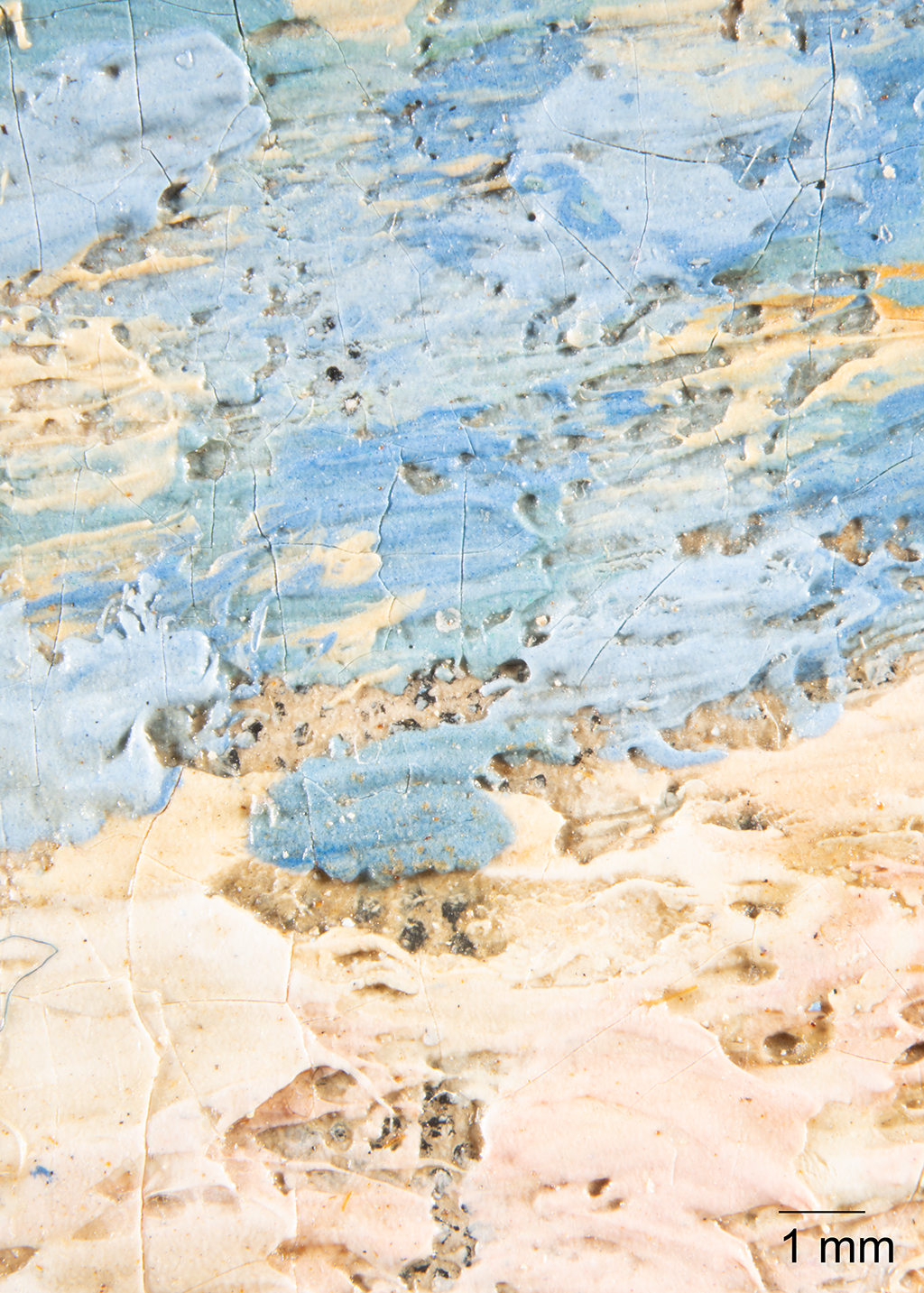 Fig. 6. Detail of exposed off-white ground between passages of paint, Portrieux, The Bathing Cabins, Opus 185 (Beach of the Countess) (1888). Note also the black particles of dry media, probably Conté crayon, associated with the underdrawing of the figures.
Infrared reflectographyinfrared reflectography (IRR): A form of infrared imaging that exploits the behavior of painting materials at wavelengths beyond those accessible to infrared photography. These advantages sometimes include a continuing increase in the transparency of pigments beyond wavelengths accessible to infrared photography (i.e, beyond 1,000 nanometers), rendering underdrawing more clearly. The resulting image is called an infrared reflectogram. Devices that came into common use in the 1980s such as the infrared vidicon effectively revealed these features but suffered from lack of sharpness and uneven response. Vidicons continue to be used out to 2,200 nanometers but several newer pixelated detectors including indium gallium arsenide and indium antimonide array detectors offer improvements. All of these devices are optimally used with filters constraining their response to those parts of the infrared spectrum that reveal the most within the constraints of the palette used for a given painting. They can be used for transmitted light imaging as well as in reflection. shows a sketchy but complete underdrawing (Fig. 7). Signac marked the contours of the hillside, horizon, and beach and established the shapes of the bathing cabins and deck. Completely absent in the final painted composition, several roughly sketched figures populate the beach in the IR reflectograminfrared reflectogram: An infrared image captured with an electronic infrared imager, typically in the 1000-2500 nanometer range. See Infrared reflectography (IRR).. On the far left, there are figures at the edge of the water, possibly an adult with several children. In the center is a figure seated on the sand, and there are some sketchy lines that may represent another seated figure slightly further in the distance. There are two figures standing by the cabins on the beach, and there are more lines on the deck which may suggest another figure.
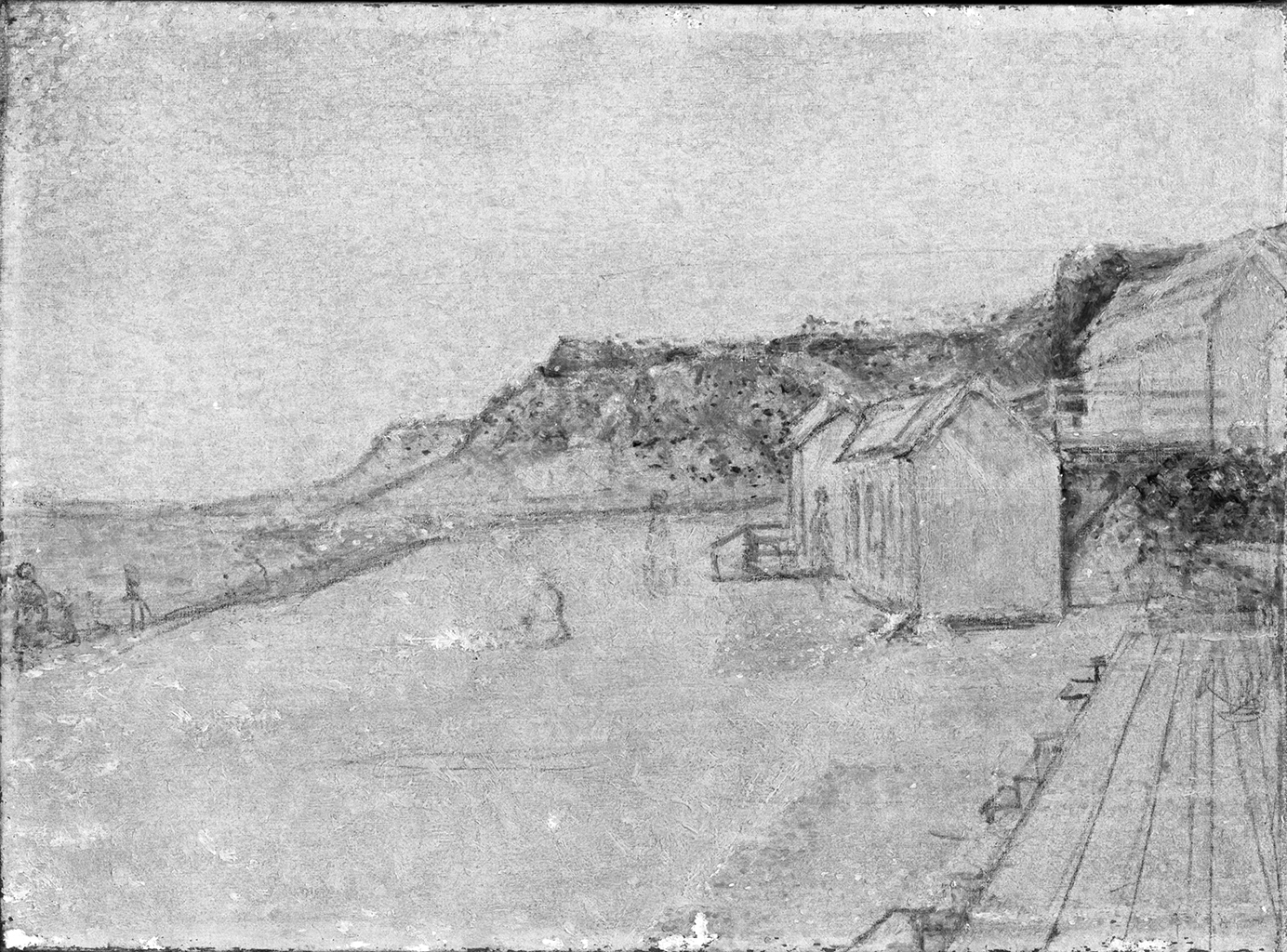 Fig. 7. Infrared reflectogram captured at 2100 nanometers, Portrieux, The Bathing Cabins, Opus 185 (Beach of the Countess) (1888). A complete underdrawing is revealed, along with initial placement of figures, the third set of stairs on the deck, and the shifting perspective lines in the decking.
Signac made several other small changes to the composition. He did not sketch the shadows in his underdrawing, adding them only later as he painted. He lowered the line of the cliff by approximately three centimeters and shifted the cabins’ rooflines. He also adjusted the angle of the deck planks and omitted a third set of sketched steps from the deck to the sand.
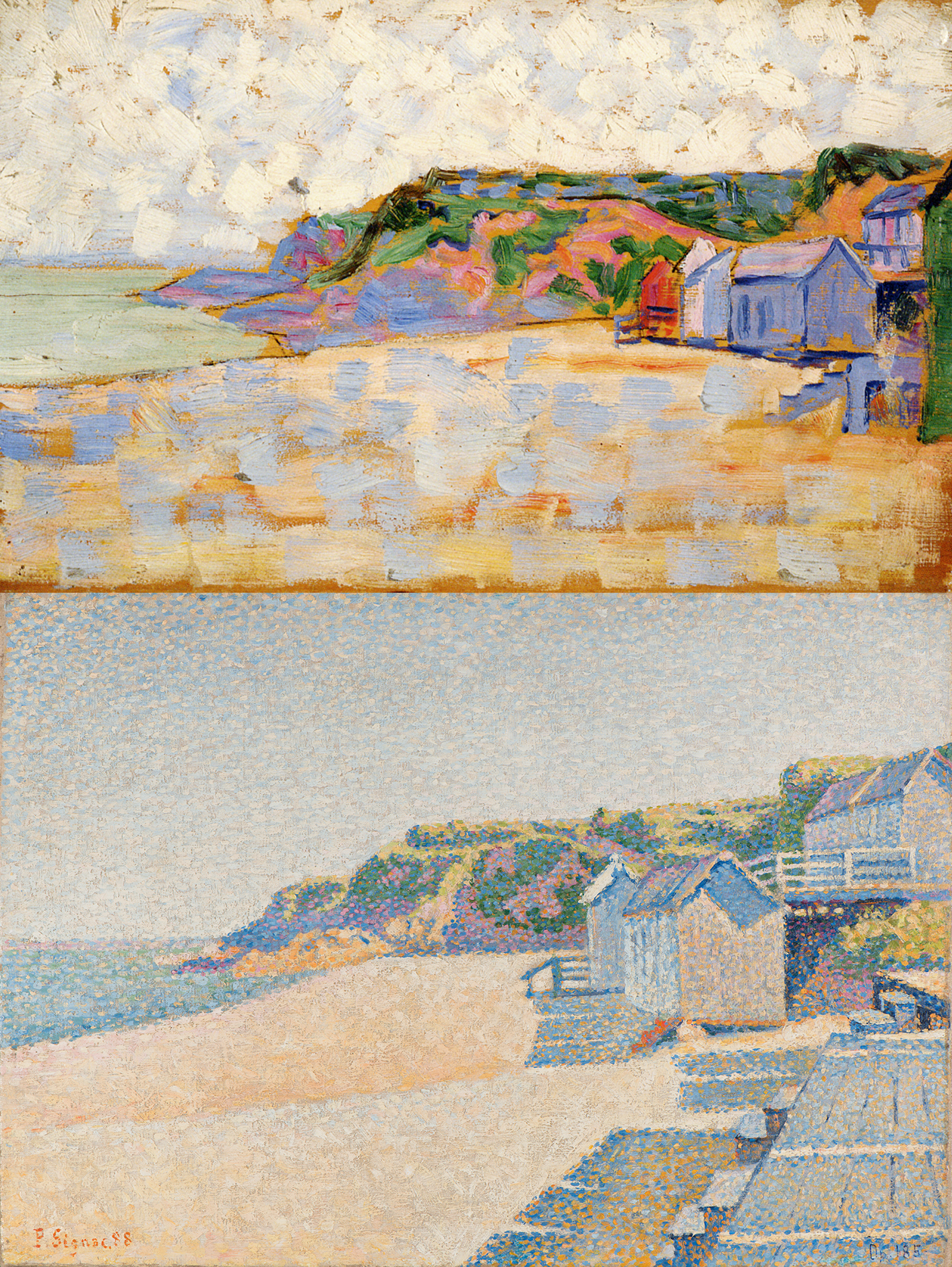 Fig. 8. Comparison of Portrieux, The Bathing Cabins, Opus 185 (Beach of the Countess) (1888) and its preparatory oil sketch, Portrieux, Beach of the Countess (Study). The study is at the top, showing the red cabin in the center, a sliver of the green cabin at right, and a more distant vantage point. At bottom, the painting shows more of the wooden deck in the lower right and strong shadows cast by the bathing cabins.
Painted two years after The Château Gaillard, View from My Window, Petit-Andely (1886; The Nelson-Atkins Museum of Art), The Bathing Cabins, Opus 185 (Beach of the Countess) represents Signac as a confident Neo-ImpressionistNeo-Impressionism: A term coined in 1886 by French art critic Félix Fénéon to describe a style of painting pioneered by Georges Seurat. He and his followers espoused a scientific approach to color and a painting technique known as pointillism. artist. The compositional elements are more defined and linear, a trend which increases among his mature works. In comparison to the preparatory oil sketch mentioned above in the catalogue entry, Signac positioned himself closer to the green cabin and turned slightly toward the buildings for the Nelson-Atkins painting (Fig. 8). The result is a more synthesized, structured composition with a unified color story of contrasting blue-violets and yellow-oranges. The red cabin is now absent, hidden behind its neighbors, and the green cabin is cropped from the right edge. The deck, portrayed simply in the sketch, extends to occupy the lower right corner, amplifying the sense of depth with its long, linear planks. The deck itself and the shadows in front of it both reference cabins beyond the picture plane, creating an enclosed, intimate beach vista looking out to the sea.
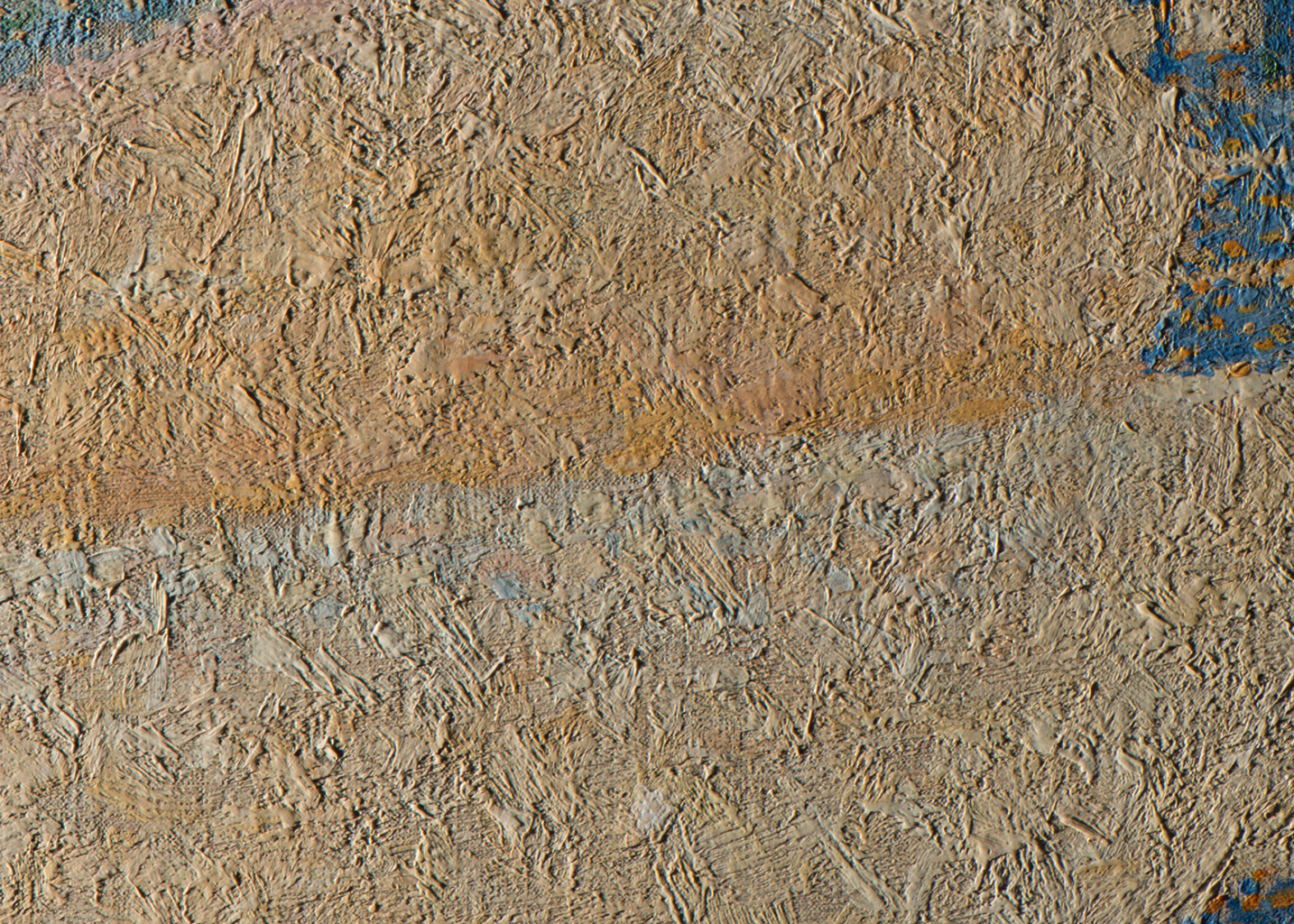 Fig. 9. Detail in raking light showing Signac’s crisscrossing balayé strokes in the sand, Portrieux, The Bathing Cabins, Opus 185 (Beach of the Countess) (1888)
Signac’s palette remained unchanged from 1883 onward, according to his writing.9In an unpublished letter to Amédée Ozenfant (collection of Amédée Ozenfant, Cannes), Signac described his palette; quoted in Wiliam Innes Homer, Seurat and the Science of Painting (New York: Hacker Art Books, 1985), 151. The painting is composed of divided brushstrokes, though Signac also included less fragmented brushwork. For example, the shadows between the deck planks are long, continuous strokes, as are the rooflines of the cabins on the beach. He used balayé strokes to add luminosity and texture to the sand (Fig. 9).10Homer describes balayé strokes as “swept over or crisscrossed,” and they were used often by Seurat. See Homer, Seurat and the Science of Painting, 60. In much of the rest of the composition, Signac applied color, then returned with small dabs, adding both similar tones to create gradations and contrasting colors for added light and shadow.
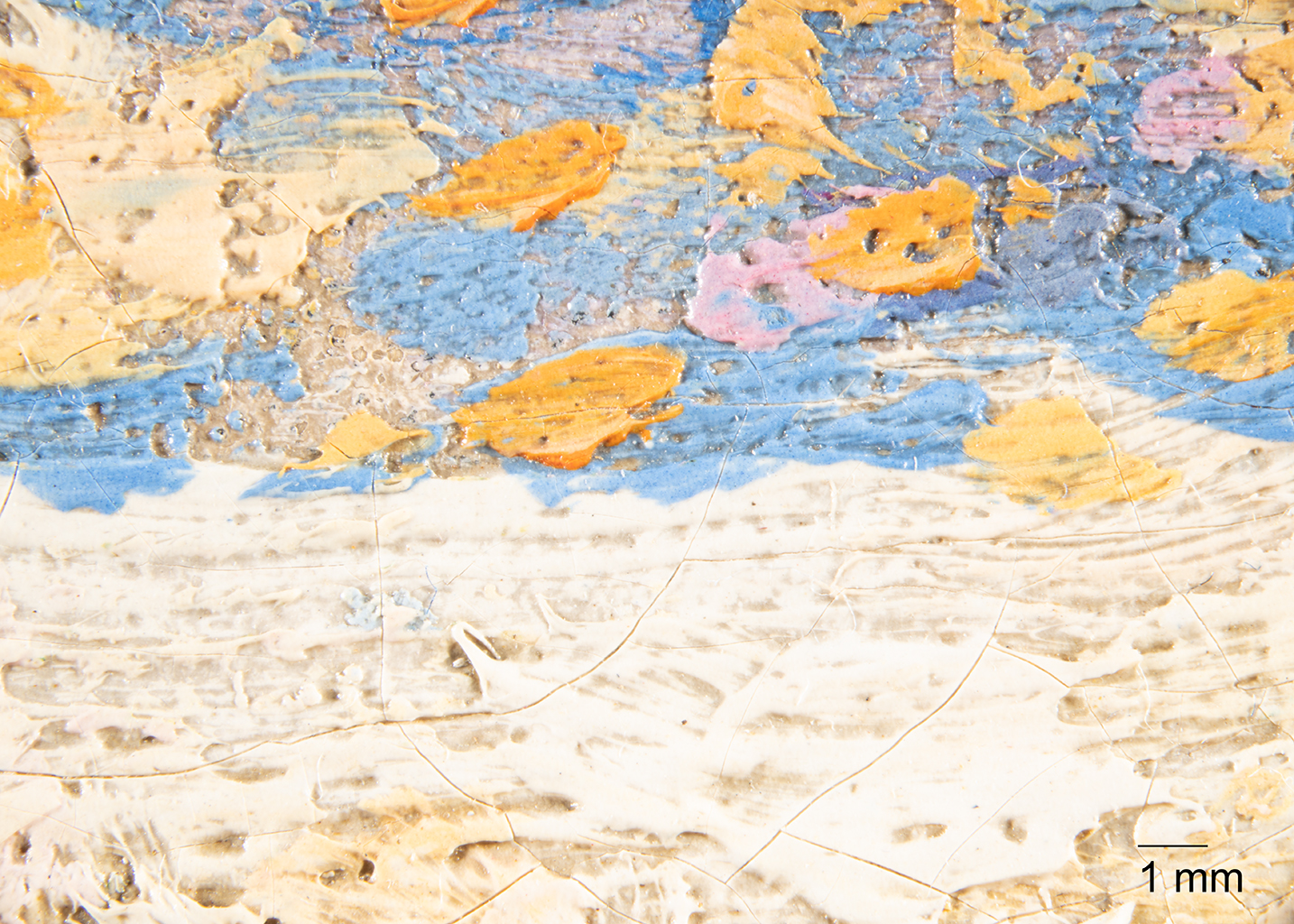 Fig 10. Photomicrograph of Portrieux, The Bathing Cabins, Opus 185 (Beach of the Countess) (1888), showing an example of wet-over-dry brushwork at the border between the sand and the cliff
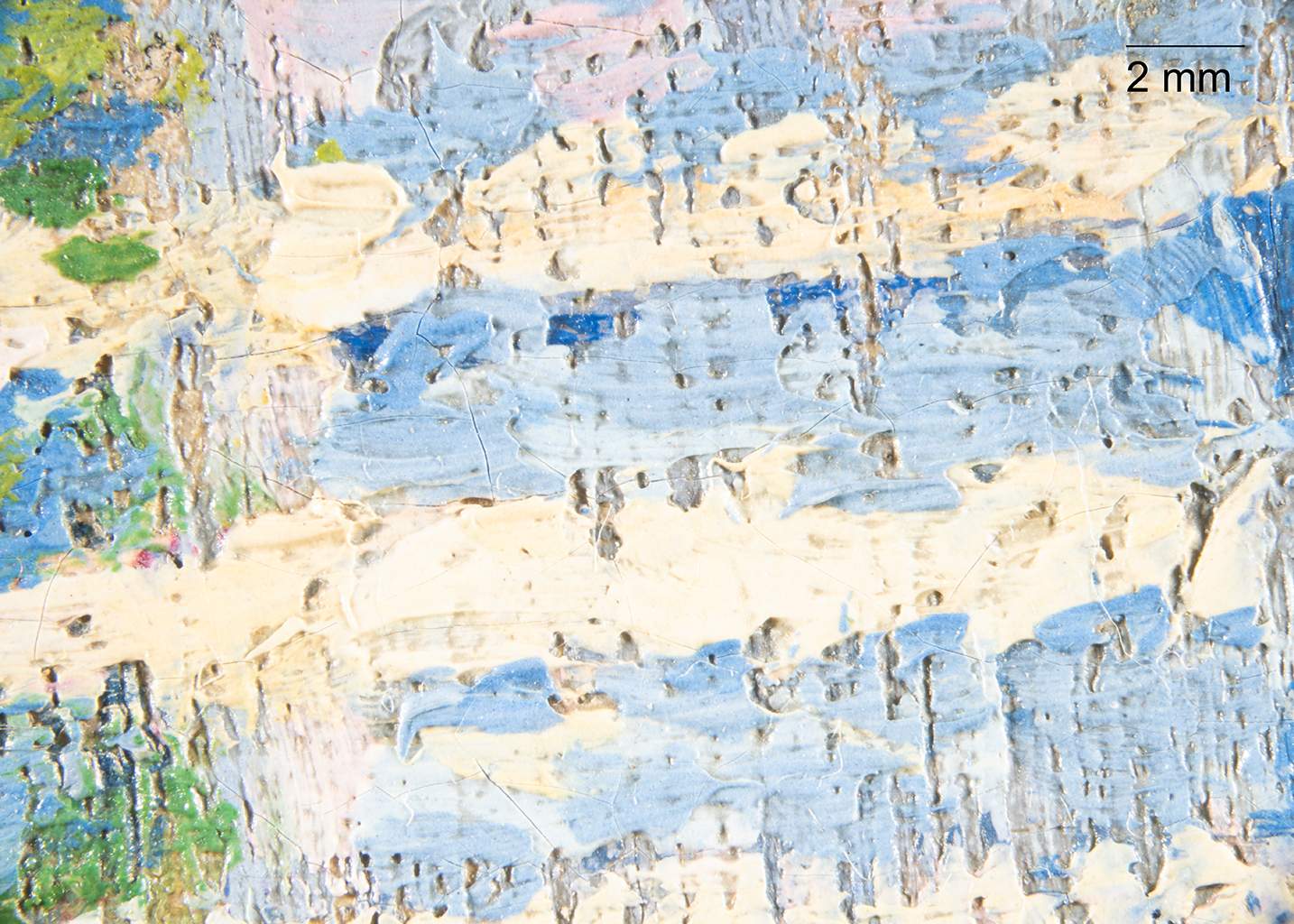 Fig. 11. Photomicrograph of Portrieux, The Bathing Cabins, Opus 185 (Beach of the Countess) (1888), showing blue and white horizontal strokes skipping over a dry vertical brushstroke with impasto
Much of Signac’s brushwork is wet-over-drywet-over-dry: An oil painting technique that involves layering paint over an already dried layer, resulting in no intermixing of paint or disruption to the lower paint strokes.. For example, orange dabs sit atop blue brushstrokes over nearly white paint, with no blending or disruption of the paint texture (Fig. 10). He applied paint dryly, resulting in skipping strokes which often show underlying brushwork or the ground layer. There is a clear example in the railing of the cabins in the upper right. Signac painted blue and white horizontal brushstrokes over a vertical stroke with heavy impastoimpasto: A thick application of paint, often creating texture such as peaks and ridges. (Fig. 11). There are several areas in which wet-over-wetwet-over-wet: An oil painting technique which involves drawing a stroke of one color across the wet paint of another color. painting has occurred, likely inadvertently. Some occurs in the sand, most noticeably when dissimilar colors, like pink and blue, are adjacent and mix together. There is also a surprising amount of blending and mixing at the lower left corner of the nearest bathing cabin (Fig. 12). The painting was signed “P. Signac 88” in the lower left corner in bright, divided dabs of opaque orange (Fig. 13a), and in the lower right corner, Signac added “Op. 185” in deep blue with a very thin brush (Fig. 13b).11For a brief description of Signac’s use of opus numbers, see Richard R. Brettell and Joachim Pissarro, Manet to Matisse: Impressionist Masters from the Marion and Henry Bloch Collection (Kansas City: Nelson-Atkins Museum of Art, 2007), 111.
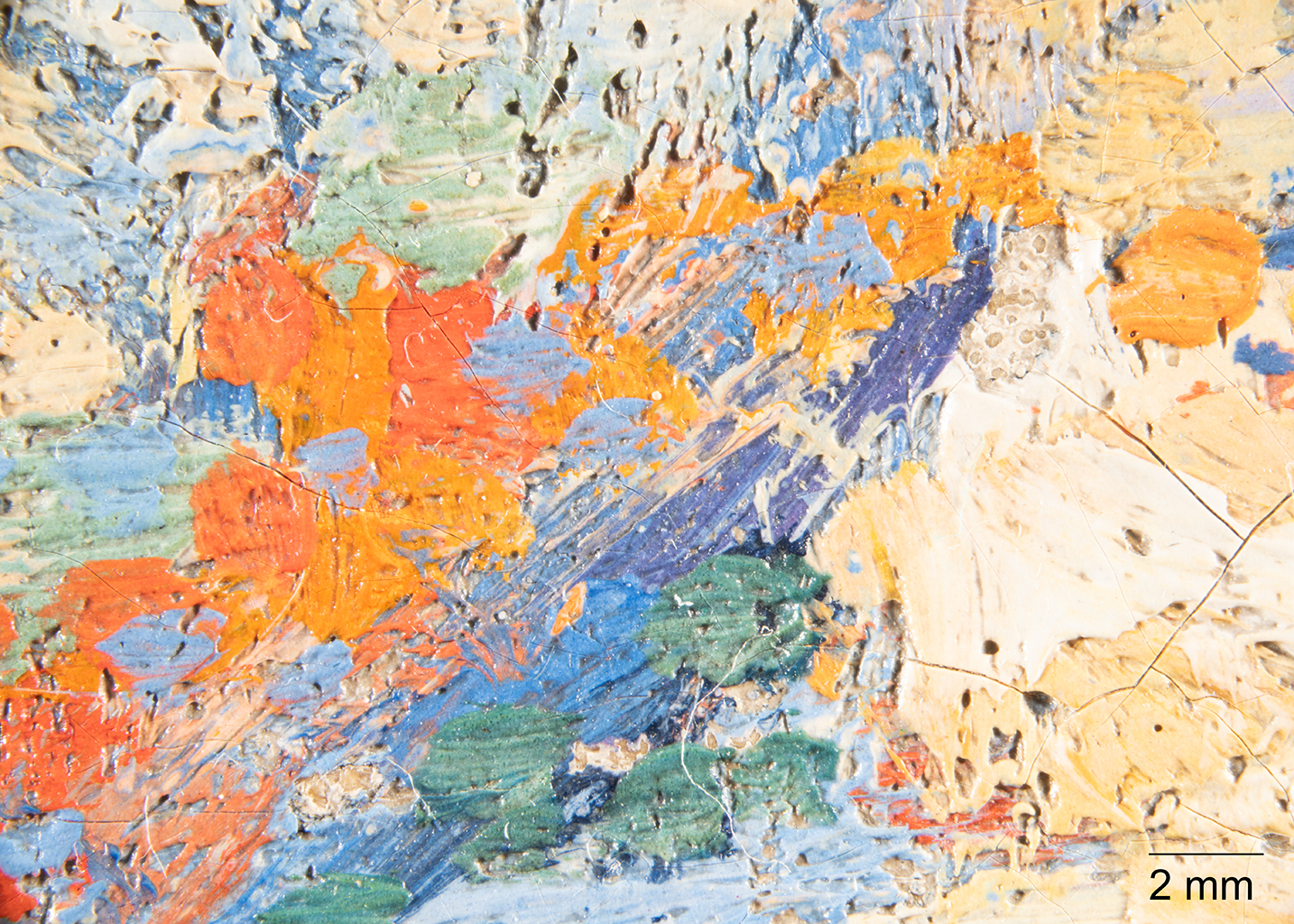 Fig. 12. Photomicrograph of the lower left corner of the nearest bathing cabin, showing wet-over-wet paint application and color mixture, Portrieux, The Bathing Cabins, Opus 185 (Beach of the Countess) (1888)
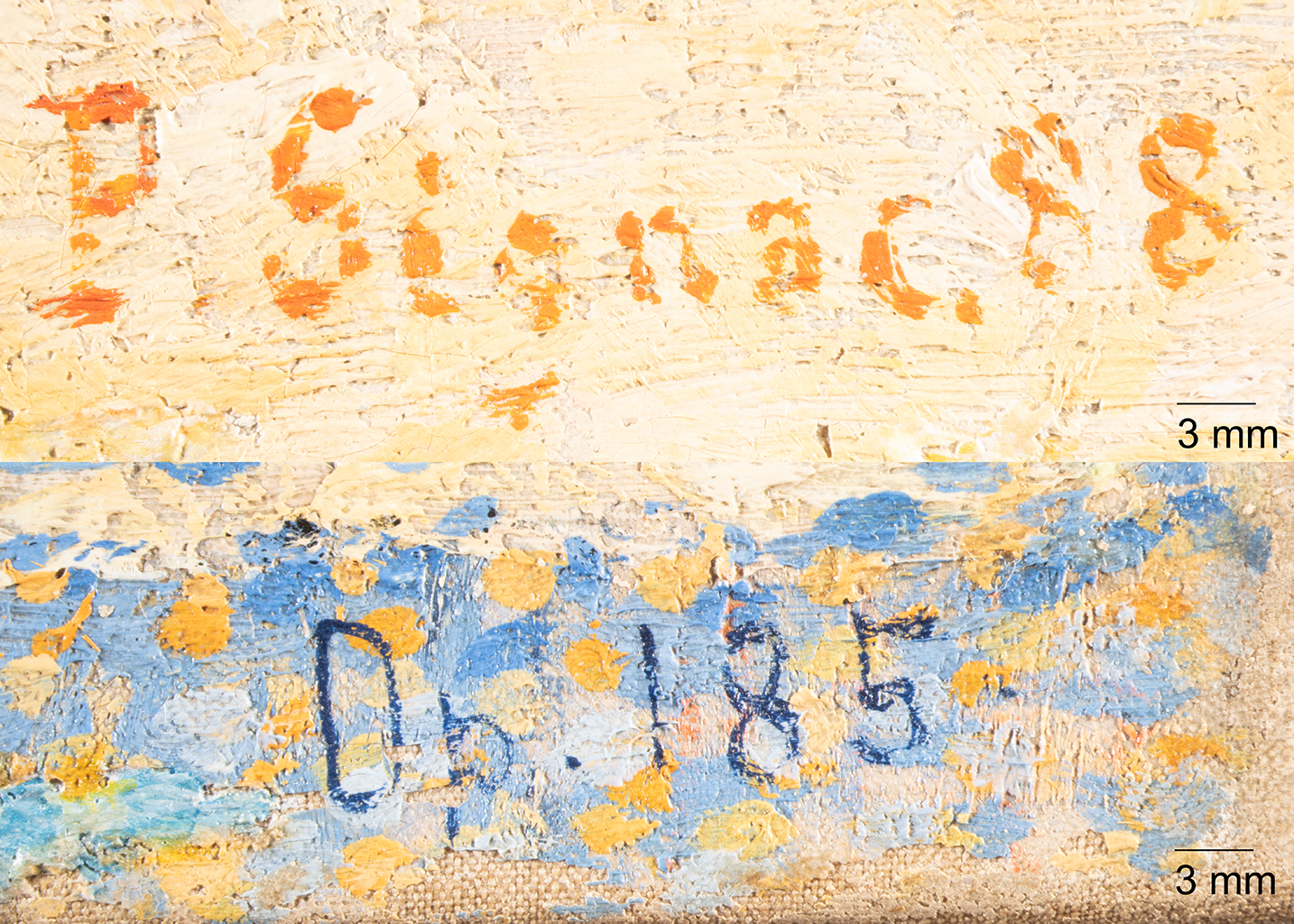 Figs. 13a-b. Photomicrographs of Portrieux, The Bathing Cabins, Opus 185 (Beach of the Countess) (1888), showing Signac’s signature in the lower left corner (top) and Signac’s opus number in the lower right corner (bottom)
The painting is in fair condition overall. Small splits and losses at the foldover edgefoldover edge: The point at which the canvas begins to wrap around the stretcher, at the junction between the picture plane and tacking margin. See also turnover edge. were stabilized by the edge lining. In the tacking margins, the ground layer is quite friablefriable: When paint is no longer sufficiently bound. Friable paint often appears powdery or crumbles easily. and actively powdering. There is cracking throughout the painting, but it is not obvious under normal viewing conditions. Mechanical crackingmechanical cracks: Cracks, either localized or overall, that form in response to movement or stress. along the foldover edge has led to lifting and loss of the paint and ground layer. Some of the losses have been previously filledfill material: A material added to a loss of paint and/or ground to create an area level with the surrounding original paint. and retouchedretouching: Paint application by a conservator or restorer to cover losses and unify the original composition. Retouching is an aspect of conservation treatment that is aesthetic in nature and that differs from more limited procedures undertaken solely to stabilize original material. Sometimes referred to as inpainting or retouch.;12Bailey, examination report, November 9, 1994, and treatment report, January 4, 1995, NAMA conservation file, 2015.13.23. others are untreated, showing bare canvas. Minor consolidation treatments have been undertaken to address instability, the most recent of which occurred in December 2025.13Susan Enterline, treatment report, December 3, 2025, and Mary Schafer, treatment report, May 24, 2007, NAMA conservation file, 2015.13.23. There are losses in the inscription in the lower right, and both inscriptions show some abrasionabrasion: A loss of surface material due to rubbing, scraping, frequent touching, or inexpert solvent cleaning. (see Fig. 13a-b). At some time in the painting’s history, it was harshly and unevenly cleaned. Areas of thin paint and exposed ground are abraded, exposing areas of bare canvas. Embedded grime remains on exposed ground and in interstices between brushstrokes.
There is a thin layer of varnish on the surface of the painting.14Solvent testing carried out by the author confirmed the varnish is a synthetic resin. Several documents describe the painting as unvarnished or having no surface film (Bailey, examination report, November 9, 1994; and Scott Heffley, acquisition report, May 29, 2015, NAMA conservation file, 2015.13.23), but it seems likely that it was varnished during the same treatment campaign in which it was edge lined. The paint film is probably damaged and undersaturated from its past overcleaning, and the thin coat of varnish helps to approximate its original appearance. Under normal viewing conditions, the surface appears matte but not chalky, although any specular illuminationspecular illumination: An examination technique in which light is reflected off an artwork’s surface in order to better visualize sheen variation, surface textures, and surface anomalies. reveals the gloss of the coating. The varnish remains in good condition with no visible discoloration. There are a handful of areas across the painting with yellow or brown resinous surface accretions. The dabs of paint below the accretions appear to have some associated deterioration or surface pitting. Some areas of flattened impasto and impressions in wet paint along the left and right edges indicate that the painting was placed in a frame before it was fully dry. Along the right edge, there is a buildup of wax on the surface of the paint with embedded gold-colored powder, likely related to its framing.
Notes
-
Forrest Bailey, examination report, November 9, 1994, NAMA conservation file, 2015.13.23.
-
See illustration 33 in Mark Bockrath and Barbara A. Buckley, “Historical and Original Stretchers and Strainers,” American Institute for Conservation (AIC) Wiki, accessed November 21, 2025, https://www.conservation-wiki.com
/wiki ./Stretchers _and _Strainers :_Materials _and _Equipment -
Tasset et L’Hôte operated from 1887 to 1899. Pascal Labreuche, “Tasset et Lhote,” Guide Labreuche: Guide historique des fournisseurs de matériel pour Artistes à Paris, 1790–1960, 2018, https://www.guide-labreuche.com
/en ./collection /businesses /tasset -et -lhote -
While the stamp is difficult to decipher, it visually matches Bourgeois Aîné’s mark of a “B” inside a horizontal diamond. Labreuche, “Bourgeois Aîné,” Guide Labreuche, https://www.guide-labreuche.com
/en ./collection /businesses /bourgeois -aine -
In the 1888 Bourgeois Aîné catalog, a no. 8 paysage measured 46 by 33 centimeters. See David Bomford, Jo Kirby, John Leighton, and Ashok Roy, Art in the Making: Impressionism (New Haven: Yale University Press, 1990), 46.
-
See the chronology in Marina Ferretti-Bocquillon, Anne Distel, John Leighton, and Susan Alyson Stein, Signac: 1863–1935, exh. cat. (New York: Metropolitan Museum of Art, 2001), 298.
-
Marina Ferretti-Bocquillon, “Signac: Drawings and Watercolors,” in Ferretti-Bocquillon et al., Signac: 1863–1935, 24.
-
Sjraar van Heugten, “Signac: The Graphic Worker,” in Ferretti-Bocquillon et al., Signac: 1863–1935, 33.
-
In an unpublished letter to Amédée Ozenfant (collection of Amédée Ozenfant, Cannes), Signac described his palette; quoted in Wiliam Innes Homer, Seurat and the Science of Painting (New York: Hacker Art Books, 1985), 151.
-
Homer describes balayé strokes as “swept over or crisscrossed,” and they were used often by Seurat. See Homer, Seurat and the Science of Painting, 60.
-
For a brief description of Signac’s use of opus numbers, see Richard R. Brettell and Joachim Pissarro, Manet to Matisse: Impressionist Masters from the Marion and Henry Bloch Collection (Kansas City: Nelson-Atkins Museum of Art, 2007), 111.
-
Bailey, examination report, November 9, 1994, and treatment report, January 4, 1995, NAMA conservation file, 2015.13.23.
-
Susan Enterline, treatment report, December 3, 2025, and Mary Schafer, treatment report, May 24, 2007, NAMA conservation file, 2015.13.23.
-
Solvent testing carried out by the author confirmed the varnish is a synthetic resin. Several documents describe the painting as unvarnished or having no surface film (Bailey, examination report, November 9, 1994; and Scott Heffley, acquisition report, May 29, 2015, NAMA conservation file, 2015.13.23), but it seems likely that it was varnished during the same treatment campaign in which it was edge lined. The paint film is probably damaged and undersaturated from its past overcleaning, and the thin coat of varnish helps to approximate its original appearance.
Documentation
Citation
Chicago:
Brigid M. Boyle, “Paul Signac, Portrieux, The Bathing Cabins, Opus 185 (Beach of the Countess), 1888,” documentation in French Paintings and Pastels, 1600–1945: The Collections of the Nelson-Atkins Museum of Art, ed. Aimee Marcereau DeGalan (Kansas City: The Nelson-Atkins Museum of Art, 2023), https://doi.org/10.37764/78973.5.730.4033.
MLA:
Boyle, Brigid M. “Paul Signac, Portrieux, The Bathing Cabins, Opus 185 (Beach of the Countess), 1888,” documentation. French Paintings and Pastels, 1600–1945: The Collections of The Nelson-Atkins Museum of Art, edited by Aimee Marcereau DeGalan, Nelson-Atkins Museum of Art, 2023. doi: 10.37764/78973.5.730.4033.
Provenance
Citation
Chicago:
Brigid M. Boyle, “Paul Signac, Portrieux, The Bathing Cabins, Opus 185 (Beach of the Countess), 1888,” documentation in French Paintings and Pastels, 1600–1945: The Collections of the Nelson-Atkins Museum of Art, ed. Aimee Marcereau DeGalan (Kansas City: The Nelson-Atkins Museum of Art, 2023), https://doi.org/10.37764/78973.5.730.4033.
MLA:
Boyle, Brigid M. “Paul Signac, Portrieux, The Bathing Cabins, Opus 185 (Beach of the Countess), 1888,” documentation. French Paintings and Pastels, 1600–1945: The Collections of The Nelson-Atkins Museum of Art, edited by Aimee Marcereau DeGalan, Nelson-Atkins Museum of Art, 2023. doi: 10.37764/78973.5.730.4033.
Paul Signac (1863–1935), Paris, 1888–no later than 1902;
Given by the artist to Paul Merme, Paris, by 1902 [1];
Dikran Garabed Kelekian (1868–1951), Paris and New York, by September 6, 1930–January 18, 1935 [2];
Purchased at his sale, Paintings, Watercolors, and Drawings of the Moderns: The Private Collection of Dikran G. Kelekian, Rains Galleries, New York, January 18, 1935, lot 36, as The Seashore [3];
Mollie Bragno (née Netcher, 1923–2002), Chicago [4];
With Richard L. Feigen and Co., Chicago, as La Plage, by 1959 [5];
Purchased from Feigen by Jerome Kane Ohrbach (1908–90), Los Angeles, 1959–June 28, 1990 [6];
Jerome K. Ohrbach Trust, 1990–November 8, 1994 [7];
Purchased from the Ohrbach Trust, through Richard L. Feigen and Co., New York, by Marion (née Helzberg, 1931–2013) and Henry (1922–2019) Bloch, Shawnee Mission, KS, November 8, 1994–June 15, 2015;
Their gift to The Nelson-Atkins Museum of Art, Kansas City, MO, 2015.
Notes
[1] During Signac’s lifetime, he created three chronological lists of his paintings: the cahier d’opus (compiled 1887–1902); the cahier manuscript (compiled 1902–1909); and the pré-catalogue (compiled 1929–1932). All three inventories mention a collector named Merme in connection with Portrieux, The Bathing Cabins, Opus 185 (Beach of the Countess). The cahier d’opus states that the painting was “offert à P. Merme” (given to P. Merme), indicating that this transaction must have taken place prior to 1902. The cahier manuscript and pré-catalogue both list “Merme” next to or beneath the painting’s title. See Archives Paul Signac, Paris.
Françoise Cachin identified this individual as “Paul Merme, Paris”; see Françoise Cachin, Signac: Catalogue raisonné de l’œuvre peint (Paris: Éditions Gallimard, 2000), no. 169, p. 188. Several people with this first and last name are known; one likely candidate is Paul Félix Merme (1847–1915), Inspecteur des services administratives et financiers de la marine et des colonies, but it has not been possible to confirm this connection.
[2] The painting belonged to Kelekian by 1930 because he lent it to the Stedelijk Museum, Amsterdam, for the exhibition Vincent van Gogh en zijn tijdgenoten (September 6–November 2, 1930). His descendants have no information about when he acquired the landscape or to whom he sold it in 1935; see letter from Françoise Cachin to Charles D. Kelekian, May 21, 1984, and letter from Nanette B. Kelekian to Françoise Cachin, May 29, 1984, Archives Paul Signac, Paris, copies in NAMA curatorial files.
[3] Founded by Samuel G. Rains (1872–1931), Rains Galleries was active from 1922 to 1937. Its records have not been located and are presumed lost. Multiple copies of the Rains Galleries sale catalogue are annotated with the purchase price, but none of them record the buyer’s name.
[4] Married three times over the course of her life, Bragno died single and childless. Her parents, Charles Netcher Jr. (1892–1931) and Gladys Netcher (née Oliver, 1892–1947), collected art and donated certain objects to the Art Institute of Chicago, but there is no evidence that they owned Portrieux, The Bathing Cabins, Opus 185 prior to their daughter. Bragno’s living relatives have no information about her collection. See email from Maria Stave, niece of Mollie Bragno, to Brigid M. Boyle, NAMA, August 9, 2022, NAMA curatorial files.
[5] Encapsulated on the backing board is a Richard L. Feigen and Co. label for “Paul Signac, La Plage, 1888” bearing the address “1444 Astor Street, Chicago 10, Illinois.” No stock number is listed for the painting. Feigen opened his Chicago gallery in 1957, so he must have acquired Portrieux, The Bathing Cabins, Opus 185 between 1957 and 1959.
[6] For the year of acquisition, see The Collection of Jerome K. Ohrbach (New York: Sotheby’s, November 13, 1990), lot 10. Richard L. Feigen and Co. was unable to confirm their exact date of sale to Ohrbach in 1959. See emails between Brigid M. Boyle, NAMA, and Cynthia Conti, Richard L. Feigen and Co., August 9–10, 2022, NAMA curatorial files.
[7] This painting was offered for sale by the Jerome K. Ohrbach Trust at The Collection of Jerome K. Ohrbach, Sotheby’s, New York, November 13, 1990, lot 10, but failed to sell. The Ohrbach Trust subsequently placed the painting on consignment with Richard L. Feigen and Co. from December 3, 1993 to November 8, 1994. To our knowledge, Sotheby’s did not have a part interest in the painting’s eventual sale. See email from Emelia Scheidt, Richard L. Feigen and Co., to Meghan Gray, NAMA, April 13, 2015, and email from Cynthia Conti, Richard L. Feigen and Co., to Brigid M. Boyle, NAMA, August 16, 2022, NAMA curatorial files.
Related Works
Citation
Chicago:
Brigid M. Boyle, “Paul Signac, Portrieux, The Bathing Cabins, Opus 185 (Beach of the Countess), 1888,” documentation in French Paintings and Pastels, 1600–1945: The Collections of the Nelson-Atkins Museum of Art, ed. Aimee Marcereau DeGalan (Kansas City: The Nelson-Atkins Museum of Art, 2023), https://doi.org/10.37764/78973.5.730.4033.
MLA:
Boyle, Brigid M. “Paul Signac, Portrieux, The Bathing Cabins, Opus 185 (Beach of the Countess), 1888,” documentation. French Paintings and Pastels, 1600–1945: The Collections of The Nelson-Atkins Museum of Art, edited by Aimee Marcereau DeGalan, Nelson-Atkins Museum of Art, 2023. doi: 10.37764/78973.5.730.4033.
Paul Signac, Portrieux, The Jetty, Gray Weather, Opus 180, 1888, oil on canvas, 18 1/8 x 25 9/16 in. (46 x 65 cm), Kröller-Müller Museum, Otterlo, The Netherlands, KM 108.323.
Paul Signac, Portrieux, Gouverlo, Opus 181, 1888, oil on canvas, 18 3/16 x 21 7/8 in. (46.2 x 55.5 cm), Hiroshima Museum of Art.
Paul Signac, Portrieux, Masts, Opus 182, 1888, oil on canvas, 18 1/8 x 25 9/16 in. (46 x 65 cm), whereabouts unknown, illustrated in Paul Signac (New York: Parkstone Press International, 2013), unpaginated.
Paul Signac, Portrieux, The Lighthouse, Opus 183, 1888, oil on canvas, 18 1/8 x 25 9/16 in. (46 x 65 cm), Kröller-Müller Museum, Otterlo, The Netherlands, KM 104.721.
Paul Signac, Portrieux, The Port, Setting Sun, Opus 184, 1888, oil on canvas, 13 x 18 1/8 in. (33 x 46 cm), whereabouts unknown, illustrated in Françoise Cachin, Signac: Catalogue raisonné de l’œuvre peint (Paris: Éditions Gallimard, 2000), no. 168, p. 188.
Paul Signac, Portrieux, Tertre Denis, Opus 189, 1888, oil on canvas, 25 9/16 x 31 7/8 in. (65 x 81 cm), The Phillips Family Collection, United States.
Paul Signac, Portrieux, The Swell, Opus 190, 1888, oil on canvas, 24 x 36 1/4 in. (61 x 92 cm), Staatsgalerie Stuttgart, Inv. Nr. 2698.
Paul Signac, Portrieux, The Port (study), 1888, oil on panel, 5 7/8 x 9 13/16 in. (15 x 25 cm), whereabouts unknown, illustrated in Françoise Cachin, Signac: Catalogue raisonné de l’œuvre peint (Paris: Éditions Gallimard, 2000), no. 173, p. 189.
Paul Signac, Portrieux, The Port (study), 1888, oil on panel, 5 7/8 x 9 13/16 in. (15 x 25 cm), The Fitzwilliam Museum, University of Cambridge, PD.9-1959.
Paul Signac, Portrieux, The Port (study), 1888, oil on panel, 6 5/16 x 9 7/16 in. (16 x 24 cm), whereabouts unknown, illustrated in Françoise Cachin, Signac: Catalogue raisonné de l’œuvre peint (Paris: Éditions Gallimard, 2000), no. 175, p. 190.
Paul Signac, Portrieux, The Port (study), 1888, oil on panel, 5 7/8 x 9 13/16 in. (15 x 25 cm), private collection, Paris.
Paul Signac, Portrieux, The Countess, Opus 191, 1888, oil on canvas, 23 3/4 x 36 1/4 in. (60.3 x 92.1 cm), whereabouts unknown, illustrated in The Collection of Peggy and David Rockefeller, vol. 1, 19th and 20th Century Art Evening Sale (New York: Christie’s, May 8, 2018), 161–62.
Paul Signac, Portrieux, The Countess (study), 1888, oil on panel, 5 7/8 x 9 13/16 in. (15 x 25 cm), whereabouts unknown, illustrated in Françoise Cachin, Signac: Catalogue raisonné de l’œuvre peint (Paris: Éditions Gallimard, 2000), no. 178, p. 190.
Preparatory Work
Citation
Chicago:
Brigid M. Boyle, “Paul Signac, Portrieux, The Bathing Cabins, Opus 185 (Beach of the Countess), 1888,” documentation in French Paintings and Pastels, 1600–1945: The Collections of the Nelson-Atkins Museum of Art, ed. Aimee Marcereau DeGalan (Kansas City: The Nelson-Atkins Museum of Art, 2023), https://doi.org/10.37764/78973.5.730.4033.
MLA:
Boyle, Brigid M. “Paul Signac, Portrieux, The Bathing Cabins, Opus 185 (Beach of the Countess), 1888,” documentation. French Paintings and Pastels, 1600–1945: The Collections of The Nelson-Atkins Museum of Art, edited by Aimee Marcereau DeGalan, Nelson-Atkins Museum of Art, 2023. doi: 10.37764/78973.5.730.4033. s
Paul Signac, Portrieux, The Countess (study), 1888, oil on panel, 6 1/8 x 9 3/4 in. (15.5 x 24.8 cm), whereabouts unknown, illustrated in Richard R. Brettell and Joachim Pissarro, Manet to Matisse: Impressionist Masters from the Marion and Henry Bloch Collection, exh. cat. (Kansas City, MO: Nelson-Atkins Museum of Art, 2007), 110.
Exhibitions
Citation
Chicago:
Brigid M. Boyle, “Paul Signac, Portrieux, The Bathing Cabins, Opus 185 (Beach of the Countess), 1888,” documentation in French Paintings and Pastels, 1600–1945: The Collections of the Nelson-Atkins Museum of Art, ed. Aimee Marcereau DeGalan (Kansas City: The Nelson-Atkins Museum of Art, 2023), https://doi.org/10.37764/78973.5.730.4033.
MLA:
Boyle, Brigid M. “Paul Signac, Portrieux, The Bathing Cabins, Opus 185 (Beach of the Countess), 1888,” documentation. French Paintings and Pastels, 1600–1945: The Collections of The Nelson-Atkins Museum of Art, edited by Aimee Marcereau DeGalan, Nelson-Atkins Museum of Art, 2023. doi: 10.37764/78973.5.730.4033. s
Sixième exposition de la Société des Artistes indépendants, Pavillon de la Ville de Paris, March 20–April 27, 1890, no. 741, as La mer—De Portrieux (Côtes-du-Nord), juin, juillet, août, septembre 1888, Op. 185.
Vincent van Gogh en zijn tijdgenoten, Stedelijk Museum, Amsterdam, September 6–November 2, 1930, no. 280, as Het strand.
Manet to Matisse: Impressionist Masters from the Marion and Henry Bloch Collection, The Nelson-Atkins Museum of Art, Kansas City, MO, June 9–September 9, 2007, no. 20, as Portrieux, The Bathing Cabins, Opus 185 (Beach of the Countess) (Portrieux, les cabines, Opus 185 [Plage de la comtesse]).
References
Citation
Chicago:
Brigid M. Boyle, “Paul Signac, Portrieux, The Bathing Cabins, Opus 185 (Beach of the Countess), 1888,” documentation in French Paintings and Pastels, 1600–1945: The Collections of the Nelson-Atkins Museum of Art, ed. Aimee Marcereau DeGalan (Kansas City: The Nelson-Atkins Museum of Art, 2023), https://doi.org/10.37764/78973.5.730.4033.
MLA:
Boyle, Brigid M. “Paul Signac, Portrieux, The Bathing Cabins, Opus 185 (Beach of the Countess), 1888,” documentation. French Paintings and Pastels, 1600–1945: The Collections of The Nelson-Atkins Museum of Art, edited by Aimee Marcereau DeGalan, Nelson-Atkins Museum of Art, 2023. doi: 10.37764/78973.5.730.4033.
Société des Artistes indépendants: Peintres, sculpteurs, graveurs, dessinateurs et architectes; Catalogue des œuvres exposées, exh. cat. (Paris: Imprimerie A. Lahure, 1890), 37 [repr., in Theodore Reff, ed., Modern Art in Paris: Two-Hundred Catalogues of the Major Exhibitions Reproduced in Facsimile in Forty-Seven Volumes, vol. 9, Salons of the “Indépendants” 1884–1891 (New York: Garland, 1981), unpaginated], as La mer—De Portrieux (Côtes-du-Nord), juin, juillet, août, septembre 1888, Op. 185.
Jules Christophe, “Causerie: L’Impressionnisme; L’exposition des artistes indépendants,” Journal des artistes, no. 13 (April 6, 1890): 102.
Gustave Geffroy, “Chronique d’art: Indépendants,” La Revue d’Aujourd’hui 1, no. 4 (April 15, 1890): 270.
J[ulien] L[eclercq], “Beaux-arts: Aux Indépendants,” Mercure de France 1, no. 5 (May 1890): 175.
Gustave Coquiot, Les indépendants: 1884–1920 (Paris: Librairie Ollendorff, [1921]), 14.
Vincent van Gogh en zijn tijdgenooten, exh. cat. (Amsterdam: Stedelijk Museum, 1930), 98, as Het strand.
Paintings, Watercolors, and Drawings of the Moderns: The Private Collection of Dikran G. Kelekian, Esq. (New York: Rains Galleries, January 18, 1935), 16, (repro.), as The Seashore.
Marie-Thérèse Lemoyne de Forges, Signac, exh. cat. (Paris: Ministère d’état, Affaires culturelles, 1963), 29.
Sophie Monneret, L’impressionnisme et son époque: Dictionnaire international illustré (Paris: Editions Denoël, 1979), 2:256.
Peter J. Flagg, “The Neo-Impressionist Landscape” (PhD diss., Princeton University, 1988), 131–32.
The Collection of Jerome K. Ohrbach (New York: Sotheby’s, November 13, 1990), unpaginated, (repro.), as La Plage.
Françoise Cachin, Signac: Catalogue raisonné de l’œuvre peint (Paris: Éditions Gallimard, 2000), no. 169, pp. 188, 356, 358, (repro.), as Portrieux. Les Cabines. Opus 185 (plage de la Comtesse).
Marina Ferretti-Bocquillon et al., Signac, 1863–1935, exh. cat. (New York: Metropolitan Museum of Art, 2001), 133, 303.
Anne Distel, Signac: Au temps d’harmonie, exh. cat. (Paris: Gallimard / Réunion des musées nationaux, 2001), 47.
Françoise Cachin and Marina Ferretti-Bocquillon, P. Signac, exh. cat. (Paris: A.D.A.G.P., 2003), 48, 262, as Portrieux. Les Cabines.
Jane Munro, French Impressionists (Cambridge: Cambridge University Press, 2003), 132.
Robyn Roslak, “Symphonic Seas, Oceans of Liberty: Paul Signac’s La Mer: Les Barques (Concarneau),” Nineteenth-Century Art Worldwide 4, no. 1 (Spring 2005): 39n11, http://19thc-artworldwide.org/index.php/component/content/article/64-spring05article/302-symphonic-seas-oceans-of-liberty-paul-signacs-la-mer-les-barques-concarneau.
Richard R. Brettell and Joachim Pissarro, Manet to Matisse: Impressionist Masters from the Marion and Henry Bloch Collection, exh. cat. (Kansas City, MO: Nelson-Atkins Museum of Art, 2007), 11, 16–17, 108–11, 159–60, (repro.), as Portrieux, The Bathing Cabins, Opus 185 (Beach of the Countess) (Portrieux, Les cabines, Opus 185 [Plage de la comtesse]).
Alice Thorson, “A Tiny Renoir Began Impressive Obsession,” Kansas City Star 127, no. 269 (June 3, 2007): E4–E5.
Louise Pollock Gruenebaum, “Letters: Bloch Building,” Kansas City Star 127, no. 272 (June 16, 2007): B10.
Marina Ferretti Bocquillon, Georges Seurat, Paul Signac e i neoimpressionisti, exh. cat. (Milan: Skira, 2008), 234.
Alice Thorson, “Blochs add to Nelson treasures,” Kansas City Star 130, no. 141 (February 5, 2010): A1, A8.
Carol Vogel, “O! Say, You Can Bid on a Johns,” New York Times 159, no. 54,942 (February 5, 2010): C26.
Alice Thorson, “Gift will leave lasting impression,” Kansas City Star 130, no. 143 (February 7, 2010): G1–G2.
Thomas M. Bloch, Many Happy Returns: The Story of Henry Bloch, America’s Tax Man (Hoboken: John Wiley and Sons, 2011), 174–75.
Diane Stafford, “Bloch gift to go for Nelson upgrade,” Kansas City Star 135, no. 203 (April 8, 2015): A1, A8.
“Nelson-Atkins Museum of Art officially accessions Bloch Impressionist masterpieces,” Artdaily.org (July 25, 2015): http://artdaily.com/news/80246/Nelson-Atkins-Museum-of-Art-officially-accessions-Bloch-Impressionist-masterpieces.
Julie Paulais, “Le Nelson-Atkins Museum of Art reçoit des tableaux impressionnistes en échange de leurs répliques,” Le Journal des arts (July 30, 2015): https://www.lejournaldesarts.fr/patrimoine/le-nelson-atkins-museum-art-recoit-des-tableaux-impressionnistes-en-echange-de-leurs.
Josh Niland, “The Nelson-Atkins Museum of Art Acquires a Renowned Collection of Impressionist and Postimpressionist Art,” architecturaldigest.com (July 31, 2015): https://www.architecturaldigest.com/story/nelson-atkins-museum-accessions-bloch-art-collection.
Nancy Staab, “Van Gogh is a Go!” 435: Kansas City’s Magazine (September 2015): 76.
Marianne Jakobi, Gauguin-Signac: La genèse du titre contemporain (Paris: CNRS Éditions, 2015), 259, (repro.), as Op. 185 and Portrieux, Les Cabines, Opus 185.
Seurat, Van Gogh, Mondrian: Il post-impressionismo in Europa, exh. cat. (Milan: 24 ORE Cultura, 2015), 66.
“Nelson-Atkins to unveil renovated Bloch Galleries of European Art in winter 2017,” Artdaily.org (July 20, 2016): http://artdaily.com/news/88852/Nelson-Atkins-to-unveil-renovated-Bloch-Galleries-of-European-Art-in-winter-2017-.
“Nelson-Atkins Museum of Art celebrates generosity of Henry Bloch with new acquisition,” Artdaily.org (October 18, 2016): https://artdaily.cc/news/90923/Nelson-Atkins-Museum-of-Art-celebrates-generosity-of-Henry-Bloch-with-new-acquisition#.XnKATqhKiUk.
Catherine Futter et al., Bloch Galleries: Highlights from the Collection of the Nelson-Atkins Museum of Art (Kansas City, MO: Nelson-Atkins Museum of Art, 2016), 100, (repro.), as Portrieux, The Bathing Cabins, Opus 185 (Beach of the Countess).
Kelly Crow, “Museum Rewards Donor with Fake Art to Hang at Home,” Wall Street Journal (January 25, 2017): https://www.wsj.com/articles/museum-rewards-donor-with-fake-art-to-hang-at-home-1485370768.
David Frese, “Bloch savors paintings in redone galleries,” Kansas City Star (February 25, 2017): 1A, 14A.
Albert Hecht, “Henry Bloch’s Masterpieces Collection to Go On Display at Nelson-Atkins Museum,” Jewish Business News (February 26, 2017): http://jewishbusinessnews.com/2017/02/26/henry-bloch-masterpieces-collection/.
David Frese, “A collection of stories,” and “Inside the Bloch Galleries: An interactive experience,” Kansas City Star 137, no. 169 (March 5, 2017): 1D, 4D, (repro.), as Portrieux, the Bathing Cabins, Opus 185 (Beach of the Countess).
“Editorial: Thank you, Henry and Marion Bloch,” Kansas City Star (March 7, 2017), http://www.kansascity.com/opinion/editorials/article137040948.html [repr., in “Thank you, Henry and Marion Bloch,” Kansas City Star 137, no. 172 (March 8, 2017): 16A].
Hampton Stevens, “(Not Actually) 12 Things To Do During The Big 12 Tournament,” Flatland: KCPT’s Digital Magazine (March 9, 2017): http://www.flatlandkc.org/arts-culture/sports/not-actually-12-big-12-tournament/.
Laura Spencer, “The Nelson-Atkins’ Bloch Galleries Feature Old Masterworks and New Technology,” KCUR (March 10, 2017): http://kcur.org/post/nelson-atkins-bloch-galleries-feature-old-masterworks-and-new-technology#stream/0.
Victoria Stapley-Brown, “Nelson-Atkins Museum’s new European art galleries come with a ‘love story,’” Art Newspaper (March 10, 2017): http://theartnewspaper.com/news/museums/nelson-atkins-museum-s-new-european-art-galleries-come-with-a-love-story/.
Harry Bellet, “Don du ciel pour le Musée Nelson-Atkins,” Le Monde (March 13, 2017): http://theartnewspaper.com/news/museums/nelson-atkins-museum-s-new-european-art-galleries-come-with-a-love-story/.
Menachem Wecker, “Jewish Philanthropist Establishes Kansas City as Cultural Mecca,” Forward (March 14, 2017): http://forward.com/culture/365264/jewish-philanthropist-establishes-kansas-city-as-cultural-mecca// [repr., in Menachem Wecker, “Kansas City Collection Is A Chip Off the Old Bloch,” Forward (March 17, 2017): 20–22].
Juliet Helmke, “The Bloch Collection Takes up Residence in Kansas City’s Nelson Atkins Museum,” Blouin ArtInfo International (March 15, 2017): http://www.blouinartinfo.com/news/story/2005267/the-bloch-collection-takes-up-residence-in-kansas-citys.
Louise Nicholson, “How Kansas City got its magnificent museum,” Apollo: The International Art Magazine (April 7, 2017): https://www.apollo-magazine.com/how-kansas-city-got-its-magnificent-museum/.
Lilly Wei, “Julián Zugazagoitia: ‘Museums should generate interest and open a door that leads to further learning,’” Studio International (August 21, 2017): http://studiointernational.com/index.php/julian-zugazagoitia-director-nelson-atkins-museum-of-art-kansas-city-interview.
Vivien Greene, ed., Paris, Fin de Siècle: Signac, Redon, Toulouse-Lautrec, y sus Contemporáneos, exh. cat. (Bilbao: Guggenheim Bilbao, 2017), 12.
The Collection of Peggy and David Rockefeller, vol. 1, 19th and 20th Century Art Evening Sale (New York: Christie’s, May 8, 2018), 352, 354.
Robert D. Hershey Jr., “Henry Bloch, H&R Block’s cofounder, dies at 96,”
Boston Globe (April 23, 2019):
https://www3.bostonglobe.com
Robert D. Hershey Jr., “Henry W. Bloch, Tax-Preparation Pioneer (and Pitchman), Is Dead at 96,” New York Times (April 23, 2019): https://www.nytimes.com/2019/04/23/obituaries/henry-w-bloch-dead.html.
Megan McDonough, “Henry Bloch, whose H&R Block became world’s largest
tax-services provider, dies at 96,” Washington Post (April 23, 2019):
https://www.washingtonpost.com
Claire Selvin, “Henry Wollman Bloch, Collector and Prominent Benefactor of Nelson-Atkins Museum of Art, Is Dead at 96,” ArtNews (April 23, 2019): http://www.artnews.com/2019/04/23/henry-bloch-dead-96/.
Eric Adler and Joyce Smith, “Henry Bloch, co-founder of H&R Block, dies at 96,” Kansas City Star 139, no. 219 (April 24, 2019): 1A, 2A.
“Henry Wollman Bloch (1922–2019),” Artforum (April 24, 2019): https://www.artforum.com/news/henry-wollman-bloch-1922-2019-79547.
Frank Morris, “Henry Bloch, Co-Founder Of H&R Block, Dies At 96,” NPR (April 24, 2019): https:www.npr.org/2019/04/24/716641448/henry-bloch-co-founder-of-h-r-block-dies-at-96.
Ignacio Villarreal, “Nelson-Atkins mourns loss of Henry Bloch,” ArtDaily.org (April 24, 2019): https://artdaily.com/news/113035/Nelson-Atkins-mourns-loss-of-Henry-Bloch#.XMB76qR7laQ.
Eric Adler and Joyce Smith, “H&R Block co-founder, philanthropist Bloch dies,” Cass County Democrat Missourian 140, no. 29 (April 26, 2019): 1A.
Eric Adler and Joyce Smith, “KC businessman and philanthropist Henry Bloch dies,” Lee’s Summit Journal 132, no. 79 (April 26, 2019): 1A.
Luke Nozicka, “Family and friends remember Henry Bloch of H&R Block,” Kansas City Star 139, no. 225 (April 30, 2019): 4A [repr., in Luke Nozicka, “Family and friends remember Henry Bloch of H&R Block,” Kansas City Star 139, no. 228 (May 3, 2019): 3A].
Eric Adler, “Sold for $3.25 million, Bloch’s home in Mission Hills may be torn down,” Kansas City Star 141, no. 90 (December 16, 2020): 2A.
Kristie C. Wolferman, The Nelson-Atkins Museum of Art: A History (Columbia: University of Missouri Press, 2020), 345.
Marina Ferretti Bocquillon, Paul Signac, l’air du large, exh. cat. (Rouen: Éditions des Falaises, 2021), 78, (repro.), as Portrieux. Les Cabines; Opus 185.
Paul Signac, Journal: 1894–1909, ed. Charlotte Hellman (Paris: Gallimard, 2021), 184n374.