Chicago
Aimee Marcereau DeGalan, Editor, French Paintings and Pastels, 1600–1945: The Collections of the Nelson-Atkins Museum of Art (Kansas City: The Nelson-Atkins Museum of Art, 2021–2025), https://doi.org/10.37764/78973.
MLA
Marcereau DeGalan, Aimee. Editor. French Paintings and Pastels, 1600–1945: The Collections of the Nelson-Atkins Museum of Art. The Nelson-Atkins Museum of Art, 2021–2025. doi: 10.37764/78973.
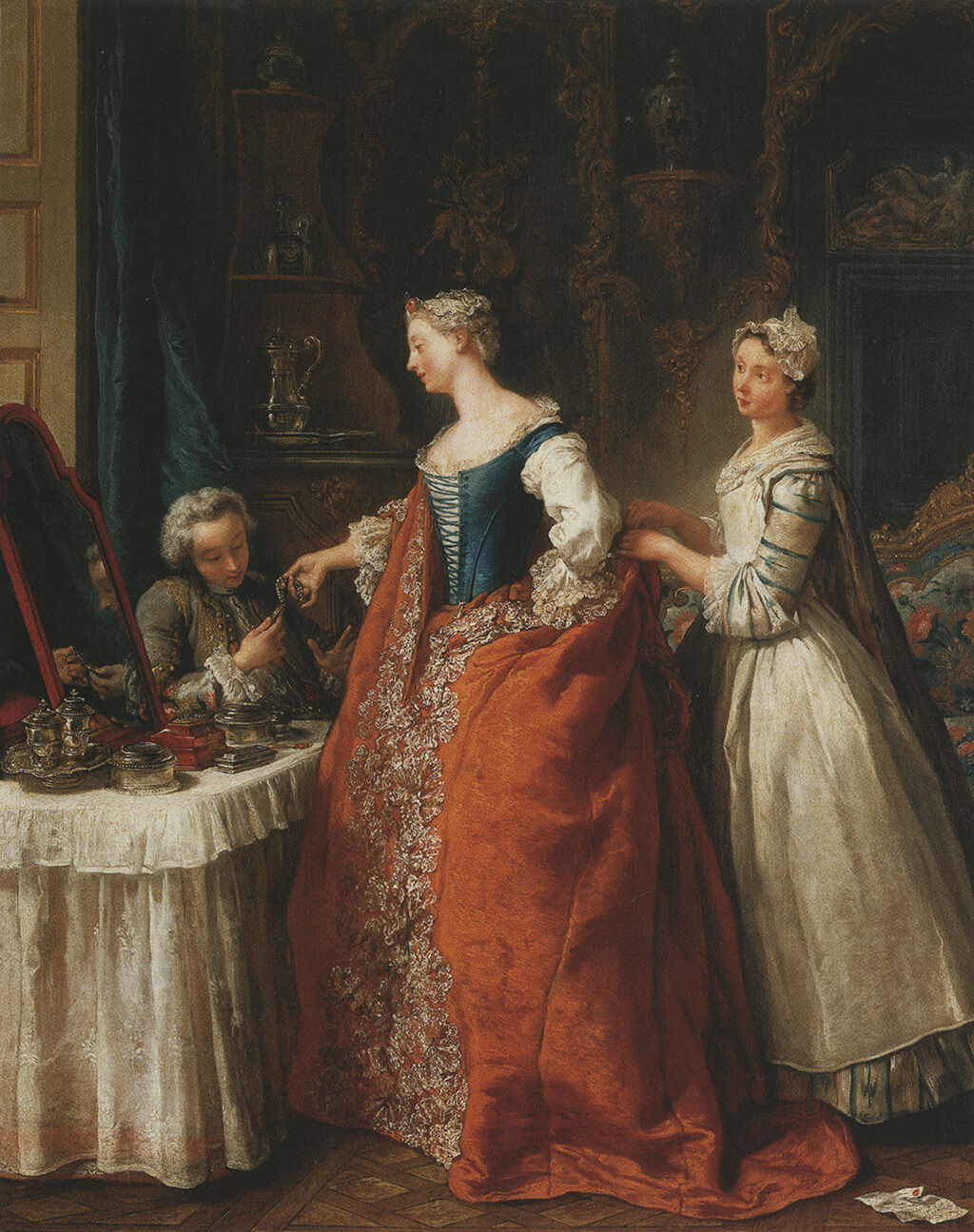
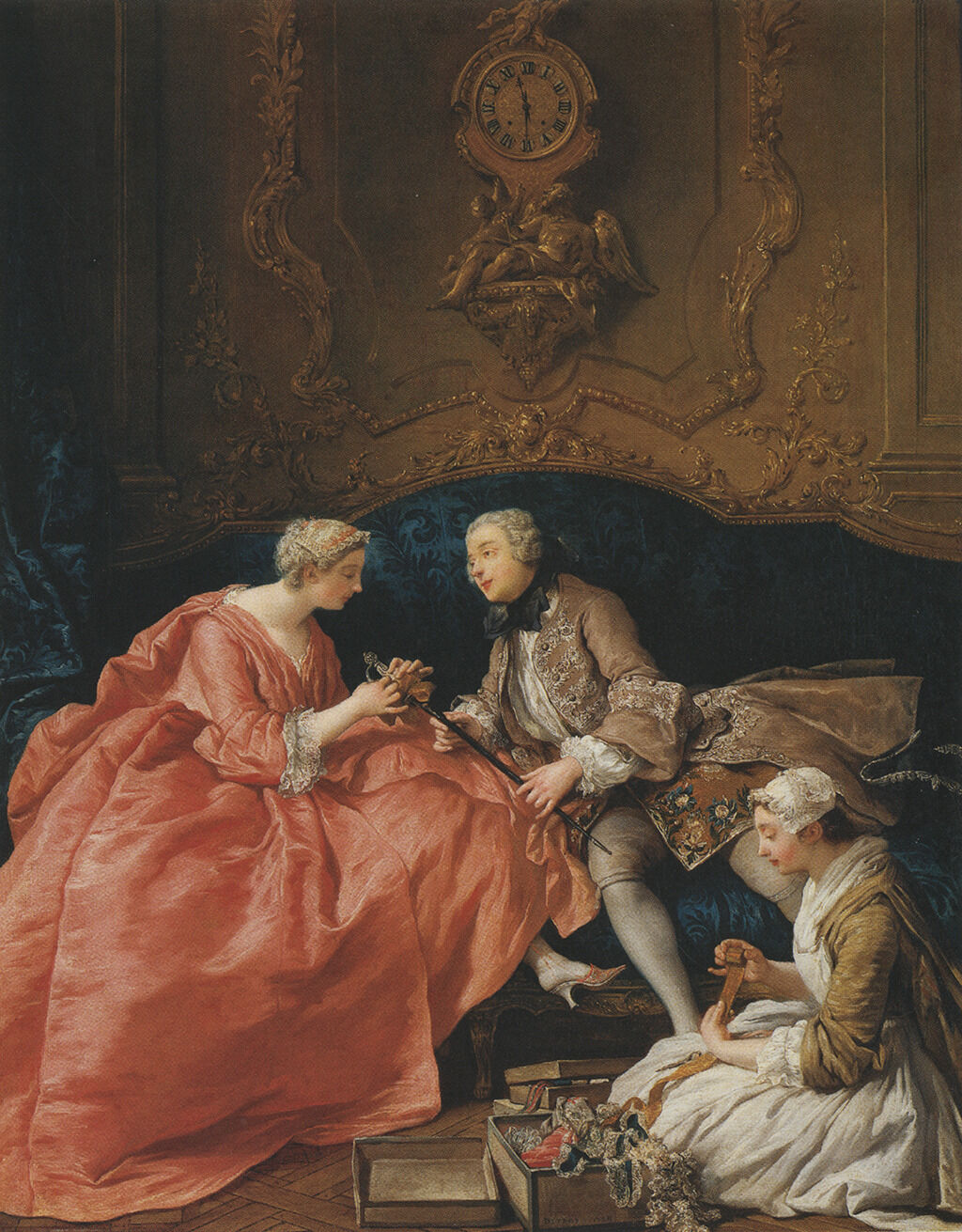
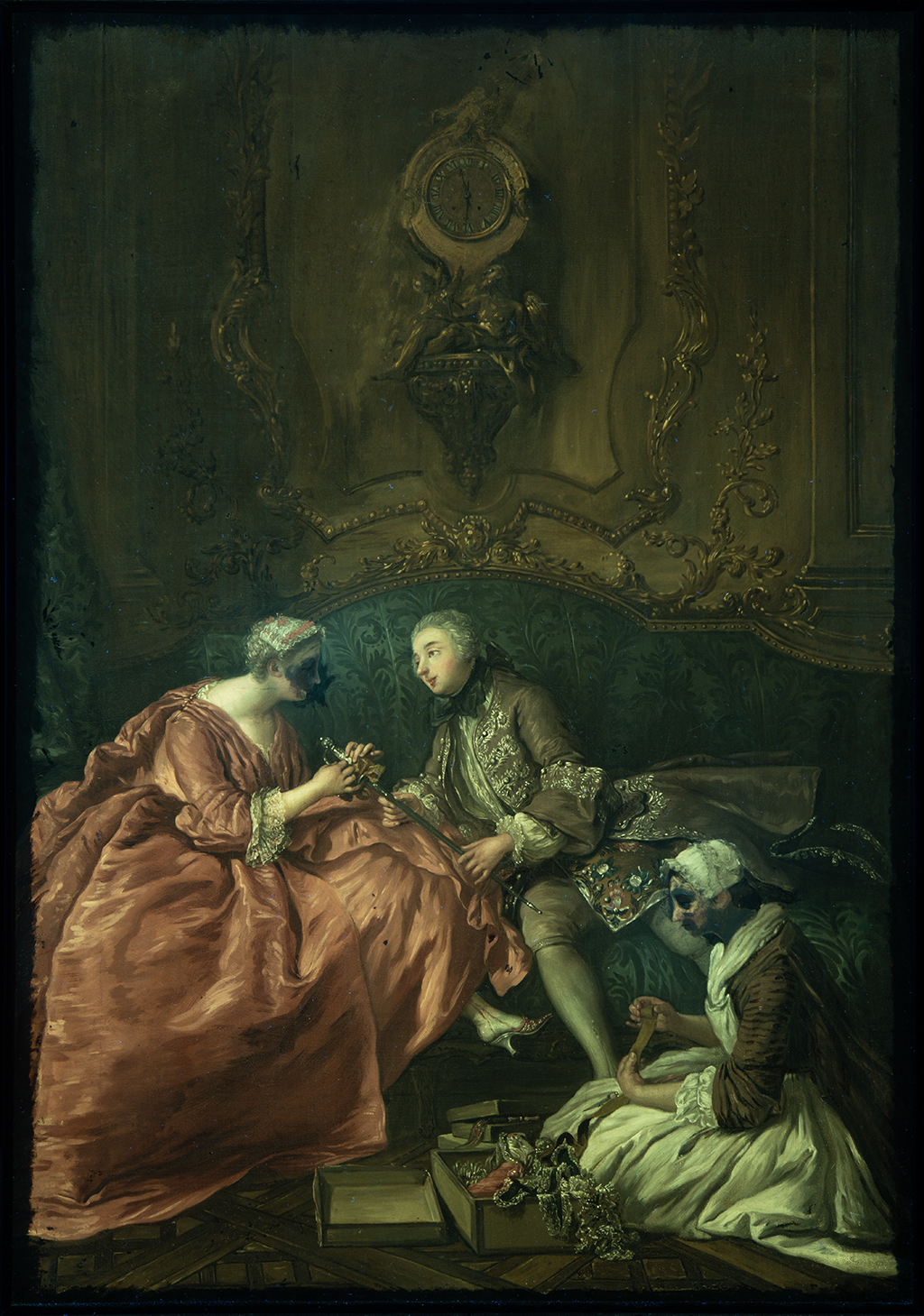
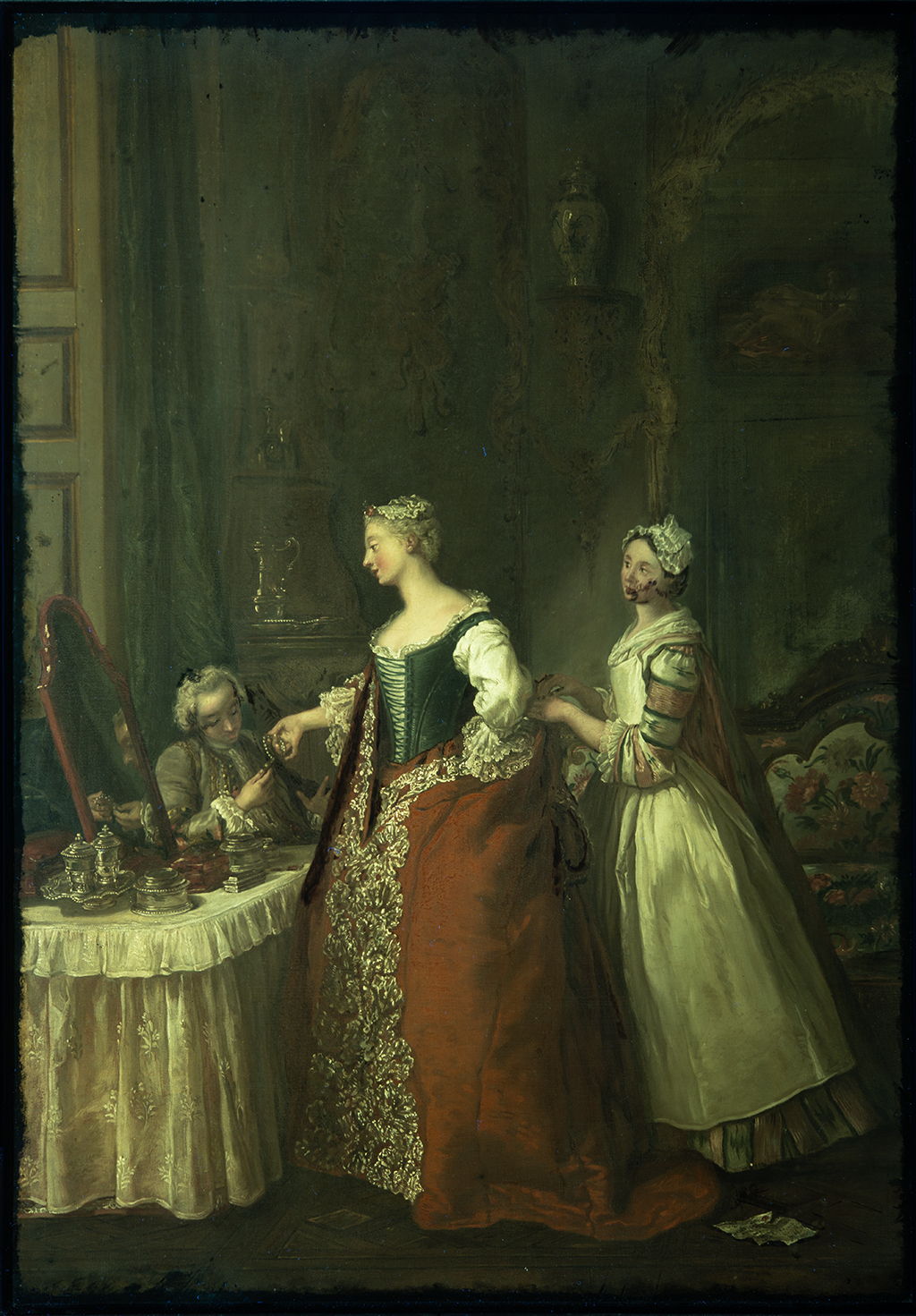
(Top) After Jean François de Troy, A Lady Attaching a Bow to a Gentleman’s Sword, 1764 (?), oil on canvas, 25 1/2 x 18 in. (64.8 x 45.7 cm), Purchase: William Rockhill Nelson Trust, 82-36/1; (Bottom) After Jean François de Troy, A Lady Showing a Bracelet Miniature to Her Suitor, 1764 (?), oil on canvas, 25 1/2 x 18 in. (64.8 x 45.7 cm), Purchase: William Rockhill Nelson Trust, 82-36/2
After Jean François de Troy, A Lady Attaching a Bow to a Gentleman’s Sword, 1764 (?), oil on canvas, 25 1/2 x 18 in. (64.8 x 45.7 cm), Purchase: William Rockhill Nelson Trust, 82-36/1
After Jean François de Troy, A Lady Showing a Bracelet Miniature to Her Suitor, 1764 (?), oil on canvas, 25 1/2 x 18 in. (64.8 x 45.7 cm), Purchase: William Rockhill Nelson Trust, 82-36/2
Fig. 1. Jean François de Troy, A Lady Showing a Bracelet Miniature to Her Suitor, 1734, oil on canvas, 31 9/16 x 25 1/8 in. (81 x 64 cm), private collection; reproduced in Christophe Leribault, Jean-François de Troy (1679–1752) (Paris: Arthena, 2002), 334.
Toggle Caption
Toggle Dual View
Fig. 2. Jean François de Troy, A Lady Attaching a Bow to a Gentleman’s Sword, 1734, oil on canvas, 31 9/16 x 25 1/8 in. (81 x 64 cm), private collection; reproduced in Christophe Leribault, Jean-François de Troy (1679–1752) (Paris: Arthena, 2002), 335.
Toggle Caption
Toggle Dual View
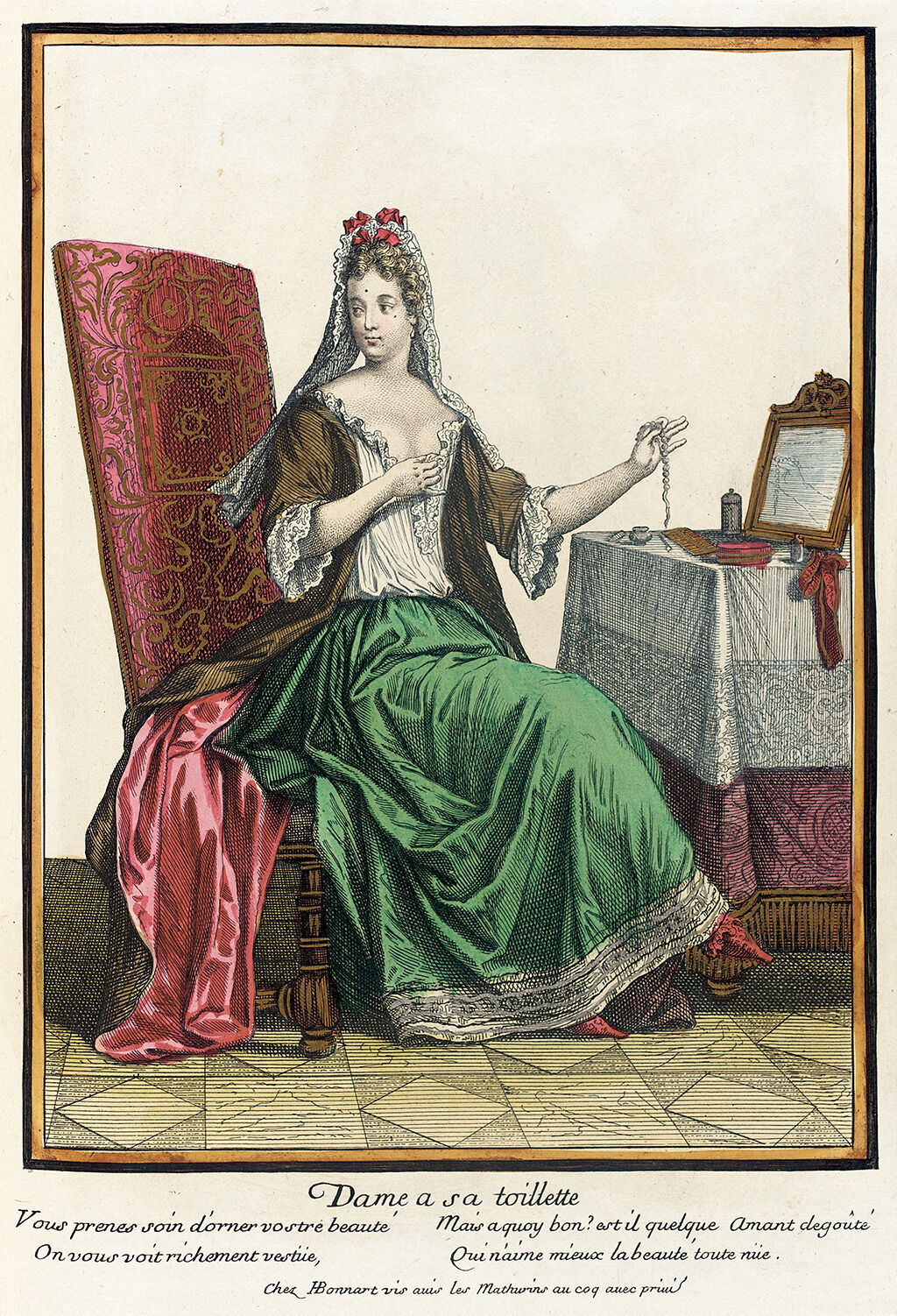
Fig. 3. Henri Bonnart (1642–1711), Collection of Fashions of the French Court, “Lady at Her Toilette,” 1687, hand-colored engraving on paper, sheet: 14 3/8 x 9 3/8 in. (36.5 x 23.8 cm); image: 10 3/4 x 7 1/2 in. (27.3 x 19 cm), Los Angeles County Museum of Art, M.2002.57.81
Toggle Caption
Toggle Dual View
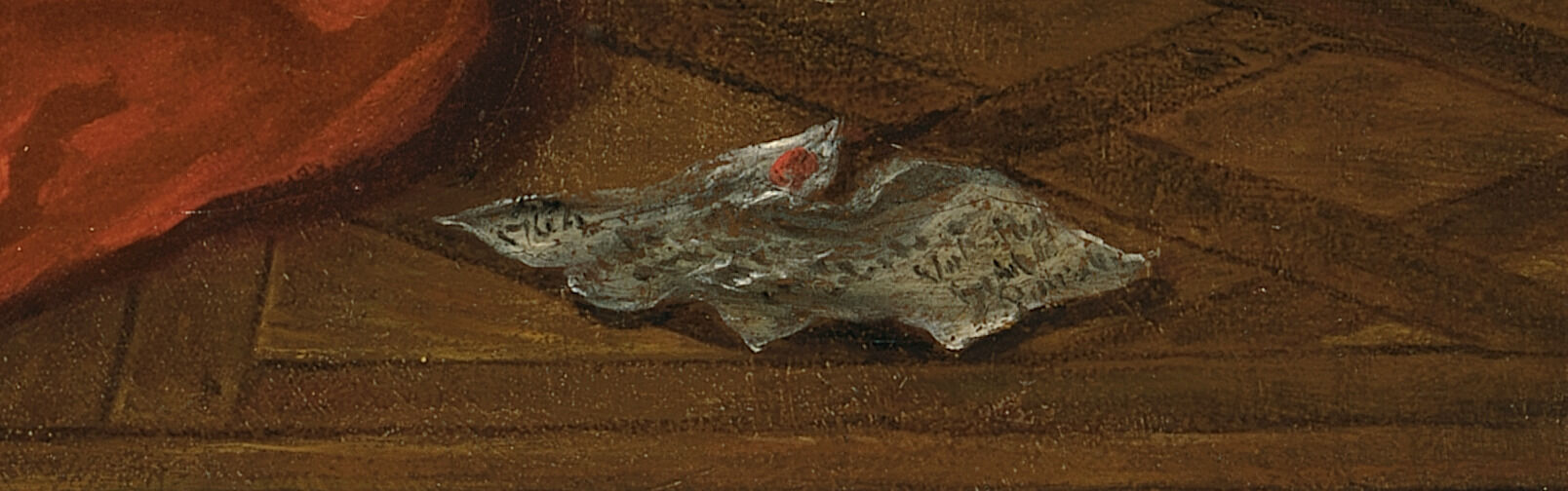
Fig. 4. Detail of the letter on the floor, A Lady Showing a Bracelet Miniature to Her Suitor, 1764 (?)
Toggle Caption
Toggle Dual View
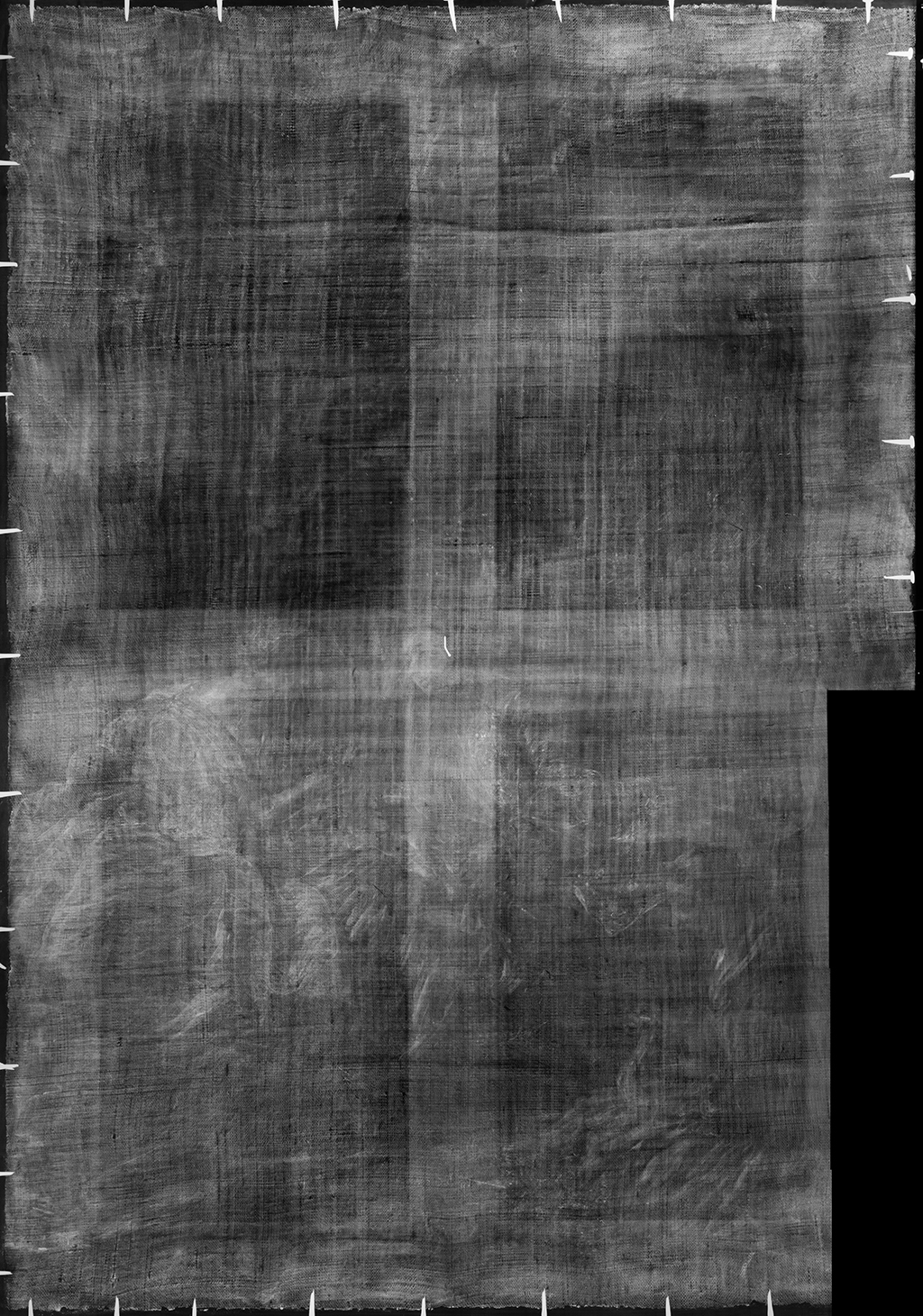
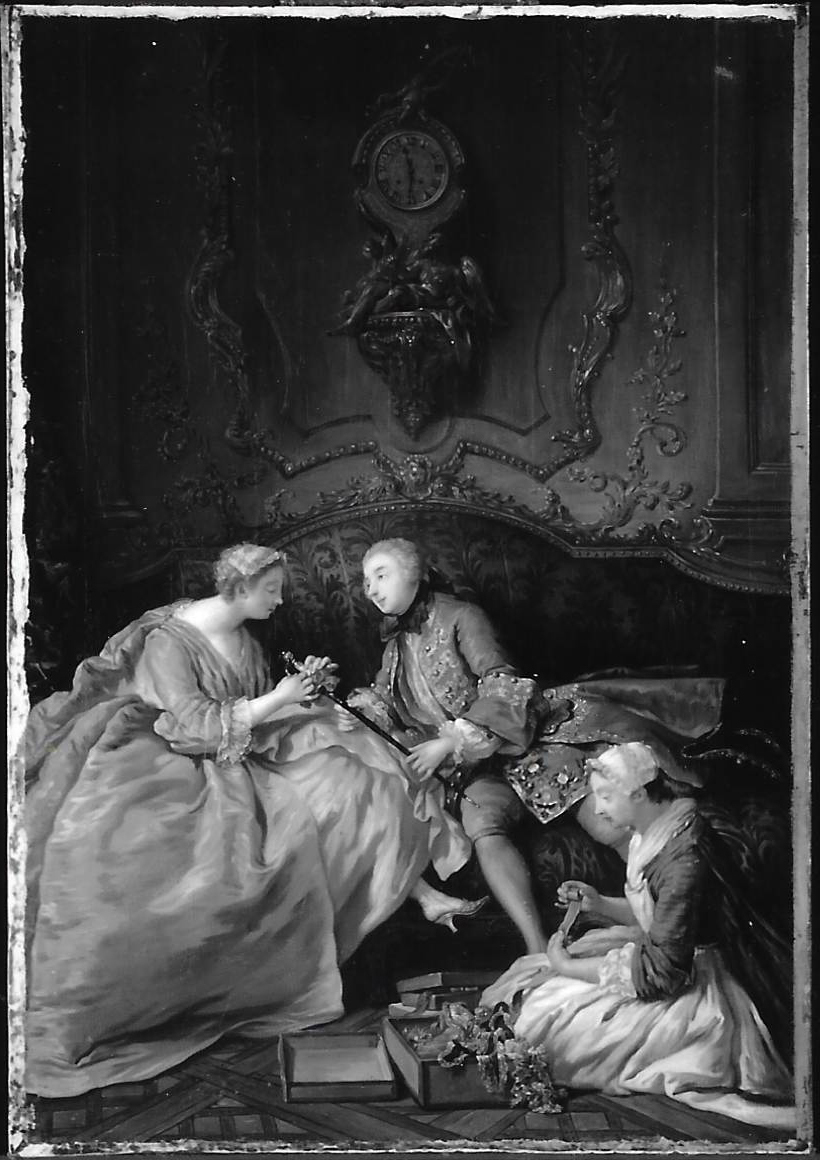
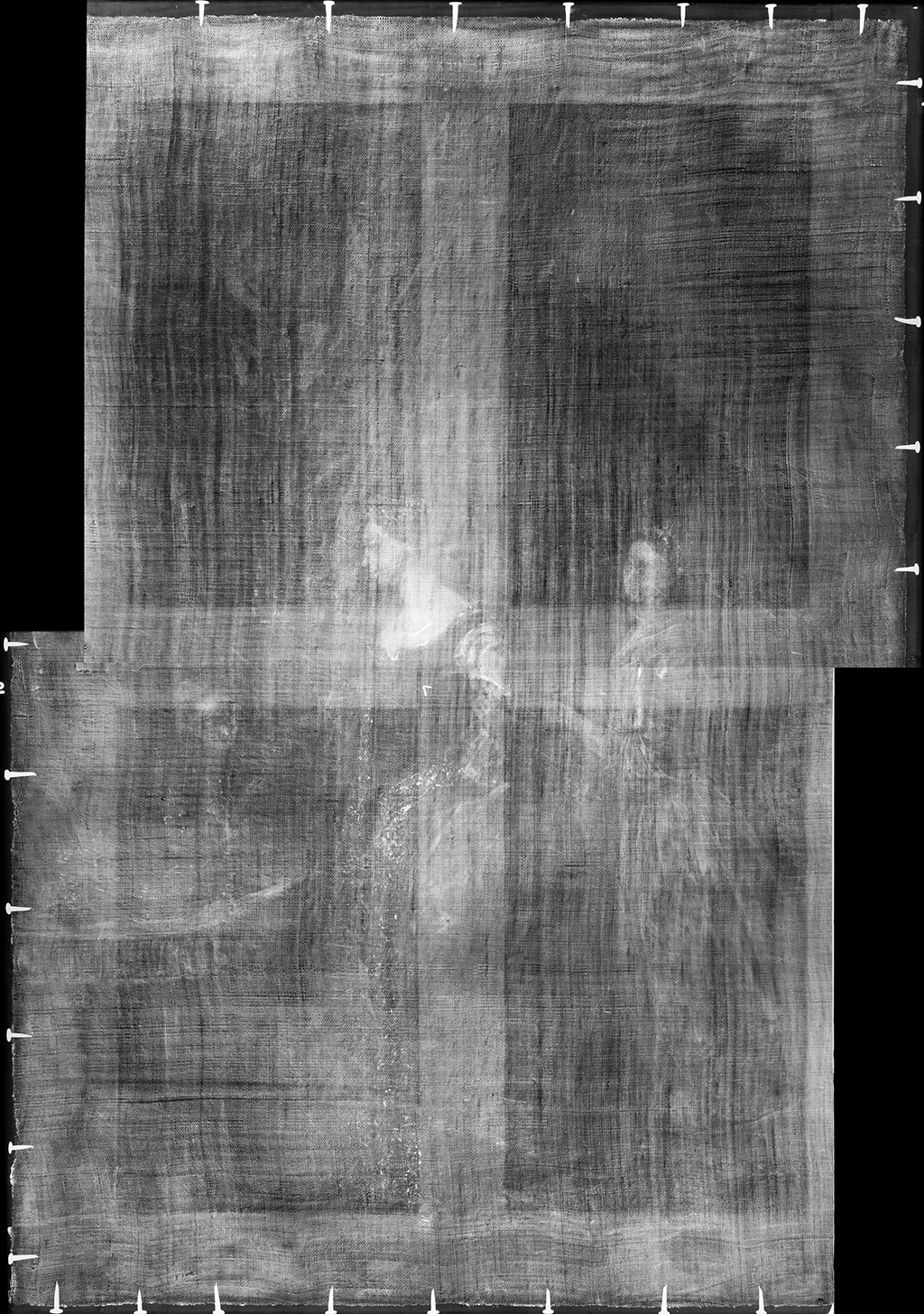
Fig. 5. Radiograph of A Lady Attaching a Bow to a Gentleman’s Sword (1764?)
Toggle Caption
Toggle Dual View
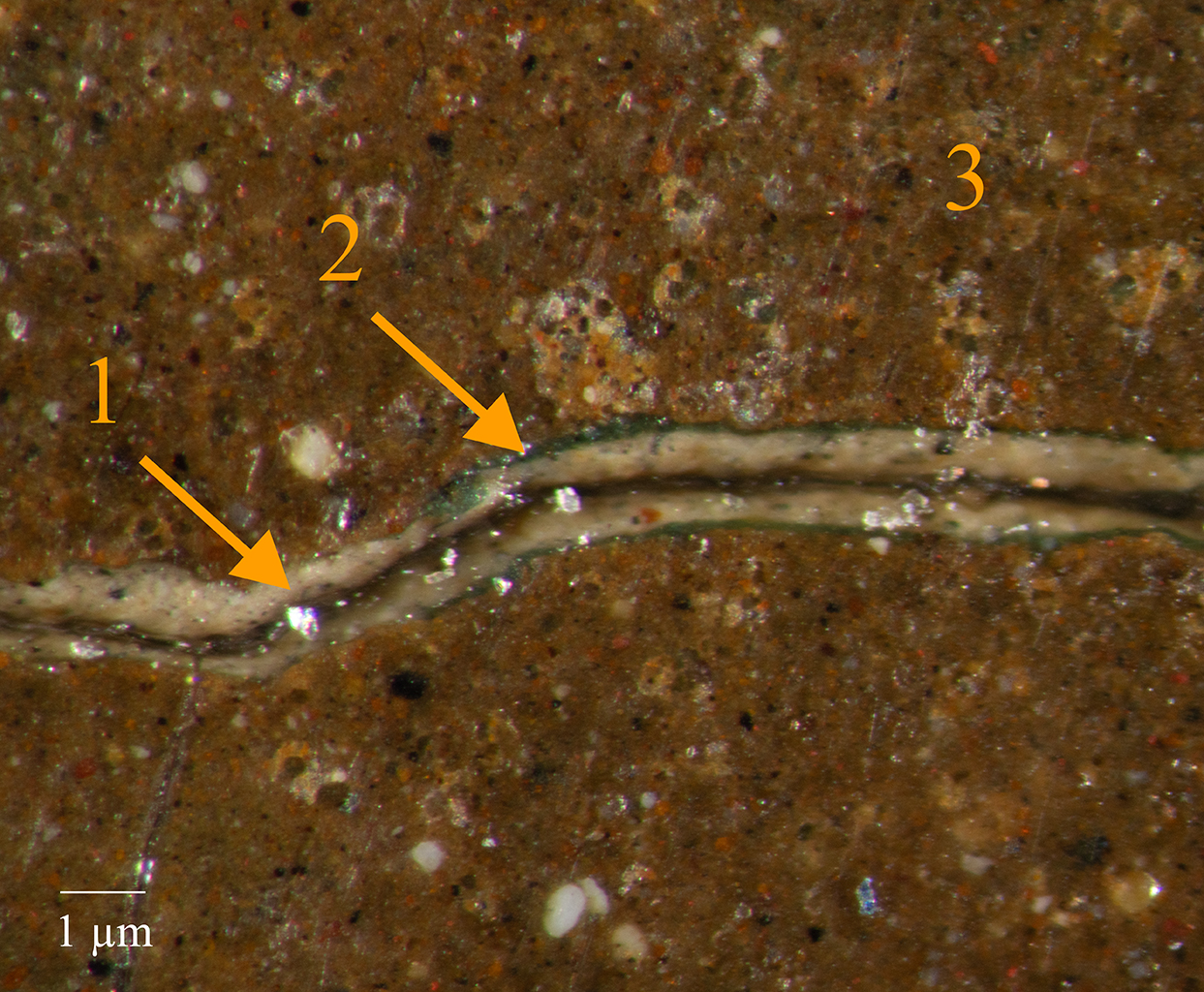
Fig. 6. Photomicrograph of A Lady Attaching a Bow to a Gentleman’s Sword (1764?), showing the ground and paint layers with numbers corresponding to the order of application: (1) light-gray ground, (2) greenish-blue wash, and (3) brown paint
Toggle Caption
Toggle Dual View
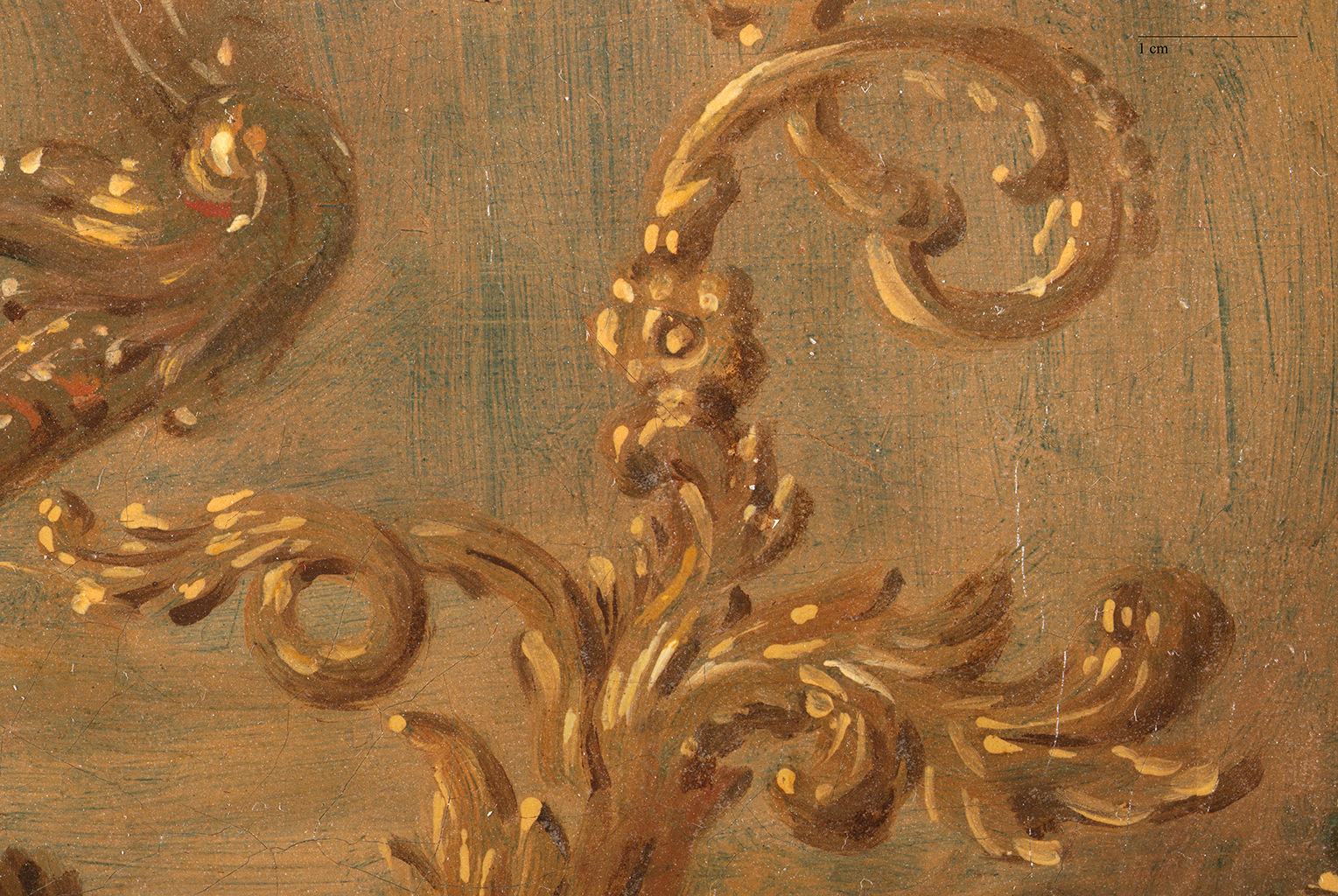
Fig. 7. Photomicrograph of the canapé, A Lady Attaching a Bow to a Gentleman’s Sword (1764?)
Toggle Caption
Toggle Dual View
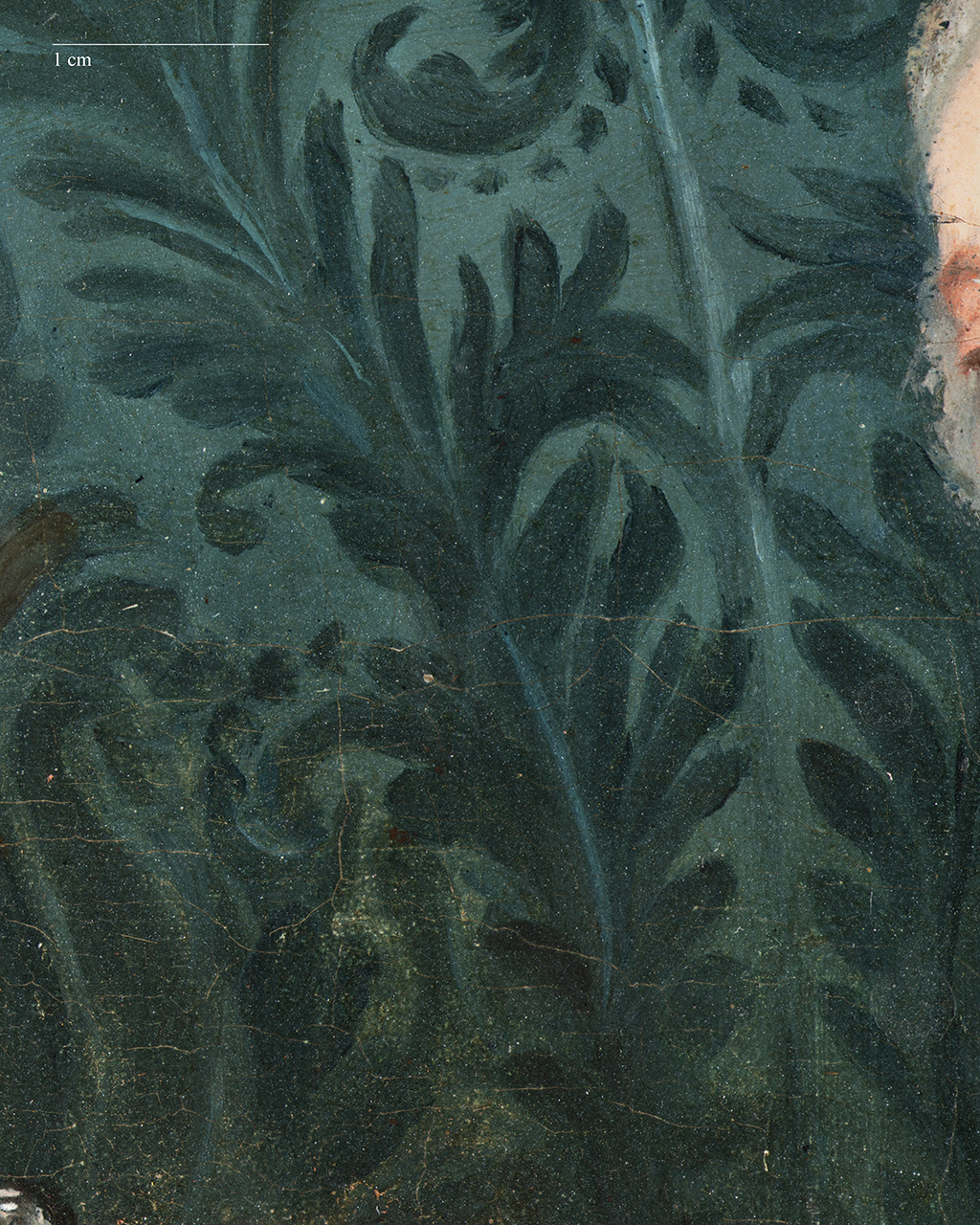
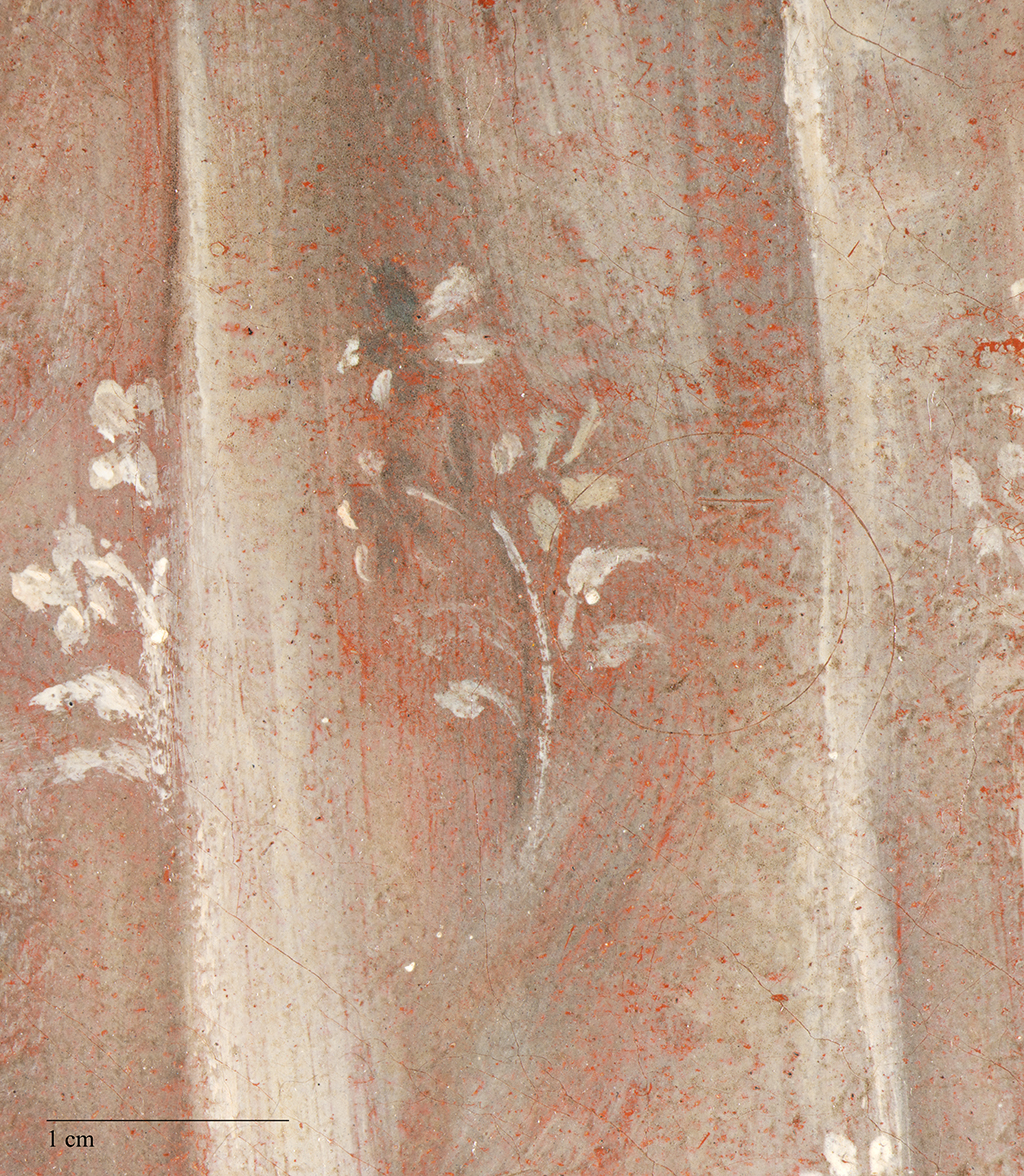
Fig. 8. Photomicrograph of the wall, A Lady Attaching a Bow to a Gentleman’s Sword (1764?)
Toggle Caption
Toggle Dual View
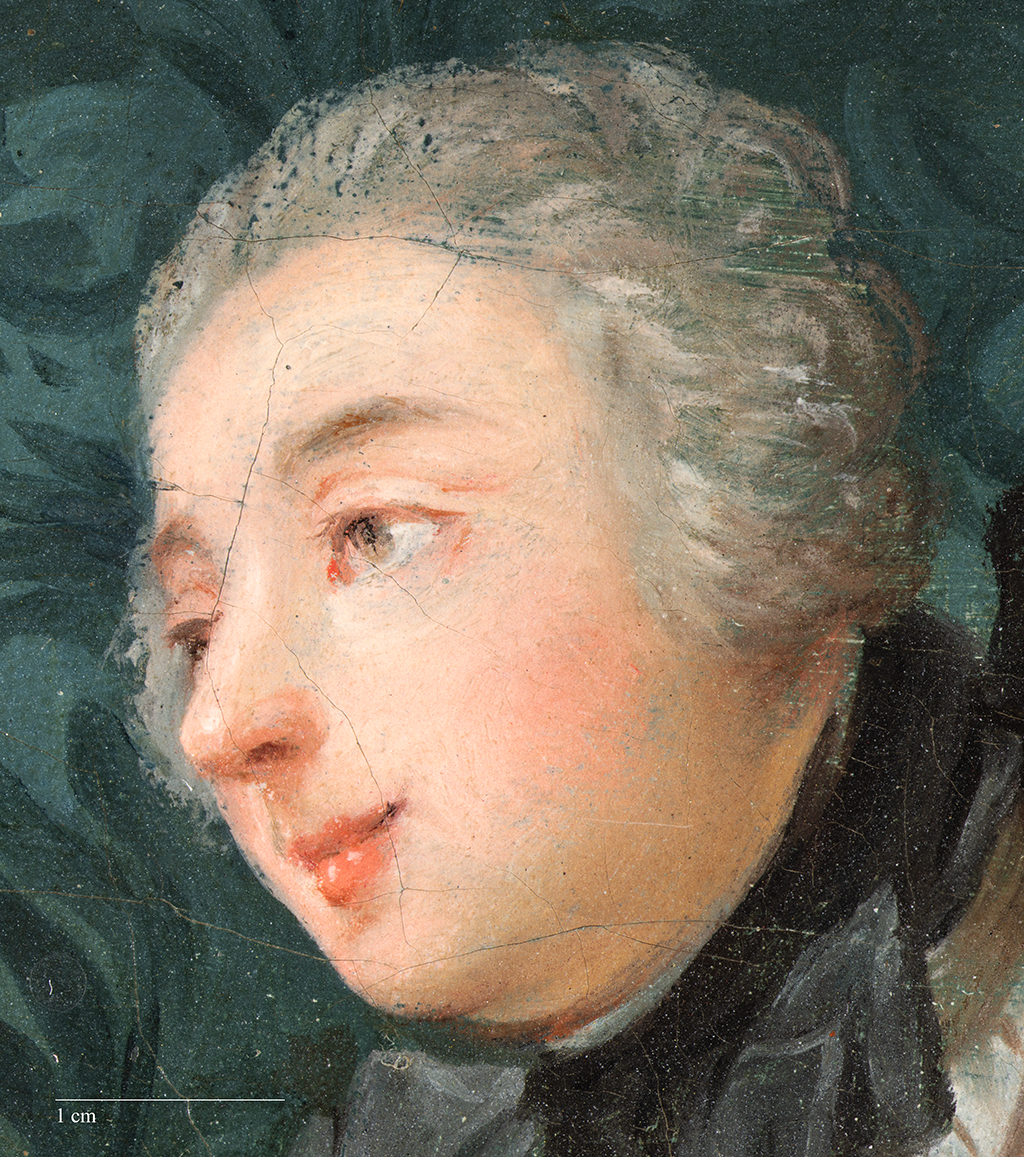
Fig. 9. Photomicrograph of the man’s face, A Lady Attaching a Bow to a Gentleman’s Sword (1764?)
Toggle Caption
Toggle Dual View
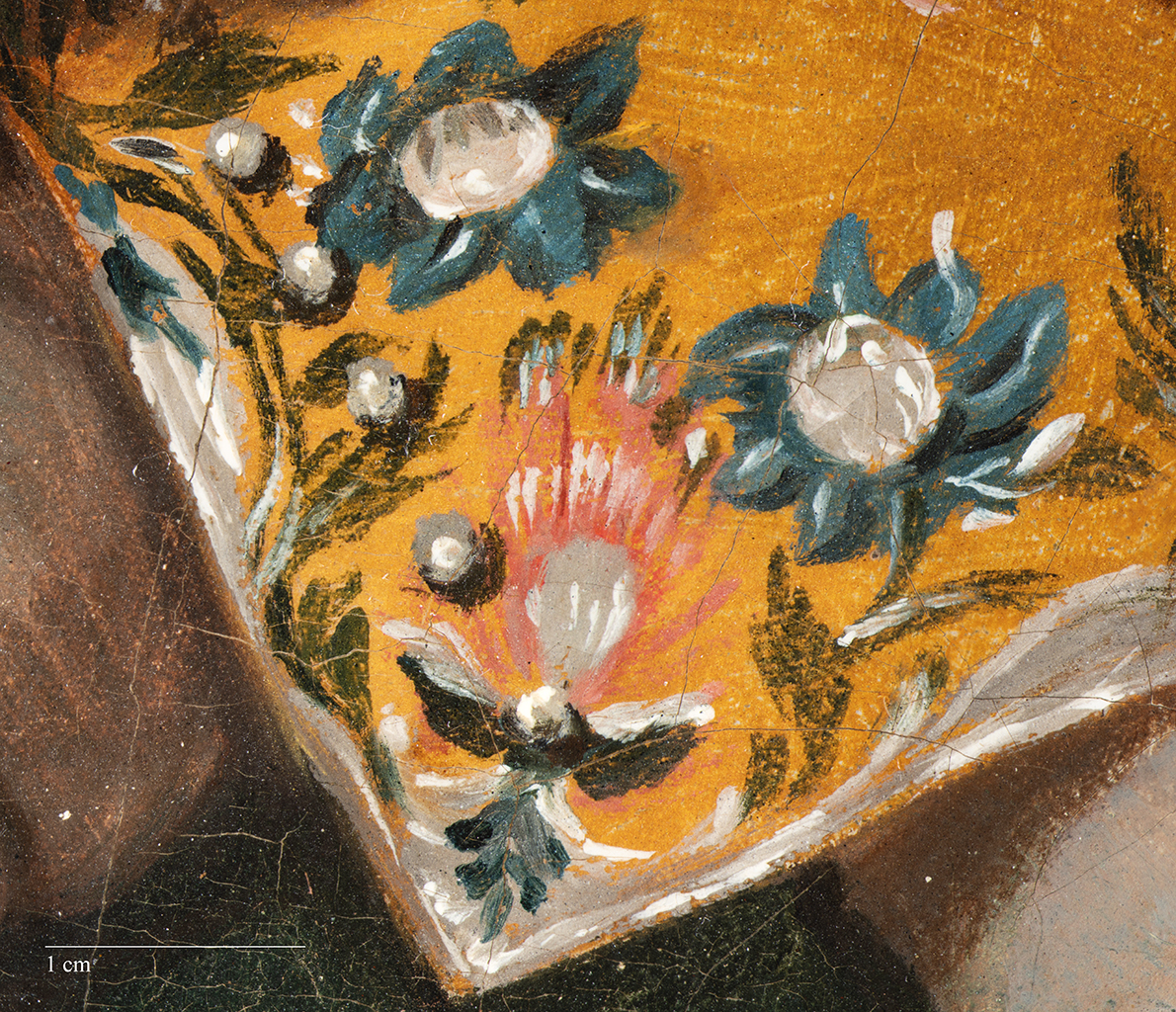
Fig 10. Photomicrograph of the man’s inner coat, A Lady Attaching a Bow to a Gentleman’s Sword (1764?)
Toggle Caption
Toggle Dual View
Fig 11. Photograph captured during the 1982 treatment of A Lady Attaching a Bow to a Gentleman’s Sword (1764?), taken before retouching
Toggle Caption
Toggle Dual View
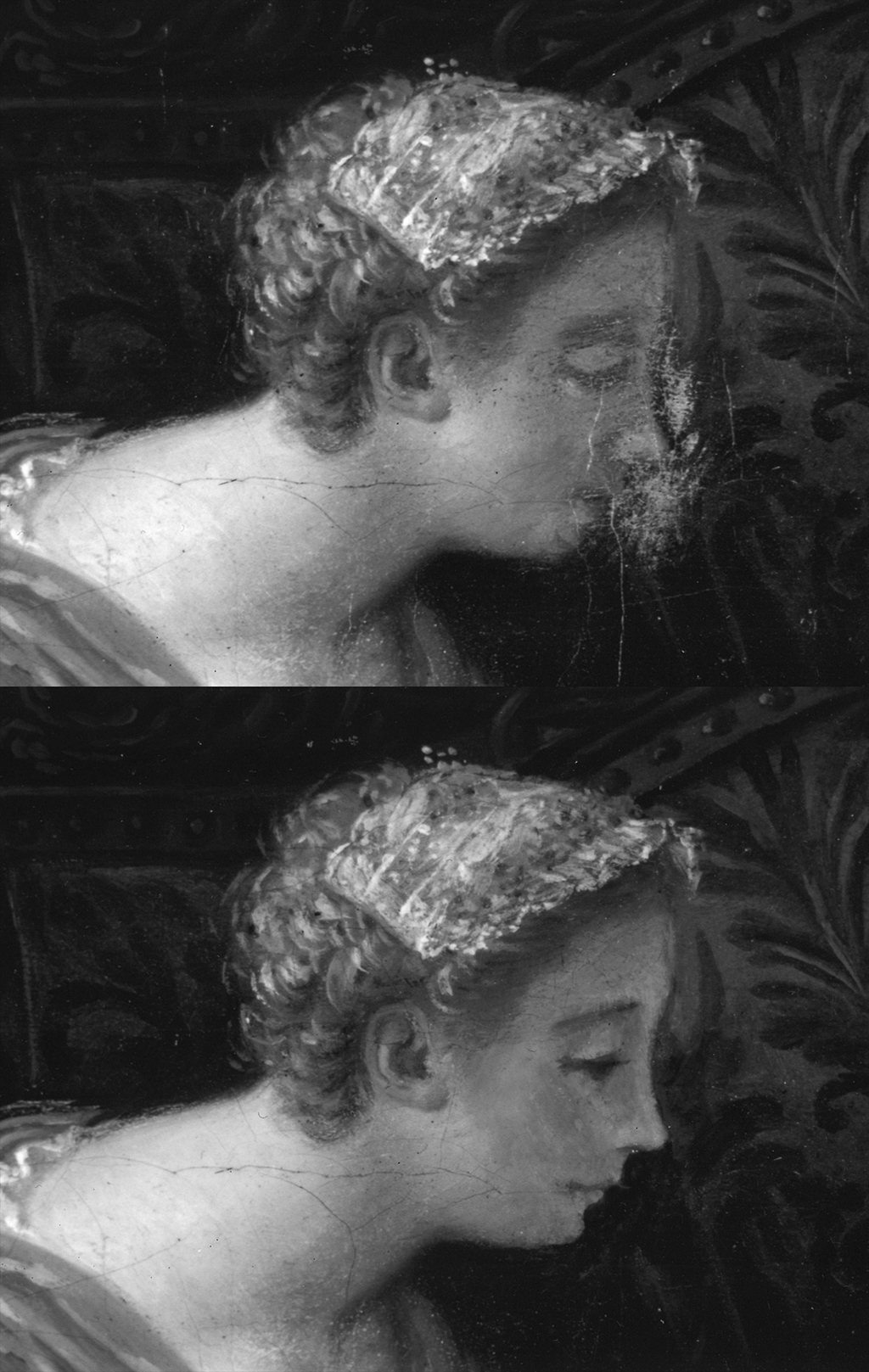
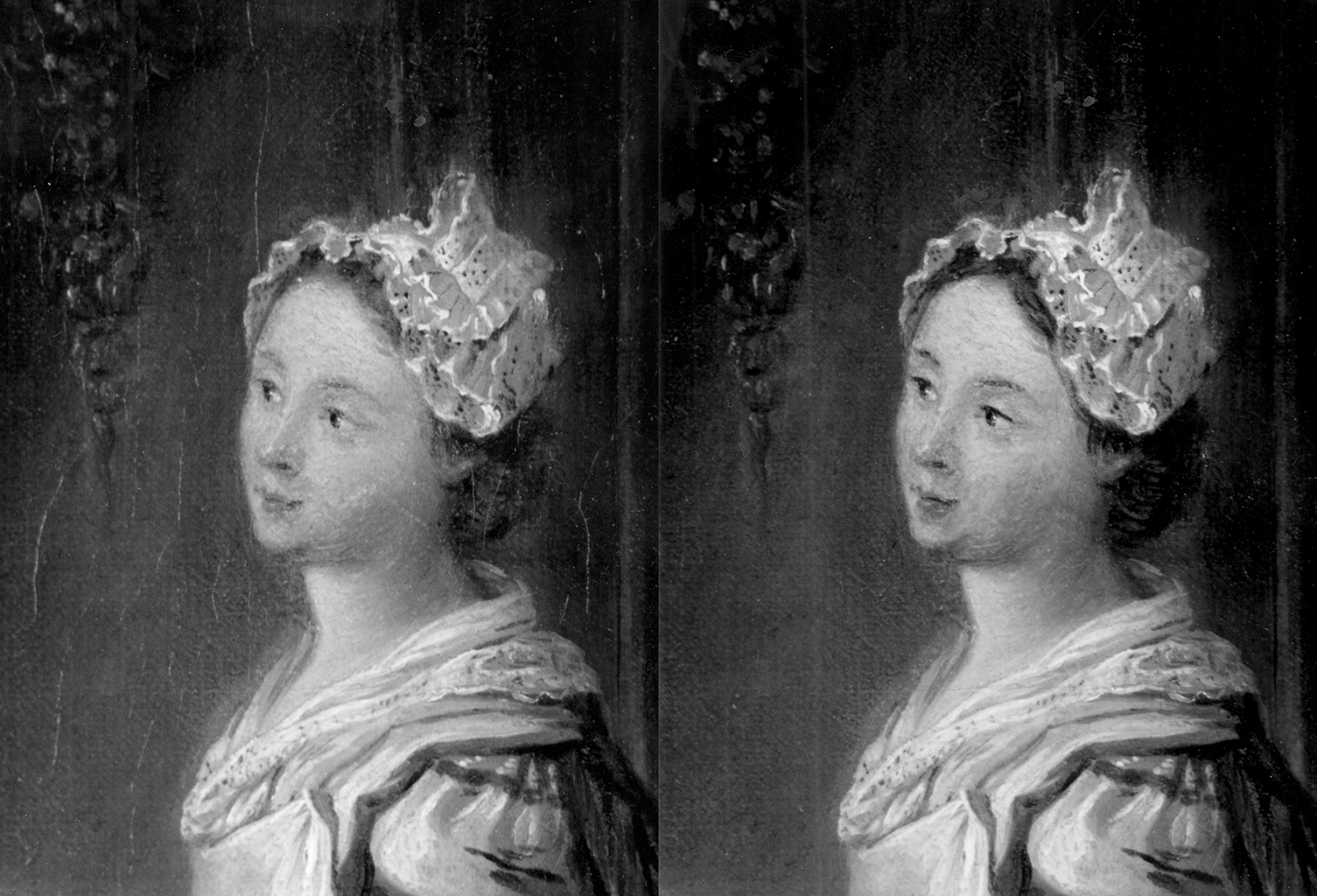
Fig. 12. Details captured during the 1982 treatment of A Lady Attaching a Bow to a Gentleman’s Sword (1764?), showing the leftmost woman’s face before retouching (top) and after retouching (bottom)
Toggle Caption
Toggle Dual View
Fig. 13. UV-induced visible fluorescence photograph, A Lady Attaching a Bow to a Gentleman’s Sword (1764?)
Toggle Caption
Toggle Dual View
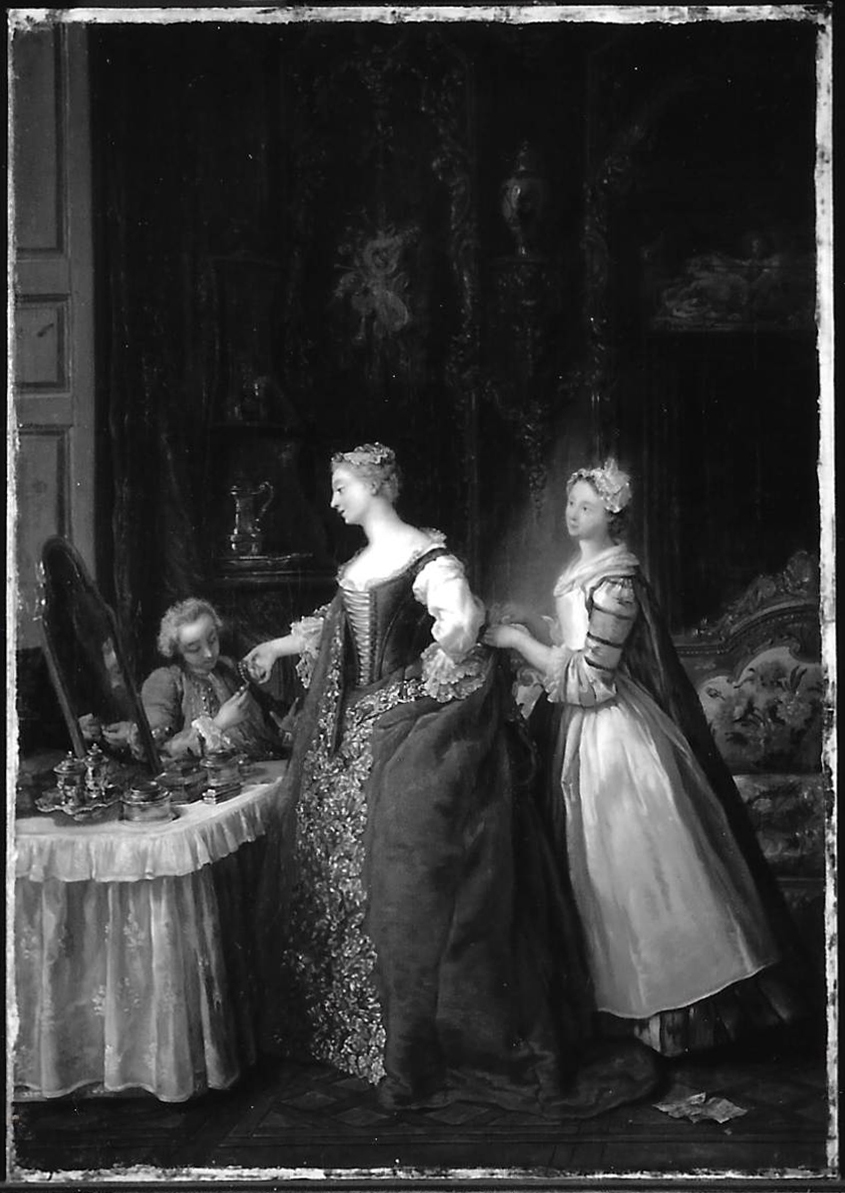
Fig. 14. Radiograph of A Lady Showing a Bracelet Miniature to Her Suitor (1764?)
Toggle Caption
Toggle Dual View
Fig. 15. Photomicrograph of the vanity table, A Lady Showing a Bracelet Miniature to Her Suitor (1764?)
Toggle Caption
Toggle Dual View
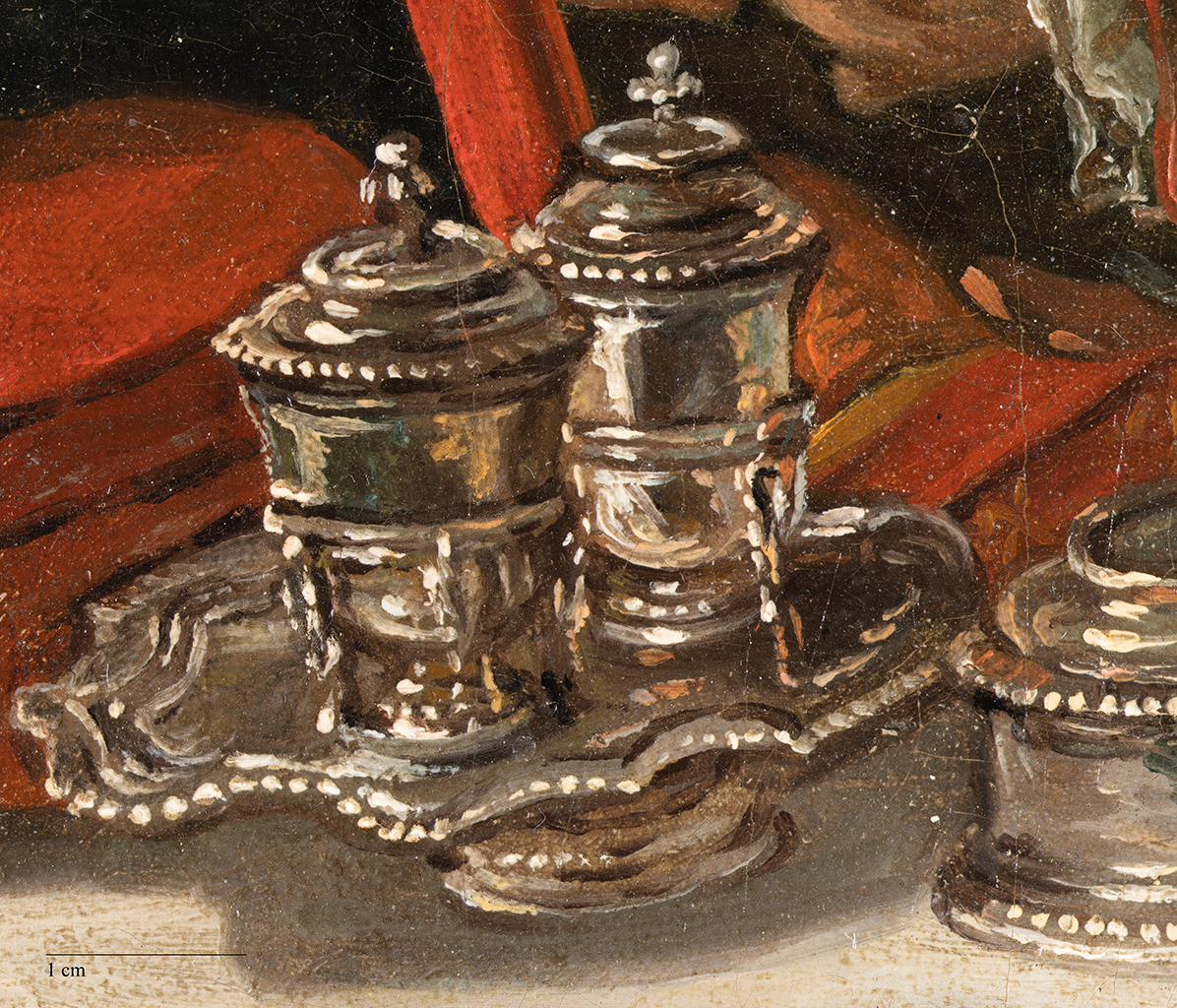
Fig. 16. Photomicrograph of the items on the vanity table, A Lady Showing a Bracelet Miniature to Her Suitor (1764?)
Toggle Caption
Toggle Dual View
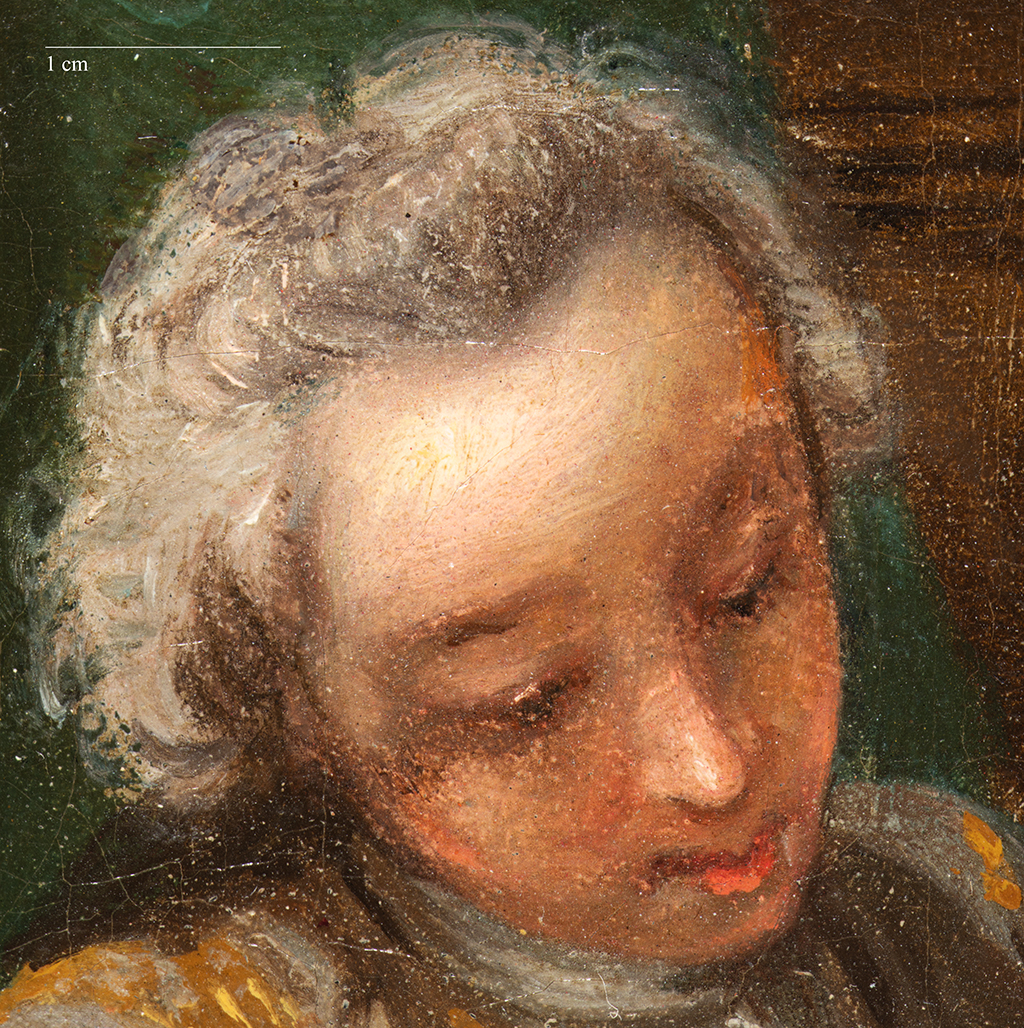
Fig. 17. Photomicrograph of the man’s face, A Lady Showing a Bracelet Miniature to Her Suitor (1764?)
Toggle Caption
Toggle Dual View
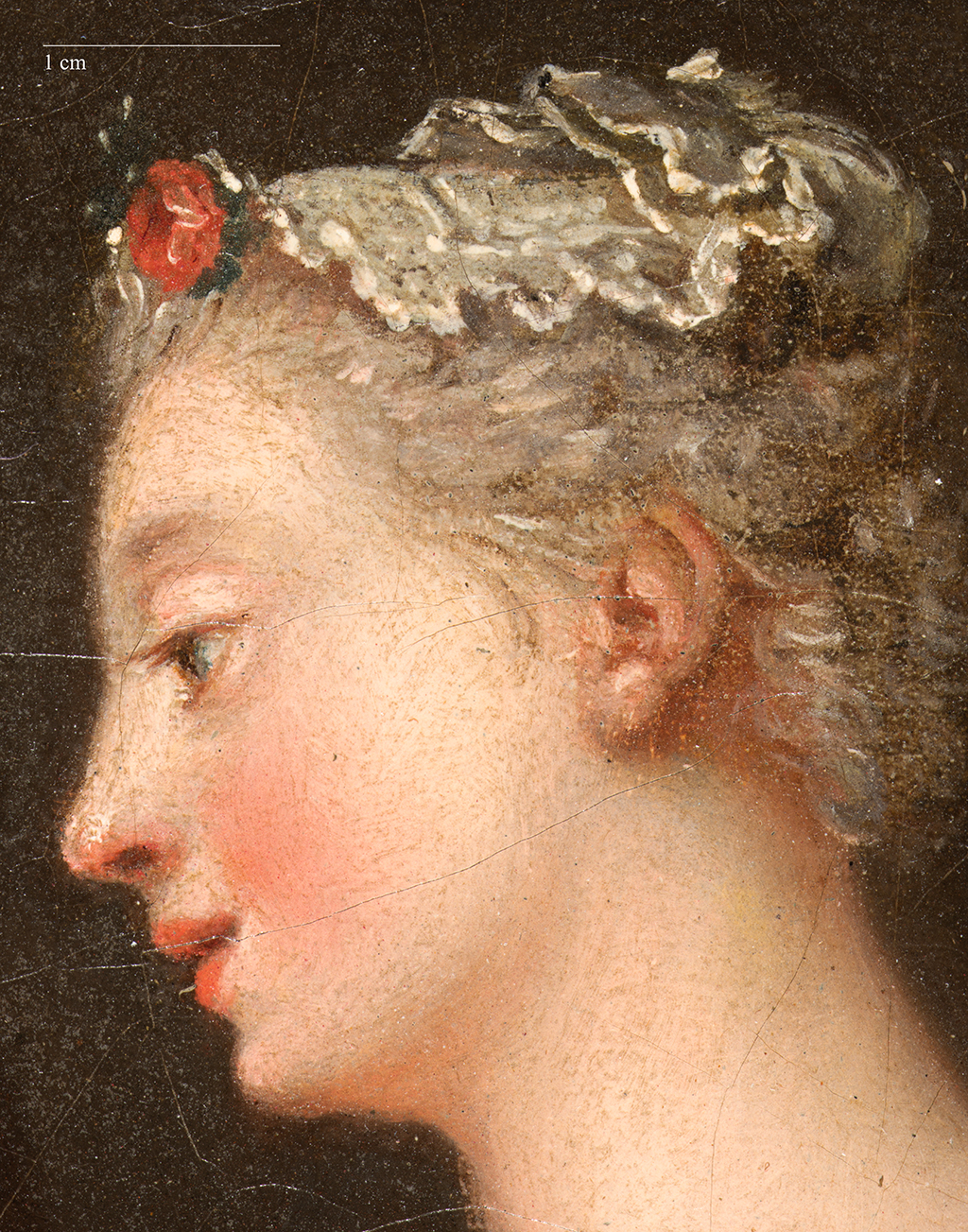
Fig. 18. Photomicrograph of the aristocratic woman’s face, A Lady Showing a Bracelet Miniature to Her Suitor (1764?)
Toggle Caption
Toggle Dual View
Fig. 19. Photograph captured during the 1982 treatment of A Lady Showing a Bracelet Miniature to Her Suitor (1764?), taken before retouching
Toggle Caption
Toggle Dual View
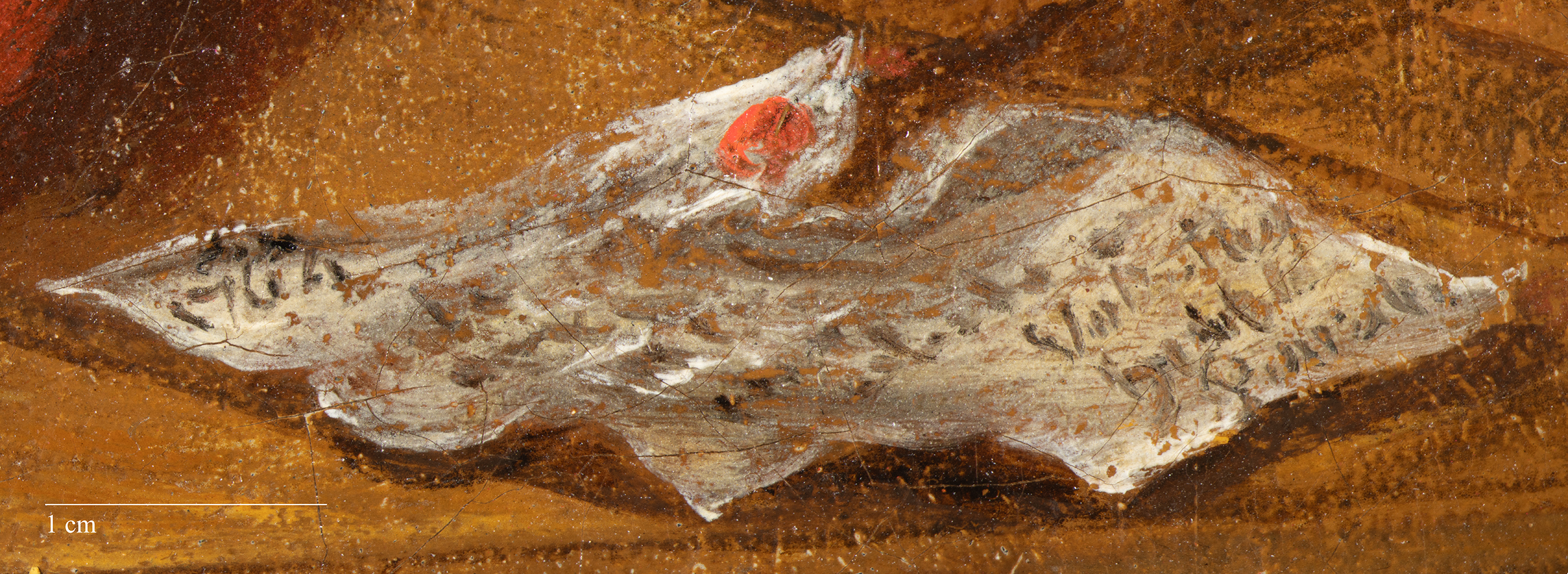
Fig. 20. Photomicrograph of the letter in A Lady Showing a Bracelet Miniature to Her Suitor (1764?)
Toggle Caption
Toggle Dual View
Fig. 21. Photograph captured during the 1982 treatment of A Lady Showing a Bracelet Miniature to Her Suitor (1764?), taken before retouching (left) and after retouching (right)
Toggle Caption
Toggle Dual View
Fig. 22. Ultraviolet-induced visible fluorescence image of A Lady Showing a Bracelet Miniature to Her Suitor (1764?)
Toggle Caption
Toggle Dual View
After Jean François de Troy, A Lady Attaching a Bow to a Gentleman’s Sword, 1764 (?), and A Lady Showing a Bracelet Miniature to Her Suitor, 1764 (?)
doi: 10.37764/78973.5.312
Artist
After Jean François de Troy, French, 1679–1752
Title
A Lady Attaching a Bow to a Gentleman’s Sword
Object Date
1764 (?)
Alternate and Variant Titles
Scène galante; Jeune femme attachant un ruban à l’épée d’un jeune homme; Une dame attachant un nœud à l’épée d’un gentilhomme; Dame attachant un nœud à l’épée d’un cavalier
Medium
Oil on canvas
Dimensions (Unframed)
25 1/2 x 18 in. (64.8 x 45.7 cm)
Credit Line
The Nelson-Atkins Museum of Art. Purchase: William Rockhill Nelson Trust, 82-36/1
Nicole R. Myers, “After Jean François de Troy, A Lady Attaching a Bow to a Gentleman’s Sword, and A Lady Showing a Bracelet Miniature to Her Suitor, 1764 (?),” catalogue entry in French Paintings and Pastels, 1600–1945: The Collections of the Nelson-Atkins Museum of Art, ed. Aimee Marcereau DeGalan (Kansas City: The Nelson-Atkins Museum of Art, 2024), https://doi.org/10.37764/78973.5.312.5407.
MLA:
Myers, Nicole R. “After Jean François de Troy, A Lady Attaching a Bow to a Gentleman’s Sword, and A Lady Showing a Bracelet Miniature to Her Suitor, 1764 (?),” catalogue entry. French Paintings and Pastels and Pastels, 1600–1945: The Collections of The Nelson-Atkins Museum of Art, edited by Aimee Marcereau DeGalan, Nelson-Atkins Museum of Art, 2024. doi: 10.37764/78973.5.312.5407.
Born in 1679, De Troy was trained by his father, the eminent portraitist
François de Troy (1645–1730), in addition to receiving formal lessons at
the academy. Around 1699, his father sent him to continue his studies in
Italy, and he spent considerable time in Rome, Florence, and Pisa before
returning to Paris in 1706. Two years later, De Troy was simultaneously agréé (accepted) and reçu (received) by the academy
as a history painter, with Niobe and Her Children (1708;
Musée Fabre, Montpellier) as his morceau de reception (reception piece).
De Troy went on to build his reputation with such monumental works
as The Plague at Marseilles (ca. 1722; Musée
des Beaux-Arts, Marseilles) and a series of paintings commemorating the
life of Saint Vincent de Paul (commissioned for the Mission
Saint-Lazare, Paris, in 1729; now in various locations). In the category
of history painting, De Troy was considered second only to one during
his lifetime: his rival François Lemoyne (1688–1737).
Mariette might thus have been surprised to discover The Declaration
of Love, De Troy’s first foray into genre painting, but it nonetheless
seduced him with its charm, refinement, and novelty. With the
painting and its pendantpendant: One of two paintings conceived as a pair and intended to be displayed togther., The Garter (1724;
Metropolitan Museum of Art), which debuted the following year
at the Salon of 1725, De Troy introduced a new pictorial form. Dubbed
tableaux de mode (pictures of fashionable society) by his
contemporaries, these paintings took as their subjects the leisure
activities, social rituals, and intimate moments of the
eighteenth-century Parisian elite.2The term tableaux de mode appears in texts by Jean Pierre Mariette and in the Mercure de France. Christophe Leribault, Jean-François de Troy (1679–1752), cat. rais. (Paris: Arthena, 2002), 72. The original versions of A Lady
Showing a Bracelet Miniature to Her Suitor and A Lady Attaching a Bow
to a Gentleman’s Sword (Figs. 1, 2)—of which the Nelson-Atkins paintings are copies—are among the approximately ten tableaux de mode
that De Troy created in Paris between 1724 and 1738, the year he was
appointed director of the French Academy in Rome. Differing from his
large-scale religious and civic commissions, which were broadly painted
in loose, sweeping strokes, his tableaux de mode were executed in a
highly detailed and polished style reminiscent of seventeenth-century
Dutch and Flemish genre paintings. Indeed, the rising
popularity of paintings from the Low Countries among connoisseurs and collectors during the first half of the
eighteenth century provided the background against which the tableaux de mode were
developed, received, and collected in France.3Colin B. Bailey, “Surveying Genre in Eighteenth-Century French Painting,” in Bailey et al., The Age of Watteau, 18–19; and Leribault, Jean-François de Troy, 60.
Fig. 3. Henri Bonnart (1642–1711), Collection of Fashions of the French Court, “Lady at Her Toilette,” 1687, hand-colored engraving on paper, sheet: 14 3/8 x 9 3/8 in. (36.5 x 23.8 cm); image: 10 3/4 x 7 1/2 in. (27.3 x 19 cm), Los Angeles County Museum of Art, M.2002.57.81
fullscreen
Fig. 3. Henri Bonnart (1642–1711), Collection of Fashions of the French Court, “Lady at Her Toilette,” 1687, hand-colored engraving on paper, sheet: 14 3/8 x 9 3/8 in. (36.5 x 23.8 cm); image: 10 3/4 x 7 1/2 in. (27.3 x 19 cm), Los Angeles County Museum of Art, M.2002.57.81
The circumstances behind the creation of the Nelson-Atkins pendants remain
elusive, as there is no record of these copies’ existence before the museum purchased
them in 1982. Moreover, nearly nothing is known
about De Troy’s studio practice and whether he employed assistants in
the making of the few high-quality replicas currently attributed to him,
such as the replicas of The Declaration of Love and The Garter at
the Williams College Museum of Art in Williamstown, Massachusetts.28Of de Troy’s tableaux de mode, the Nelson-Atkins pictures are the only other known copies. For the Williams College versions, see https://egallery.williams.edu/objects/10412/la-declaration-damour and https://egallery.williams.edu/objects/22393/la-conversation-galante. The Williamstown pair is
almost identical to the original set at the Metropolitan Museum of Art in both size and fidelity
to the composition. They only differ in their handling (which Leribault
describes as less lively) and the absence of a signature and date. As
Leribault notes in his catalogue raisonné, in light of these
compositions’ popularity when they were exhibited in 1724 and again at
the Salon of 1725, it is not surprising that there was a demand for
copies. Who made them, though, is an open question. De Troy
may very well have supervised assistants in the production of such
high-quality copies, as was typical of the period; however, lacking
documentation of this practice, Leribault credits De Troy with their
execution.
Fig. 4. Detail of the letter on the floor, A Lady Showing a Bracelet Miniature to Her Suitor, 1764 (?)
fullscreen
Fig. 4. Detail of the letter on the floor, A Lady Showing a Bracelet Miniature to Her Suitor, 1764 (?)
The original pendants were sold in 1762 following the death of
Chauvelin, their first owner, who had kept the paintings for nearly
thirty years. Unlike many of De Troy’s tableaux de mode, the original
versions were never engraved and thus probably remained largely unknown
until they resurfaced on the market. One can easily imagine that
this rediscovery in 1762 prompted a new appreciation for these
elegant paintings, resulting in the production of copies around that
time. The smaller, narrower dimensions of the copies now at the Nelson-Atkins could in fact reflect the
proportions of a space for which they were specifically commissioned.
“On voyait de M. de Troye, le fils, déjà connu par de plus grands
ouvrages, un Tableau qui fait beaucoup d’honneur à son pinceau, par
l’entente et le goût galant et vrai dont il est composé. C’est un
jeune Cavalier en habit de velours, dont l’étoffe est véritablement
moëlleuse, auprès d’une Dame assise sur un canapé.” “Extraits de
diverses Lettres,” Mercure de France (June 1724): 1391; repr.
Mercure de France, Tome VI, Janvier–Juin 1724 (Geneva: Slatkine Reprints,
1968), 370. Translated in Colin Bailey, Philip Conisbee, and Thomas
W. Gaehtgens, The Age of Watteau, Chardin, and Fragonard:
Masterpieces of French Genre Painting, exh. cat. (New
Haven: Yale University, 2003), 10.
The term tableaux de mode appears in texts by Jean Pierre
Mariette and in the Mercure de France. Christophe Leribault,
Jean-François de Troy (1679–1752) (Paris: Arthena,
2002), 72.
Colin B. Bailey, “Surveying Genre in Eighteenth-Century French
Painting,” in Bailey et al., Age of Watteau, 18–19; and
Leribault, Jean-François de Troy, 60.
Michael Levey, Painting and Sculpture in France, 1700–1789 (New
Haven: Yale University Press, 1993), 21.
Richard Rand, Intimate Encounters: Love and Domesticity in
Eighteenth-Century France, exh. cat (Hanover, NH: Hood Museum of Art,
Dartmouth College, 1997), 5.
Leribault, Jean-François de Troy, 62; Bailey et al., Age of
Watteau, 166, no. 24.
Barbara Anderman, “La notion de peinture de genre à l’époque de
Watteau,” in Patrick Ramade and Martin P. Eidelberg, Watteau et la
fête galante, exh. cat. (Paris: Réunion des musées nationaux,
2004), 35. See also Jörg Ebeling, “Upwardly Mobile: Genre Painting
and the Conflict between Landed and Moneyed Interests,” in Philip
Conisbee, ed., French Genre Painting in the Eighteenth Century
(Washington, DC: National Gallery of Art, 2007), 73–89.
Thomas W. Gaehtgens, “Genre Painting in Eighteenth-Century
Collections,” in Bailey et al., Age of Watteau, 81; Joan
DeJean, “A New Interiority: The Architecture of Privacy in
Eighteenth-Century Paris,” in Charissa Bremer-David, ed., Paris:
Life and Luxury in the Eighteenth Century, exh. cat. (Los Angeles: J. Paul
Getty Museum, 2011), 34; and Penelope Hunter-Stiebel, “French
Painting in the Age of Madame de Pompadour,” in Penelope
Hunter-Stiebel et al., La Volupté du Gout: French Painting in the
Age of Madame de Pompadour, exh. cat. (Paris: Somogy éditions
d’art, 2008), 20.
De Troy was also a member of the social elite, having married a
wealthy woman whose fortune allowed him to purchase the rank of
secrétaire du roi du grand collège (secretary to the king of the
grand college) in 1737. Many of De Troy’s contemporaries remarked
on his elevated social position and the worldly milieu with which
he associated. See Ebeling, “Upwardly Mobile,” 73;
A[ntoine]-J[oseph] Dézallier d’Argenville, Abrégé de la vie des
plus fameux peintres (1762; repr. Geneva: Minkoff Reprint, 1972),
4:368; and Chevalier de Valory, “Jean-François de Troy,” in L.
Dussieux et al., Mémoires Inédits sur la Vie et les Ouvrages des
Membres de l’Académie Royale de Peinture et de Sculpture (1854;
Paris: F. de Nobele, 1968), 2:260–61.
Germain Louis Chauvelin, a financier, belonged to the class of
nouveaux riches and haute bourgeois that made up part of De Troy’s
clientele. Denise Amy Baxter, “Parvenu or honnête homme: The Collecting Practices
of Germain-Louis de Chauvelin,” Journal of the History of Collections
20, no. 2 (2008): 273–89.
Monika Kopplin, European Lacquer: Selected Works from the Museum
für Lackkunst Münster (Munich: Hirmer, 2010), 110. Few complete
toilette sets have survived intact; this is a rare
illustration of French Regency silver that closely resembles a toilette
set in the Gilbert Collection of Gold and Silver at the Los Angeles County Museum of Art. See
Denise Amy Baxter, “Fashions of Sociability in Jean-François de
Troy’s Tableaux de Mode, 1725–1738: Defining a Fashionable Genre in
Early Eighteenth-Century France,” in Alden Cavanaugh, ed.,
Performing the “Everyday”: The Culture of Genre in the Eighteenth
Century (Newark: University of Delaware Press, 2007), 31.
Peter Thornton, Authentic Decor: The Domestic Interior
1620–1929 (London: Weidenfeld and Nicolson, 1984), 109; and
Kimberly Chrisman-Campbell, “Dressing to Impress: The Morning
Toilette and the Fabrication of Femininity,” in Bremer-David, ed.,
Paris: Life and Luxury in the Eighteenth Century, 55–56.
My sincere thanks go to Katelyn Bennett, Nelson-Atkins French
paintings catalogue intern, for her research and identification of
this previously undocumented object. This pot with a lid and no
handles may have had a functional use as a perfume burner. French
collectors appreciated monochrome Chinese porcelains for their
brilliant shine and reflective quality, which in the De Troy
painting resembles that of glass. These luxury porcelains were very
costly due to the difficulty of achieving an even glaze as well as
their relative scarcity, since they were exported from China in
small quantities. See Kristel Smentek, Rococo Exotic: French
Mounted Porcelains and the Allure of the East (New York: Frick
Collection, 2007), 13–14.
D. F. Lunsingh Scheurleer, Chinese Export Porcelain: “Chine de
Commande” (London: Faber and Faber, 1974), 50–51.
Chrisman-Campbell, “Dressing to Impress,” 56.
Pierre Verlet, La Maison du XVIIIe Siècle en France: Société
Décoration Mobilier (Paris: Baschet, 1966), 134–36.
Kopplin, European Lacquer, 90, 93.
Everett Fahy, ed., Wrightsman Pictures (New York: Metropolitan
Museum of Art, 2005), 163, 166; and Baxter, “Fashions of
Sociability,” 31. De Troy included this same clock in
The Garter (1724; Metropolitan Museum of Art, New York), and The Reading of Molière
(ca. 1728; private collection).
Maurice Leloir, Histoire du Costume de l’Antiquité à 1914
(Paris: Henri Ernst, 1938), 11:26, 28–29; and Aileen Ribeiro, Dress
in Eighteenth-Century Europe 1715–1789 (New Haven: Yale
University Press, 2002), 29.
For an excellent discussion of the practice of the toilette and
its visual representation in the eighteenth century, see
Chrisman-Campbell, “Dressing to Impress,” esp. 53, 71; and
Elise Goodman-Soellner, “Boucher’s Madame de Pompadour at her
Toilette,” Simiolus 17, no. 1 (1987): 41–58.
Although modern scholars assume that the woman in A Lady Showing
a Bracelet Miniature to Her Suitor is showing her lover a portrait
miniature of his likeness, descriptions of this object penned in the
eighteenth century are varied. One author noted that the lady is
giving her own portrait to the suitor: “Deux autres
tableaux aussi de mode, l’un une dame qui donne son portrait à un
jeune homme, et l’autre une dame qui attache une nœud d’épée à un
cavalier” (Two other tableaux de mode, in one a lady giving her
portrait to a young man, and in the other a lady tying a sword knot
to for knight); “Extrait de la vie de M. De Troy, peintre du roi et
directeur de son Académie à Rome,” in Mémoires inédits, 275. The
catalogue accompanying Chauvelin’s sale in 1762, however, described the object as a watch: “Dans
l’un, une Dame attache un ruban à l’épée d’un Cavalier; dans
l’autre, une Dame fait voir à un Monsieur, qui est assis proche à sa
toilette, l’heure qu’il est” (In one, a lady ties a ribbon to a
knight’s sword; in the other, a lady shows a gentleman, who is
sitting nearby at her toilette, what time it is); Catalogue des
Tableaux, Estampes en livres et en feuilles, Cartes manuscrites et
gravées, montées à gorges et rouleaux, du Cabinet de feu Messire
Germain-Louis Chauvelin, Ministre d’Etat, Commandeur des Ordres du
Roi, et Ancien Garde des Sceaux (Paris: Lottin et Musier, 1762),
9–10. This and subsequent translations by the author.
Rand, Intimate Encounters, 105.
Rand, Intimate Encounters, 105.
Bailey et al., Age of Watteau, 23.
The similarity in the appearance of De Troy’s women was noted by
at least one of his contemporaries, Antoine-Joseph Dézallier
d’Argenville, who was prompted to explain that De Troy was so
smitten with his young wife that he painted her head (always in
profile to hide a cataract) in all his gallant paintings;
D’Argenville, Abrégé de la vie des plus fameux peintres, 4:368.
Goodman-Soellner, “Boucher’s Madame de Pompadour,” 47–48; and
Baxter, “Fashions of Sociability,” 31.
See technical notes by Mary Schafer, NAMA paintings conservator,
April 1, 2011 (82-36/1) and April 6, 2011 (82-36/2), NAMA
conservation files.
The skirt of the lady’s pink sack dress in A Lady Attaching a
Bow is missing the central seam; otherwise, there are no
significant changes beyond the enlarged composition; see Leribault,
Jean-François de Troy, 335.
Due to the virtual inaccessibility of the original versions,
which are now housed in a private collection, assessments of their
quality and comparisons to the Nelson-Atkins paintings have relied
exclusively on reproductions, including Leribault’s entries in the
De Troy catalogue raisonné.
The Williamstown copies omit altogether the inscriptions on the
paintings at the Met.
See Schafer, technical notes, April 6, 2011 (82–36/2), NAMA
conservation files.
The number’s curved shape also rules out a 4 (for 1744), the only
other number that would have indicated a possible date for the
painting’s execution within De Troy’s lifetime.
“Il a beaucoup plu [sic] à Paris par ses petits tableaux de modes, qui
sont en effet plus soignés que ses grands tableaux d’histoire; mais
je ne pense pas que ce soit sur ces ouvrages qu’il fonde sa
réputation” (He greatly pleased Paris with his small fashion
paintings, which are in fact more careful than his large historical
paintings; but I do not think it is on these works that he bases his
reputation). P[ierre] J[ean] Mariette, Abécédario de P. J.
Mariette et autres notes inédites de cet amateur sur les arts et les
artistes, ed. Ph. de Chennevières and A. de Montaiglon (Paris:
J.-B. Dumoulin, 1853–54), 2:101.
Sophia Boosalis, “After Jean François de Troy, A Lady Attaching a Bow to a Gentleman’s Sword, 1764 (?),” technical entry in French Paintings and Pastels, 1600–1945: The Collections of the Nelson-Atkins Museum of Art, ed. Aimee Marcereau DeGalan (Kansas City: The Nelson-Atkins Museum of Art, 2026), https://doi.org/10.37764/78973.5.312.2088.
MLA:
Boosalis, Sophia. “After Jean François de Troy, A Lady Attaching a Bow to a Gentleman’s Sword, 1764 (?),” technical entry. French Paintings and Pastels, 1600–1945: The Collections of The Nelson-Atkins Museum of Art, edited by Aimee Marcereau DeGalan, Nelson-Atkins Museum of Art, 2026. doi: 10.37764/78973.5.312.2088.
Although the date of the painting remains tentative, aspects of its
paint handling, condition, and treatment history support the conclusion
that it forms a pendant to A Lady Showing a Bracelet Miniature to Her
Suitor (1764?). For instance, the wood parquet is rendered in a similar
manner, with a yellow base tone overlaid in certain areas with
brownish-ocher wash and fluid black paint outlining the individual
floorboards. Pigment analysis of the yellow and blue pigments on the
man’s inner coat could provide further confirmation that the painting is
an eighteenth-century copy after Jean François de Troy.5For information about the original pendants by De Troy, see the accompanying curatorial entry by Nicole R. Myers.
Forrest Bailey, examination report, December 17, 1982, NAMA
conservation file, 82-36/1.
The radiograph is a composite of three film-based radiographs,
with a black area representing a region that was not captured. See
film-based radiographs, no.172, 1982, NAMA conservation file,
82-36/1.
Christophe Leribault, Jean-François de Troy (1679–1752) (Paris:
Arthena, 2002), 335.
Forrest Bailey, treatment report, March 7, 1983, NAMA conservation
file, 82-36/1.
For information about the original pendants by De Troy, see the
accompanying curatorial entry by Nicole R. Myers.
Bailey, treatment report, March 7, 1983, NAMA conservation file,
82-36/1.
Bailey, examination report, December 17, 1982, NAMA conservation
file, 82-36/1.
The retouching of the two female heads was informed by
the original De Troy painting reproduced in Pierre Verlet, French Furniture and Interior
Decoration of the 18th Century (London: Charles E. Tuttle,
1967), pl. 92. See Bailey, treatment report, March 7, 1983, NAMA
conservation file, 82-36/1.
Glynnis Napier Stevenson, “After Jean François de Troy, A Lady Attaching a Bow to a Gentleman’s Sword, 1764 (?),” documentation in French Paintings and Pastels, 1600–1945: The Collections of the Nelson-Atkins Museum of Art, ed. Aimee Marcereau DeGalan (Kansas City: The Nelson-Atkins Museum of Art, 2024), https://doi.org/10.37764/78973.5.312.4033.
MLA:
Stevenson, Glynnis Napier. “After Jean François de Troy, A Lady Attaching a Bow to a Gentleman’s Sword, 1764 (?),” documentation. French Paintings and Pastels, 1600–1945: The Collections of The Nelson-Atkins Museum of Art, edited by Aimee Marcereau DeGalan, Nelson-Atkins Museum of Art, 2024. doi: 10.37764/78973.5.312.4033.
Provenance
Citation
Chicago:
Glynnis Napier Stevenson, “After Jean François de Troy, A Lady Attaching a Bow to a Gentleman’s Sword, 1764 (?),” documentation in French Paintings and Pastels, 1600–1945: The Collections of the Nelson-Atkins Museum of Art, ed. Aimee Marcereau DeGalan (Kansas City: The Nelson-Atkins Museum of Art, 2024), https://doi.org/10.37764/78973.5.312.4033.
MLA:
Stevenson, Glynnis Napier. “After Jean François de Troy, A Lady Attaching a Bow to a Gentleman’s Sword, 1764 (?),” documentation. French Paintings and Pastels, 1600–1945: The Collections of The Nelson-Atkins Museum of Art, edited by Aimee Marcereau DeGalan, Nelson-Atkins Museum of Art, 2024. doi: 10.37764/78973.5.312.4033.
Possible sale, Versailles, ca. 1980 [1];
With Etablissement pour la diffusion et la connaissance des œuvres d’art
(“D.C.”), Vaduz, Liechtenstein, by August 18–September 14, 1982;
Purchased from the latter, through David Carritt Limited, London, by The
Nelson-Atkins Museum of Art, Kansas City, MO, 1982.
Notes
[1] Former Nelson-Atkins curator Roger Ward noted in a letter to
Jessica Falvo, student at the Institute of Fine Arts, New York
University, November 27, 1995, that the painting might have been
auctioned at a Versailles sale in 1980. Extensive research has not
produced any record of the paintings before 1982.
Glynnis Napier Stevenson, “After Jean François de Troy, A Lady Attaching a Bow to a Gentleman’s Sword, 1764 (?),” documentation in French Paintings and Pastels, 1600–1945: The Collections of the Nelson-Atkins Museum of Art, ed. Aimee Marcereau DeGalan (Kansas City: The Nelson-Atkins Museum of Art, 2024), https://doi.org/10.37764/78973.5.312.4033.
MLA:
Stevenson, Glynnis Napier. “After Jean François de Troy, A Lady Attaching a Bow to a Gentleman’s Sword, 1764 (?),” documentation. French Paintings and Pastels, 1600–1945: The Collections of The Nelson-Atkins Museum of Art, edited by Aimee Marcereau DeGalan, Nelson-Atkins Museum of Art, 2024. doi: 10.37764/78973.5.312.4033.
Jean François de Troy, A Lady Attaching a Bow to a Gentleman’s Sword,
1734, oil on canvas, 31 9/16 x 25 1/8 in. (81 x 64 cm), private
collection.
Drawn copy, black pencil, sanguine, watercolor, and gouache, 20 1/2 x 16
1/16 in. (52.8 x 41 cm), location unknown, cited in Christophe
Leribault, Jean-François de Troy (1679–1752) (Paris: Arthena, 2002),
335.
Pendants
Jean François de Troy, A Lady Showing a Bracelet Miniature to Her
Suitor, 1734, oil on canvas, 31 9/16 x 25 1/8 in. (81 x 64 cm), private
collection.
After Jean François de Troy, A Lady Showing a Bracelet
Miniature to Her Suitor, 1764 (?), oil on canvas, 25 1/2 x 18 in. (64.8
x 45.7 cm), The Nelson-Atkins Museum of Art, Kansas City, MO, 82-36/2.
Glynnis Napier Stevenson, “After Jean François de Troy, A Lady Attaching a Bow to a Gentleman’s Sword, 1764 (?),” documentation in French Paintings and Pastels, 1600–1945: The Collections of the Nelson-Atkins Museum of Art, ed. Aimee Marcereau DeGalan (Kansas City: The Nelson-Atkins Museum of Art, 2024), https://doi.org/10.37764/78973.5.312.4033.
MLA:
Stevenson, Glynnis Napier. “After Jean François de Troy, A Lady Attaching a Bow to a Gentleman’s Sword, 1764 (?),” documentation. French Paintings and Pastels, 1600–1945: The Collections of The Nelson-Atkins Museum of Art, edited by Aimee Marcereau DeGalan, Nelson-Atkins Museum of Art, 2024. doi: 10.37764/78973.5.312.4033.
Genre, The Nelson-Atkins Museum of Art, Kansas City, MO, April 5–May
15, 1983, no. 16A, as by Jean-François De Troy, Scenes Gallantes: A
Lady Attaching a Bow to a Gentleman’s Sword.
Glynnis Napier Stevenson, “After Jean François de Troy, A Lady Attaching a Bow to a Gentleman’s Sword, 1764 (?),” documentation in French Paintings and Pastels, 1600–1945: The Collections of the Nelson-Atkins Museum of Art, ed. Aimee Marcereau DeGalan (Kansas City: The Nelson-Atkins Museum of Art, 2024), https://doi.org/10.37764/78973.5.312.4033.
MLA:
Stevenson, Glynnis Napier. “After Jean François de Troy, A Lady Attaching a Bow to a Gentleman’s Sword, 1764 (?),” documentation. French Paintings and Pastels, 1600–1945: The Collections of The Nelson-Atkins Museum of Art, edited by Aimee Marcereau DeGalan, Nelson-Atkins Museum of Art, 2024. doi: 10.37764/78973.5.312.4033.
Roger Ward, “New at the Nelson: Two Detroy [sic] Paintings Added to
Collection,” Calendar of Events (The Nelson-Atkins Museum of Art)
(April 1983): 2, (repro.), as by Jean François Detroy [sic], A Lady
Attaching a Bow to a Gentleman’s Sword.
Donald Hoffmann, “Art journal: This preservation exhibit is better
late,” Kansas City Star 103, no. 292 (August 28, 1983): 8E.
Ross E. Taggart and Laurence Sickman, Genre, exh. cat. (Kansas City,
MO: Nelson-Atkins Museum of Art, 1983), 2, 12, (repro.), as by Jean
François Detroy [sic], Scenes Gallantes: A Lady Attaching a Bow to
a Gentleman’s Sword.
“Principales acquisitions des musées en 1983,” La Chronique des Arts:
supplément à la Gazette des Beaux-Arts 103, no. 1382 (March 1984): S27,
(repro.), as by J.-F. de Troy, Jeune femme attachant un ruban à l’épée
d’un jeune homme.
Peter Thornton, Authentic Decor: The Domestic Interior 1620–1920
(London: Weidenfeld and Nicolson, 1984), 108–09, (repro.), as by
Jean-François de Troy, Fixing the bow, France.
Peter Thornton, “Regards d’époque,” Connaissance des Arts, no. 405
(November 1985): 78, (repro.), as by J.-F. de Troye [sic], Le
nœud.
GBL: 1986 Annual Report (Brussels: Groupe Bruxelles Lambert s.a.,
1986), 8, (repro.), as by Jean-François de Troy, Scène galante.
Roger Ward, ed., A Bountiful Decade: Selected Acquisitions, 1977–1987,
exh. cat. (Kansas City, MO: Nelson-Atkins Museum of Art, 1987), 124, as
by Jean-François de Troy, A lady attaching a bow to a gentleman’s
sword.
Elise Goodman-Soellner, “Boucher’s Madame de Pompadour at Her
Toilette,” Simiolus 17, no. 1 (1987): 55n70, as by Jean-François de
Troy, A lady attaching a bow to a gentleman’s sword.
Jean-Luc Bordeaux, “Jean-François de Troy, Still an Enigma: Some
Observations on His Early Works,” Artibus et Historiae 10, no. 20
(1989): 169n28.
Jacques Anquetil, La Soie en Occident (Paris: Flammarion, 1995),
98–99, (repro.), as by Jean François de Troy, Une dame attachant un
nœud à l’épée d’un gentilhomme.
Katharina Krause, “Genrebilder: Mode und Gesellschaft der Aristokraten
bei Jean-François de Troy,” Festschrift für Johannes Langner zum 65.
Geburtstag am 1. Februar 1997, ed. Klaus Gereon Beuckers and Annemarie
Jaeggi (Munich: Lit, 1997), 146–48, 156n41, 160, (repro.), as by Jean
François de Troy, Une dame attachant un nœud à l’épée d’un cavalier.
Richard Rand, Intimate Encounters: Love and Domesticity in
Eighteenth-Century France, exh. cat. (Hanover, NH: Hood Museum of Art,
Dartmouth College, 1997), 108n2.
Christophe Leribault, Jean-François de Troy (1679–1752) (Paris:
Arthena, 2002), no. P. 222 b, p. 335, (repro.), as Dame attachant un
nœud à l’épée d’un cavalier.
Colin B. Bailey, Philip Conisbee, and Thomas W Gaehtgens, The Age of
Watteau, Chardin, and Fragonard: Masterpieces of French Genre Painting,
ed. Colin Bailey, exh. cat. (New Haven: Yale University Press, 2003),
39n243.
Denise Amy Baxter, “Fashions of Sociability in Jean-François de Troy’s
tableaux de mode, 1725–1738” (PhD diss., University of California,
Santa Barbara, 2003), 267–68, as by Jean François de Troy, Dame
attachant un nœud à l’épée d’un cavalier.
Alden Cavanaugh, ed., Performing the “Everyday”: The Culture of Genre
in the Eighteenth Century (Newark: University of
Delaware, 2007), 31, 35, 40, 43n16, (repro.), as by Jean François de
Troy, Lady Attaching a Bow to a Gentleman’s Sword.
Denise Amy Baxter, “Parvenu or honnête homme: The Collecting Practices
of Germain-Louis de Chauvelin,” Journal of the History of Collections
20, no. 2 (2008): 280, (repro.), as by Jean François de Troy, Lady
Attaching a Bow to a Gentleman’s Sword.
Charissa Bremer-David, ed., Paris: Life and Luxury in the Eighteenth
Century, exh. cat. (Los Angeles: Getty Publications, 2011), 25, as by
Jean François de Troy, A Lady Fastening a Ribbon on a Sword.
Een leven in Mode: Vrouwenkleding 1750–1950, Uit de collective Jacoba
de Jonge/ Living Fashion: Women’s Daily Wear, 1750–1950, From the Jacoba
de Jonge Collection, exh. cat. (Tielt, Belgium: Lannoo, 2012), 60, 62,
(repro.), as by Jean François de Troy, The Ribbon.
Ewa Lajer-Burcharth, The Painter’s Touch: Boucher, Chardin, Fragonard
(Princeton, NJ: Princeton University Press, 2017), 66, (repro.), as
after Jean François de Troy, Lady Attaching a Bow to a Gentleman’s
Sword.
Sophia Boosalis, “After Jean François de Troy, A Lady Showing a Bracelet Miniature to Her Suitor, 1764 (?),” technical entry in French Paintings and Pastels, 1600–1945: The Collections of the Nelson-Atkins Museum of Art, ed. Aimee Marcereau DeGalan (Kansas City: The Nelson-Atkins Museum of Art, 2026), https://doi.org/10.37764/78973.5.313.2088.
MLA:
Boosalis, Sophia. “After Jean François de Troy, A Lady Showing a Bracelet Miniature to Her Suitor, 1764 (?),” technical entry. French Paintings and Pastels, 1600–1945: The Collections of The Nelson-Atkins Museum of Art, edited by Aimee Marcereau DeGalan, Nelson-Atkins Museum of Art, 2026. doi: 10.37764/78973.5.313.2088.
Fig. 14. Radiograph of A Lady Showing a Bracelet Miniature to Her Suitor (1764?)
fullscreen
Fig. 14. Radiograph of A Lady Showing a Bracelet Miniature to Her Suitor (1764?)
The back wall was constructed with a modulating brownish-gray tone over
which the gilded boiseries (paneling) were blocked in with ocher,
yellow, and brown paint. Dark washes were subsequently applied to define
shadows and spatial depth. Although abrasionabrasion: A loss of surface material due to rubbing, scraping, frequent touching, or inexpert solvent cleaning. limits a more detailed
analysis, the gilded surfaces throughout the composition appear to
follow a similar approach. The green curtain was painted over a brown
wash that remains visible as a warm midtone within the folds. Above the
green washes, loose zigzagging strokes of lighter green paint create
highlights and a satin-like reflectance.
Fig. 15. Photomicrograph of the vanity table, A Lady Showing a Bracelet Miniature to Her Suitor (1764?)
fullscreen
Fig. 15. Photomicrograph of the vanity table, A Lady Showing a Bracelet Miniature to Her Suitor (1764?)
Fig. 16. Photomicrograph of the items on the vanity table, A Lady Showing a Bracelet Miniature to Her Suitor (1764?)
fullscreen
Fig. 16. Photomicrograph of the items on the vanity table, A Lady Showing a Bracelet Miniature to Her Suitor (1764?)
The sequence of execution suggests that the man and maid were painted
before the central female figure, whose dress overlaps adjacent forms.
Costumes were generally established with a flat base tone, followed by
wet-over-wet brushwork to define folds and decorative details. For
instance, the aristocratic woman’s red dress consists of a
pinkish-orange tone with sketchy horizonal strokes of dark-brown wash to
suggest shadows and folds and brighter reddish-orange strokes for
highlights. The decorative motif running down the center of the dress
was executed with fine dabs of paint. Similarly, the man’s coat consists
of a gray wash, lighter highlights, and brown shadows, with the gold
embellishments formed through strokes and dabs of ocher, yellow, and
white paint. The maid’s apron was rendered with vertical and zigzagging
brushstrokes, while her sleeves and dress display a floral pattern with
more delicate, finely painted details.
The figures’ faces were constructed with a light pinkish-beige tone,
traces of which remain visible beneath abraded brown shadows in the
man’s partially shaded face (Fig. 17). Pink tones model rosy
complexions, while reddish-brown paint defines warm shadows along the
contours of the faces. Pink accents and dark brown linear strokes
outline the nose, eyes, lips, and eyebrows (Fig. 18), followed by
touches of white, pink, and sometimes yellow for highlights. By
comparison, the hands were executed more rapidly, often leaving the
ground exposed beneath the streaky applications of pink, beige, and
brown.
Forrest Bailey, examination report, December 17, 1982, NAMA
conservation file, 82-36/2.
The radiograph is a composite of two film-based radiographs, with
black areas representing regions that were not captured. See
film-based radiographs, no. 173, 1982, NAMA conservation file,
82-36/2.
Christophe Leribault, Jean-François de Troy (1679–1752) (Paris:
Arthena, 2002), 334.
Bailey, examination report, December 17, 1982, NAMA conservation
file, 82-36/2.
Leribault, Jean-François de Troy (1679–1752), 334.
In the original pair, A Lady at Her Toilette bears the signature
“De Troy” on the letter in the lower right; see the accompanying
curatorial entry by Nicole R. Myers. The artist of the Nelson-Atkins
paintings may similarly have inscribed their own name in this
location.
See the accompanying curatorial entry by Myers.
Forrest Bailey, treatment report, January 27, 1983, NAMA
conservation file, 82-36/2.
Bailey, examination report, December 17, 1982, NAMA conservation
file, 82-36/2.
Glynnis Napier Stevenson, “After Jean François de Troy, A Lady Showing a Bracelet Miniature to Her Suitor, 1764 (?),” documentation in French Paintings and Pastels, 1600–1945: The Collections of the Nelson-Atkins Museum of Art, ed. Aimee Marcereau DeGalan (Kansas City: The Nelson-Atkins Museum of Art, 2024), https://doi.org/10.37764/78973.5.313.4033.
MLA:
Stevenson, Glynnis Napier. “After Jean François de Troy, A Lady Showing a Bracelet Miniature to Her Suitor, 1764 (?),” documentation. French Paintings and Pastels, 1600–1945: The Collections of The Nelson-Atkins Museum of Art, edited by Aimee Marcereau DeGalan, Nelson-Atkins Museum of Art, 2024. doi: 10.37764/78973.5.313.4033.
Provenance
Citation
Chicago:
Glynnis Napier Stevenson, “After Jean François de Troy, A Lady Showing a Bracelet Miniature to Her Suitor, 1764 (?),” documentation in French Paintings and Pastels, 1600–1945: The Collections of the Nelson-Atkins Museum of Art, ed. Aimee Marcereau DeGalan (Kansas City: The Nelson-Atkins Museum of Art, 2024), https://doi.org/10.37764/78973.5.313.4033.
MLA:
Stevenson, Glynnis Napier. “After Jean François de Troy, A Lady Showing a Bracelet Miniature to Her Suitor, 1764 (?),” documentation. French Paintings and Pastels, 1600–1945: The Collections of The Nelson-Atkins Museum of Art, edited by Aimee Marcereau DeGalan, Nelson-Atkins Museum of Art, 2024. doi: 10.37764/78973.5.313.4033.
Possible sale, Versailles, ca. 1980 [1];
With Etablissement pour la diffusion et la connaissance des œuvres d’art
(“D.C.”), Vaduz, Liechenstein, by August 18–September 14, 1982;
Purchased from Etablissement “D.C.”, through David Carritt Limited,
London, by The Nelson-Atkins Museum of Art, Kansas City, MO, 1982.
Notes
[1] Former Nelson-Atkins curator Roger Ward noted in a letter to
Jessica Falvo, student at the Institute of Fine Arts, New York
University, November 27, 1995, that the painting might have been
auctioned at a Versailles sale in 1980. See letter in NAMA curatorial
file. Extensive research has not produced any record of the paintings
before 1982.
Glynnis Napier Stevenson, “After Jean François de Troy, A Lady Showing a Bracelet Miniature to Her Suitor, 1764 (?),” documentation in French Paintings and Pastels, 1600–1945: The Collections of the Nelson-Atkins Museum of Art, ed. Aimee Marcereau DeGalan (Kansas City: The Nelson-Atkins Museum of Art, 2024), https://doi.org/10.37764/78973.5.313.4033.
MLA:
Stevenson, Glynnis Napier. “After Jean François de Troy, A Lady Showing a Bracelet Miniature to Her Suitor, 1764 (?),” documentation. French Paintings and Pastels, 1600–1945: The Collections of The Nelson-Atkins Museum of Art, edited by Aimee Marcereau DeGalan, Nelson-Atkins Museum of Art, 2024. doi: 10.37764/78973.5.313.4033.
Jean François de Troy, A Lady Showing a Bracelet Miniature to Her
Suitor, 1734, oil on canvas, 31 9/16 x 25 1/8 in. (81 x 64 cm), private
collection.
Drawn copy, black pencil, sanguine, watercolor, and gouache, 20 1/2 x 16
1/16 in. (52.8 x 41 cm), location unknown, cited in Christophe
Leribault, Jean-François de Troy (1679–1752) (Paris: Arthena, 2002),
334.
Pendant
Jean François de Troy, A Lady Attaching a Bow to a Gentleman’s Sword,
1734, oil on canvas, 31 9/16 x 25 1/8 in. (81 x 64 cm), private
collection.
After to Jean François de Troy, A Lady Attaching a Bow to a Gentleman’s
Sword, 1764 (?), oil on canvas, 25 5/8 x 18 in. (65.1 x 45.7 cm), The
Nelson-Atkins Museum of Art, Kansas City, MO, 82-36/1.
Glynnis Napier Stevenson, “After Jean François de Troy, A Lady Showing a Bracelet Miniature to Her Suitor, 1764 (?),” documentation in French Paintings and Pastels, 1600–1945: The Collections of the Nelson-Atkins Museum of Art, ed. Aimee Marcereau DeGalan (Kansas City: The Nelson-Atkins Museum of Art, 2024), https://doi.org/10.37764/78973.5.313.4033.
MLA:
Stevenson, Glynnis Napier. “After Jean François de Troy, A Lady Showing a Bracelet Miniature to Her Suitor, 1764 (?),” documentation. French Paintings and Pastels, 1600–1945: The Collections of The Nelson-Atkins Museum of Art, edited by Aimee Marcereau DeGalan, Nelson-Atkins Museum of Art, 2024. doi: 10.37764/78973.5.313.4033.
Genre, The Nelson-Atkins Museum of Art, Kansas City, MO, April 5–May
15, 1983, no. 16B, as by Jean François De Troy, Scenes Gallantes: A
Lady Showing a Bracelet Miniature to her Suitor.
A Bountiful Decade: Selected Acquisitions 1977–1987, The Nelson-Atkins
Museum of Art, Kansas City, MO, October 14–December 6, 1987, no. 52, as
by Jean François de Troy, A Lady Showing a Bracelet Miniature to her
Suitor.
Glynnis Napier Stevenson, “After Jean François de Troy, A Lady Showing a Bracelet Miniature to Her Suitor, 1764 (?),” documentation in French Paintings and Pastels, 1600–1945: The Collections of the Nelson-Atkins Museum of Art, ed. Aimee Marcereau DeGalan (Kansas City: The Nelson-Atkins Museum of Art, 2024), https://doi.org/10.37764/78973.5.313.4033.
MLA:
Stevenson, Glynnis Napier. “After Jean François de Troy, A Lady Showing a Bracelet Miniature to Her Suitor, 1764 (?),” documentation. French Paintings and Pastels, 1600–1945: The Collections of The Nelson-Atkins Museum of Art, edited by Aimee Marcereau DeGalan, Nelson-Atkins Museum of Art, 2024. doi: 10.37764/78973.5.313.4033.
Roger Ward, “New at the Nelson: Two Detroy [sic] Paintings Added to
Collection,” Calendar of Events (The Nelson-Atkins Museum of Art)
(April 1983): 2, (repro.), as by Jean François Detroy [sic], A Lady
Showing a Bracelet Miniature to her Suitor.
Donald Hoffmann, “Art journal: This preservation exhibit is better
late,” Kansas City Star 103, no. 292 (August 28, 1983): 8E.
Ross E. Taggart and Laurence Sickman, Genre, exh. cat. (Kansas City,
MO: Nelson-Atkins Museum of Art, 1983), 12, as by Jean François Detroy
[sic], Scenes Gallantes: A Lady Showing a Bracelet Miniature to her
Suitor.
New Criterion 3 (1984): 86, as by Jean François De Troy, A Lady
Showing a Bracelet Miniature to her Suitor.
“Principales acquisitions des musées en 1983,” La Chronique des Arts:
supplément à la Gazette des Beaux-Arts 103, no. 1382 (March 1984): S27,
as by J. F. de Troy, Jeune femme montrant un bracelet miniature à son
suivant.
Peter Thornton, Authentic Decor: The Domestic Interior 1620–1920
(London: Weidenfeld and Nicolson, 1984), 108–09, (repro.), as by Jean
François de Troy, At the dressing-table, France.
Elise Goodman-Soellner, “Boucher’s Madame de Pompadour at Her
Toilette,” Simiolus 17, no. 1 (1987): 55–57, (repro.), as by Jean
François de Troy, A young woman showing a bracelet miniature to her
suitor.
Roger Ward, ed., A Bountiful Decade: Selected Acquisitions, 1977–1987,
exh. cat. (Kansas City, MO: Nelson-Atkins Museum of Art, 1987), 124–25,
(repro.), as by Jean François de Troy, A Lady Showing a Bracelet
Miniature to her Suitor.
Jean-Luc Bordeaux, “Jean François de Troy, Still an Enigma: Some
Observations on His Early Works,” Artibus et Historiae 10, no. 20
(1989): 169n28, as by Jean François de Troy, The Bracelet.
Alison J. Carter, Underwear: The Fashion History (London: B. T.
Batsford, 1992), 27, (repro.), as by Jean François de Troy, At the
Dressing Table.
Henrietta Spencer-Churchill, Classic Fabrics (London: Collins and
Brown, 1996), 21, (repro.), as by Jean François de Troy.
Patricia Wardle and I. C. Grunnill, “Een toilet kleed met kant:
Kanttekeningen bij de textilia voor de toilettafel in de late
zeventiende en achttiende eeuw,” Bulletin van het Rijksmuseum 44, no.
1 (1996): 28, 35n10, as by Jean François de Troy.
Klaus G. Beuckers and Annemarie Jaeggi, eds., Festschrift für Johannes
Langner zum 65. Geburtstag am 1. Februar 1997 (Munich: Lit, 1997),
146–48, 156n41, 160–61, (repro.), as by Jean François de Troy, Une dame
qui donne don portrait à un jeune homme.
Richard Rand, Intimate Encounters: Love and Domesticity in
Eighteenth-Century France, exh. cat. (Hanover, NH: Hood Museum of Art,
Dartmouth College, 1997), 108n2, as by Jean François de Troy.
Jan Walgrave, Het Labo van de Verleiding: Geschiedenis van de Make-up /
The Laboratory of Seduction: History of Make-Up, exh. cat. (Antwerp:
Koningin Fabiolazaal, 1998), 158, 179, (repro.), as by Jean François de
Troy, Dame en haar bezoeker.
Important mobilier, important orfèvrerie (Monte-Carlo, Monaco:
Sotheby’s, December 11, 1999), 28–29, (repro.), as by Jean François de
Troy, Femme à sa toilette.
Melissa Hyde, “The ‘Makeup’ of the Marquise: Boucher’s Portrait of
Pompadour at Her Toilette,” Art Bulletin 82, no. 3 (September 2000):
466, 470, (repro.), as by François de Troy, A Lady Showing a Miniature
Bracelet to Her Suitor.
Valerie Steele, The Corset: A Cultural History (New Haven: Yale
University, 2001), 18–19, (repro.), as by Jean François Detroy
[sic], A Lady Showing a Bracelet Miniature to Her Suitor.
Monique Crick, “Regard sur la céramique chinoise dans quelques peintures
françaises des XVIIème et XVIIIème siècles,” Cahiers de la Compagnie
des Indes, no. 7/8 (2002–2003): 40, 42, (repro.), as A la table de
toilette.
Christophe Leribault, Jean-François de Troy (1679–1752) (Paris:
Arthena, 2002), no. P. 221 b, p. 334, (repro.), as Dame à sa toilette
recevant un cavalier.
Colin B. Bailey, Philip Conisbee, and Thomas W. Gaehtgens, The Age of
Watteau, Chardin, and Fragonard: Masterpieces of French Genre Painting,
exh. cat. (New Haven: Yale University, 2003), 39n243.
Denise Amy Baxter, “Fashions of Sociability in Jean François de Troy’s
Tableaux de Mode, 1725–1738” (PhD diss., University of California,
Santa Barbara, 2003), 267–68, as by Jean François de Troy, Dame à sa
toilette recevant un cavalier.
Watteau et la fête galante, exh. cat. (Paris: Éditions de la Réunion
des Musées Nationaux, 2004), 35, (repro.), as by Jean François de Troy,
Dame à sa toilette recevant un cavalier.
Yves Carlier, “Details of the Toilet Service of the Duchesse de
Cadaval,” Bulletin of the Detroit Institute of Arts 78, no. 1/2
(2004): 5, 7, (repro.), as by Jean François de Troy, A Lady Showing a
Bracelet Miniature to Her Suitor.
Melissa Hyde, Making Up the Rococo: François Boucher and His Critics
(Los Angeles: Getty Research Institute, 2006), 120–21, (repro.), as by
Jean François de Troy, A Lady Showing a Bracelet Miniature to Her
Suitor.
Alden Cavanaugh, ed., Performing the “Everyday”: The Culture of Genre
in The Eighteenth Century (Newark: University of Delaware, 2007), 28,
31, 34, 40, 43n16, (repro.), as by Jean François de Troy, Lady at Her
Toilette Receiving a Gentleman.
Kristel Smentek, Rococo Exotic: French Mounted Porcelains and the
Allure of the East, exh. cat. (New York: Frick Collection, 2007),
33n21, as by Jean François de Troy, At the Toilette.
Denise Amy Baxter, “Parvenu or honnête homme: The Collecting Practices
of Germain-Louis de Chauvelin,” Journal of the History of Collections
20, no. 2 (2008): 280, (repro.), as by Jean François de Troy, Lady at
Her Toilette Receiving a Gentleman.
Monika Kopplin, European Lacquer: Selected Works from the Museum Für
Lackkunst Münster (Munich: Hirmer, 2010), 110, 113, (repro.), as by
Jean François de Troy, Dame à sa toilette reçevant un cavalier.
Charissa Bremer-David, ed., Paris: Life and Luxury in the Eighteenth
Century, exh. cat. (Los Angeles: J. Paul Getty Museum, 2011), 56–59,
68, (repro.), as by Jean François de Troy, A Lady Showing a Bracelet to
her Suitor.
Paula Phipps, Mirrors Reflections of Style (New York: W. W. Norton, 2012), 20, (repro.),
as by Jean François de Troy, A Lady
Showing a Bracelet Miniature to Her Suitor.
Paula Radisich, Pastiche, Fashion, and Galanterie in Chardin’s Genre
Subjects: Looking Smart (Newark: University of Delaware Press,
2013), 92, (repro.), as attributed to Jean François de Troy, A Lady
Showing a Bracelet Miniature to Her Suitor.
Paul Micio, Les Collections de Monsieur frère de Louis XIV: Orfèvrerie
et objets d’art des Orléans sous l’Ancien Régime (Paris: Somogy
éditions d’art, 2014), 252–53, (repro.), as Dame à sa toilette recevant
un cavalier.
Être et paraître: La vie aristocratique au XVIIIe siècle; Trésors
caches du musée national de la Renaissance, exh. cat. (Paris: ArtLys,
2015), 22, 25, (repro.), as La Table de toilette.
Martine Gauvard, Gérard Picaud, and Jean Foisselon, Fils de lin,
lumière de l’autre: modes et dentelles à la Visitation (Paris: Somogy
Editions d’Art, 2017), 146, (repro.), as by Follower of Jean François de
Troy, Une femme montrant son bracelet à son prétendant.
The Exceptional Sale: Le regard d’Elie Top (Paris: Christie’s,
November 27, 2019), 59, as attributed to Jean François de Troy, Dame à
sa toilette recevant un cavalier.
Margherita Rosina and Enrica Morini, Moda del Settecento a Palazzo
Morando: La donazione di Amichæ, exh. cat. (Milan: Cinisello Balsamo,
2020), 74–75, (repro.), as a copy by (?) Jean François de Troy, Dama
che mostra una miniatura del braccialetto al suo corteggiatore.
Janet Arnold et al., Patterns of Fashion 6: The Content, Cut,
Construction, and Context of European Women’s Dress ca. 1695–1795, ed.
Jenny Tiramani (London: School of Historical Dress, 2021), 26, (repro.),
as after J.-F. de Troy, A Lady and Her Suitor.
Maroma Camilleri and Maverick Spiteri, eds., Power, Costume, and
Scenography: Making Fashion a Statement in 18th and 19th Century Malta;
Proceedings of the Public Lectures Series 2019–2020 held at the National
Library of Malta, Valletta (Valletta: Malta Libraries, 2022), 17–18, 20, (repro.), as by Unknown artist, after Jean François de
Troy, A Lady Showing a Bracelet Miniature to Her Suitor.
Christophe Huchet de Quénetain, Nicolas Besnier (1685/86–1754):
architecte, orfèvre du roi, et échevin de la ville de Paris (Rennes:
Presses Universitaires de Rennes, 2023).
Sarah Kilby and Clare Murphy, eds., Crown to Couture: The Magazine;
Fashion, Style, and Celebrity from the Georgian Court and the Red
Carpet (London: Historic Royal Palaces, 2023), 72, (repro.).
Thierry Franz, Paraître. Beauté(s) en Representation XVIIIème–XXIème
siècles, exh. cat. (Lunéville, France: Château de Lunéville, forthcoming 2024), 7, (repro.).